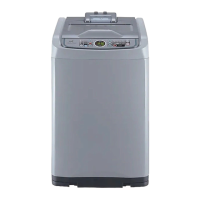
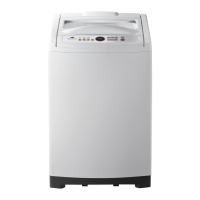
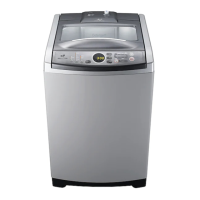
This document is a user manual for a Samsung WA15P9 or WA14P9 washing machine. It provides comprehensive information on the washer's features, installation, operation, maintenance, and troubleshooting.
Function Description
The Samsung WA15P9/WA14P9 is a top-loading washing machine designed to efficiently clean laundry. It incorporates several advanced features to enhance washing performance and user convenience. The machine offers various washing courses tailored for different types of laundry, including Fuzzy, Blanket, Delicate, Memory, Clean Tub, Quick, Super Clean, and ECO+ courses. Users can also select manual functions for Wash Only, Rinse Only, Spin Only, Wash and Rinse, Rinse and Spin, and Wash, Rinse and Spin cycles. The washing machine is equipped with an automatic sensing function that detects the laundry load and adjusts water level, wash time, rinse cycles, and spin time accordingly, except for Delicate, Clean Tub, and Super Clean courses. A Delay Start function allows users to set a specific time for the wash cycle to begin, from 3 to 18 hours.
Important Technical Specifications
The manual provides a specification table for both WA14P9 and WA15P9 models:
- Max. Mass of Dry Cloth: 12 kg for WA14P9, 13 kg for WA15P9.
- Washing Type: Stirring Type.
- Power Consumption:
- Dimensions (mm): W630 x D675 x H1010 for both models.
- Weight: 45 kg for WA14P9, 46 kg for WA15P9.
- Standard Water Level:
- Maximum: 88 l
- Mid: 64 l
- Mid-Low: 45 l
- Extra Low: 35 l
- Water Pressure: 0.05MPa ~ 0.78 Mpa (0.5 ~ 8.0 kg-f/cm²).
- Water Usage: 230 l.
- Spin Speed: 680 rpm.
Usage Features
The washing machine boasts several key usage features:
- Air Turbo Drying System: This technology spins hard and fast, drying clothes 30-40% faster than line drying. It's particularly useful in rainy or humid weather and helps make delicates and synthetic fabrics easier to iron by leaving just enough moisture.
- Diamond Drum: The diamond-shaped drum generates high water pressure for effective dirt removal and minimizes fabric damage, extending clothing lifespan. Its glittering inner tube contributes to both aesthetics and washing power.
- Tempered Transparent Door: Allows users to observe the washing process, checking laundry progress at any time.
- Digital Control: Utilizes artificial intelligence to automatically sense the washload and select the optimal washing course.
- Magic Filter: A unique filter designed to capture all lint inside the tub, ensuring high-quality filtering results and effective cleaning.
- Auto Restart: In case of a power failure, the machine automatically turns on and resumes the previous cycle, saving time and ensuring wash completion.
- Child-Lock Function: Protects children from accidental injury by locking the buttons, preventing changes to the selected wash cycle. It is activated by pressing both the Rinse and Spin buttons simultaneously for 3 seconds.
- Water Supply Button (Optional): Allows users to toggle between Cold and Hot water options.
- Soak Button: Adds soak time to the wash cycle, available for all courses except Delicate and Clean Tub.
- Water Level Button: While the water level is automatically adjusted, users can manually select it.
Maintenance Features
Proper maintenance is crucial for the washer's performance and longevity:
- Keeping the Tub Clean: Regular cleaning of the tub is recommended, especially in humid conditions, to prevent mold formation and maintain hygiene. The manual suggests using the "Clean Tub course" (page 12) with a dedicated or recommended detergent every one to three months.
- Cleaning the Water Supply Connector Filter: The filter should be removed and thoroughly washed. After cleaning, it must be securely reconnected to the inlet water valve.
- Cleaning the Filter Net (Magic Filter): The Magic Filter net should be cleaned regularly. Users need to push and pull the upper part of the filter downwards, open the cover, clean the filter, and then reinsert it until a "clicking" sound is heard.
- Cleaning the Pump Filter: For pump-drained washers, the pump filter needs to be cleaned. A rag or towel should be placed under the filter to catch water. The filter is rotated counterclockwise and pulled out, cleaned of dirt, and then returned by rotating it clockwise until it locks.
The manual emphasizes important safety precautions, using "Warning" and "Caution" labels. Key safety points include:
- Installation: Install on a hard, level surface with adequate ventilation, away from direct sunlight, rain, freezing temperatures, and heat sources. Ensure at least 4 inches (10 cm) between the washer and the wall. The washer must be properly grounded, and the power plug should be accessible.
- Flammable Substances: Do not wash items soaked in gasoline, dry cleaning solvents, or other flammable/explosive substances. Rinse such materials by hand thoroughly before washing. Do not put flammable substances into the washer.
- Hydrogen Gas: If a hot water system hasn't been used for two weeks or more, turn on hot water faucets for several minutes before using the washer to release any accumulated hydrogen gas, which is explosive. Do not smoke or light open flames during this time.
- Gas Leaks: Ventilate immediately without touching the power plug if there is a gas leak.
- General Safety: Unplug the power cord before servicing. Do not reach into the appliance when the tumbler is moving or under it. Do not allow children to play on or in the washer. Do not repair or service the washer yourself unless fully competent. Store detergents out of children's reach. Disconnect hoses and turn off water when not in use. Replace damaged power cords. Do not overload power outlets.
- Water Leaks: If the washer is flooded, do not approach it due to electric shock risk; unplug and drain water completely.
- Chemicals: Do not combine chlorine bleach, ammonia, or acids in the same wash due to hazardous fumes.
- Fiberglass: Do not machine wash fiberglass materials to avoid skin irritation.
- Disposal: Remove the door before disposing of the washer to prevent children or small animals from getting trapped.
- Hoses: Use new water supply hoses for installation. Periodically check hoses for damage and replace them every five years.
- Laundry Preparation: Empty pockets of all small, hard objects (coins, knives, pins, paperclips) before washing to prevent damage to the washer. Avoid washing clothing with large buckles, buttons, or heavy metal objects.
- Lid Safety: If the washer doesn't stop within 15 seconds of opening the lid, call a service agent.
- Grounding: Connect the grounding wire to the shell plate and bury it under at least 10 inches (25 cm) of earth, or connect to a properly grounded power receptacle. Never connect to a telephone line, lightning rod, or gas pipe.
- Ventilation: Ensure ventilation openings in the base are not obstructed by carpet.
Laundry Guidelines
The manual provides detailed guidelines for optimal washing and to prevent machine problems or clothing damage:
- Loading: Fill the tub with dry, unfolded clothes, but do not overload. Overloading reduces efficiency, causes wear, and may crease clothes. For big, bulky items or a few small items, add towels to improve tumbling and spinning.
- Bleeding Colors: Check if clothing items may bleed color by applying liquid detergent to a white towel and rubbing them together.
- Delicate Items: Be careful with scarves and imported clothes that discolor easily. Pre-treat stains by rubbing detergent in one direction. Wash heavily soiled clothes separately.
- Pre-treatment: Brush sleeves, collars, dress hems, and pockets with detergent before washing. Tie wrinkle-processed wool clothing with thread before washing.
- Metal Objects: Turn clothing with buttons and embroidered items inside out. Close pants and jacket zips to prevent damage to clothing and the spin basket.
- Long Strings: Fix long strings on clothing to prevent entanglement and damage.
- Delicate Clothing: Turn delicate clothing inside out.
- Color Separation: Wash black clothing and cotton towels separately to prevent staining.
- Floating Items: If curtains, light garments, or blue jeans float, pause the washer and push them down until soaked to prevent damage and unsatisfactory results.
- Prohibited Items: Do not wash items easily disfigured by soaking (e.g., neckties, brassieres, jackets, suits, coats made of rayon/blended fabrics, wrinkle-processed/embossed/resin processed products, easily discolored cotton/wool, wrinkled silk, leather products, leather accessories). Do not wash waterproof clothing (e.g., ski wear, diaper covers, mats/rugs) as it can cause abnormal vibrations, ejection of laundry, and personal injury or damage to the washer/floor.
- Laundry Nets: Use commercial laundry nets for delicate clothes, cashmilon, large/lightweight garments (lace-decorated, lingerie, nylon stockings, synthetic fabrics) to prevent them from rising and causing damage. Place long stringed, lace-decorated, bed cover sheets, and woolen clothes into a laundry net.
- Detergent Type: Use powdered or liquid detergent. Avoid soap.
- Detergent Amount: Use the appropriate amount. Excessive detergent does not improve washing results and can lead to insufficient rinsing, residue, bad odors, and discoloration. Warm water helps dissolve detergent.
- Delayed Start: For delayed starts, detergent must be added to the detergent drawer, not directly onto laundry, to prevent discoloration.
- Detergent Drawer: The detergent drawer is located at the back of the washer. Add powder detergent evenly, ensuring it doesn't brim over.
- Fabric Softener: Add the proper amount of fabric softener to the softener inlet. It's automatically added during the last rinse cycle. Do not add detergent, bleach, or starch to the softener inlet. Too much softener can yield unsatisfactory results. Do not open the lid during the spin cycle if softener has already been added. Do not leave softener in the dispenser for long periods as it may congeal. If water pressure is low, add fabric softener directly to the tub.
The manual includes a troubleshooting section with common problems and their solutions, along with a table of information codes displayed on the washer:
- No Power: Check electric voltage, plug connection, and power button.
- Does Not Work: Check if drain hose is twisted/folded/clogged/frozen, lid is open, or "Hold" button is on. Ensure sufficient water supply and open faucet.
- Drain Hose/Spin Basket Frozen: Add hot water to the frozen tap, remove drain hose and soak in hot water, pour hot water into spin basket, place hot towel on drain hose connector, then reconnect and check drainage.
- Water Leaks at Connector: Check if faucet connecting part is loose, rubber ring is in place, hose is folded, or water supply is too strong.
- Loud Noises/Vibrations: Check if laundry is spread evenly, washer is balanced/level on a sturdy floor, leveling legs are loose, or if unnecessary items surround the washer.
- Information Codes:
- 5E: Does not drain. Check drain hose for twists, folds, clogs, or freezing.
- 4E: Has no water. Turn faucets on, check water supply to residence, check supply hose/connection for clogs, check if faucet is frozen.
- UE/BE: Does not spin. Check if laundry is spread evenly, washer is balanced/level on a sturdy flat surface.
- 1E/0E: Overflows (water). Restart after spinning. If the error persists, call customer service.

 Need help?

 To Next Page
 General