
 Need help?
Do you have a question about the Samsung WF9702N3 and is the answer not in the manual?
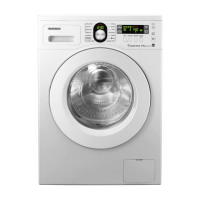
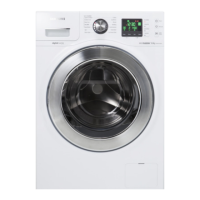
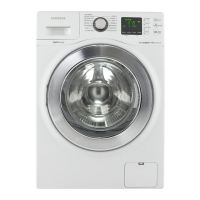
This document is a user manual for a Samsung Washing Machine, covering models WF9702N3, WF9700N3, WF9604N3, WF9602N3, and WF9600N3.
The Samsung Washing Machine is designed to provide efficient and convenient laundry care. It features a "Fuzzy Control" automatic system that selects the correct temperature, washing time, and spin speed based on the type of clothing. The machine offers various wash programs tailored for different fabric types and soil levels, including Cotton, Synthetics, Denim, Sports Wear, Wool, Handwash, Baby Care, and Daily Wash. It also includes special functions like Prewash, Rinse, Spin, Delay End, and Time Saving. The Child Lock feature prevents curious children from tampering with the machine's operation. The machine is designed for easy loading and unloading with a wide door aperture.
The manual provides specifications for two main types: WF9702/WF9700 (front-loading) and WF9604/WF9602/WF9600 (front-loading).
Dimensions:
Water Pressure: 50 kPa ~ 800 kPa
Water Volume:
Net Weight:
Wash and Spin Capacity:
Power Consumption:
Spin Revolutions (rpm):
The machine is designed to operate on a 220-240V, 50Hz power supply and requires a 15-amp fuse or comparable circuit breaker.
Baby Care System: This feature includes wash programs that add protection to clothing for children with sensitive skin, reducing skin irritation by minimizing detergent residue. Child Lock: This function ensures that curious children cannot interfere with the washing machine's operation. It can be activated by pressing the Temp. and Rinse buttons simultaneously for 3 seconds. Wool Certified: The machine has been tested and approved by Woolmark Company for washing machine washable wool products. Delay End: Allows users to delay the start of a wash cycle for up to 19 hours in one-hour increments, providing flexibility in laundry scheduling. Quick Wash: A program designed for lightly soiled clothes, completing a wash in less than 30 minutes. Delicates & Hand Wash Program: Special care programs for delicate items, ensuring gentle wash action and appropriate water amounts. Ceramic Heater for Durability & Energy Saving: Features durable ceramic heaters that save energy and reduce hard water and scale buildup. Wide Door: An extra-wide door aperture for convenient loading and unloading of large laundry items like bedding and towels. Washing for the First Time: Before the first use, a complete empty cycle (i.e., no laundry) should be run to clean the machine. Loading Laundry: Users should not overload the machine; the load capacity varies by fabric type. For optimal results, laundry should be sorted by fabric type, color, and sensitivity. Detergent and Additives Information: The manual provides guidance on which detergent to use for different fabric types (powder, liquid, or tablet) and how to add fabric softener or prewash detergent to the appropriate compartments in the detergent drawer. It emphasizes using neutral liquid detergent for wool cycles. Washing Clothes Using the Cycle Selector: This method allows the machine to automatically select the best washing conditions. Users turn on the water supply, press the Power button, open the door, load articles, add detergent, close the door, select the desired cycle, and press the Start/Pause button. Washing Clothes Manually: For manual control, users turn on the water supply, press Power, load articles, add detergent, press Temp. to select temperature, press Rinse to select rinse cycles, press Spin to select spin speed, press Delay End if needed, and then press Start/Pause. Calibrating Your Washing Machine: This mode ensures accurate weight detection for optimal washing performance. It involves removing laundry, pressing Temp and Delay End buttons simultaneously, pressing Power, then Start, and waiting for the calibration to complete.
Draining the Washing Machine in an Emergency: In case of an emergency or error, the machine can be drained by unplugging it, opening the filter cover, pulling the emergency drain tube, removing the cap, and allowing water to flow into a bowl. Cleaning the Exterior: The exterior should be wiped with a soft cloth using a non-abrasive household detergent. Avoid pouring water directly onto the machine. Cleaning the Detergent Drawer and Drawer Recess: The detergent drawer should be regularly cleaned by pressing the release lever, pulling the drawer out, washing all parts under running water, scrubbing the recess with an old toothbrush, and then reassembling. Cleaning the Debris Filter: The debris filter should be cleaned every 5 or 6 times a year, or when a "5E" error message appears. This involves unplugging the power cord, opening the filter cover, turning the emergency drain cap to the left to drain water, unscrewing the debris filter cap, removing any dirt or material, cleaning the filter, and then reassembling. Cleaning the Water Hose Mesh Filter: The water hose mesh filter should be cleaned at least once a year, or when a "4E" error message appears. This involves turning off the water supply, unscrewing the hose from the back of the machine, pulling out the mesh filter, cleaning it with pliers and rinsing it under water, and then reassembling. Repairing a Frozen Washing Machine: If the machine freezes, users should unplug it, turn off the water supply, loosen the water supply hose, remove the water supply hose and soak it in warm water, pour warm water into the drum, let it sit for 10 minutes, and then reconnect the water supply hose. If the machine is still frozen, it is recommended to allow time for any leftover water to thaw out. Troubleshooting and Information Codes: The manual provides a comprehensive troubleshooting guide for common problems (e.g., machine not starting, no water, detergent residue, vibrations, door not locked) and corresponding solutions. It also lists information codes (dE, 4E, 5E, UE, cE/3E, Sud, Uc) with their meanings and solutions, advising users to contact Samsung Customer Service if the problem persists.



 To Next Page
 General