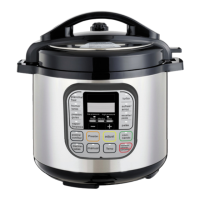
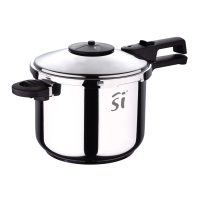
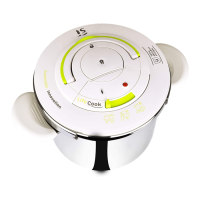
This document is a user manual for a San Ignacio pressure cooker, designed for various cooking applications.
Function Description
The San Ignacio pressure cooker is a versatile kitchen appliance designed for efficient and safe cooking under pressure. It significantly reduces cooking times compared to conventional methods, making it ideal for preparing a wide range of dishes, including meats, vegetables, legumes, and even desserts. The pressure cooking mechanism allows for faster heat transfer and retention, preserving nutrients and flavors. It is suitable for use on various heat sources, including induction, gas, electric, ceramic, and halogen hobs.
Important Technical Specifications
The manual provides specifications for two models: SG-1523 and SG-1549.
- Diameter: Both models have a diameter of Ø22cm.
- Capacity: SG-1523 has a capacity of 6L, while SG-1549 has a capacity of 4+6L (implying a set with two different capacity pots or a convertible system).
- Working Pressure (PS): Both models operate at a working pressure of 100kPa.
- Test Pressure (PT): Both models are tested at a pressure of 300kPa.
The pressure cooker features multiple safety mechanisms:
- Safety Valve: Releases excess pressure to prevent over-pressurization.
- Pressure Limiting Valve: Regulates the internal pressure during cooking.
- Overpressure Safety Device: An additional safety measure to manage excessive pressure.
- Lid: Securely seals the pot during operation.
- Gasket: Ensures an airtight seal between the lid and the pot.
- Safety Window: A visual indicator for pressure release.
- Upper Handle: For lifting and carrying the lid.
- Tight Nut: Secures components of the lid.
- Open-Preventing Valve: Prevents the lid from being opened while the pot is under pressure.
- Anti-Opening Valve: Another mechanism to ensure the lid cannot be opened prematurely.
- Gasket Ring: Provides a secure seal.
- Auxiliary Handle: For easier handling and lifting of the pot.
- Lower Handle: The main handle for the pot.
- Body: The main pot vessel.
- Complex Base: Designed for efficient heat distribution across various hob types.
Usage Features
Before First Use:
- Thoroughly clean the pressure cooker before its first use.
- Familiarize yourself with all parts and safety instructions.
Operation:
- Closing the Lid: Align the "O" mark on the lid with the "O" mark on the lower handle and turn the lid clockwise until it locks securely.
- Heating: Place the pot on the heat source. The pressure limiting valve will rise as pressure builds inside. Once the desired pressure is reached, reduce the heat to maintain a steady pressure.
- Cooking Time: Refer to the provided cooking tables for recommended cooking times for various foods.
- Turning Off Heat and Releasing Pressure:
- Natural Release: Remove the pot from the heat source and allow the pressure to decrease naturally. The pressure limiting valve will drop when pressure is fully released.
- Quick Release (for some models/dishes): For models with a quick release valve, follow the instructions to safely vent steam.
- Opening the Lid: Once the pressure limiting valve has dropped and no steam is escaping, turn the lid counter-clockwise to open.
Special Characteristics:
- Compatibility: The pressure cooker is compatible with induction, gas, electric, ceramic, and halogen hobs.
- Material: Made from robust materials for durability and efficient heat conduction.
- Safety: Equipped with multiple safety features to prevent accidents related to over-pressurization or premature lid opening.
- Cooking Tables: Detailed cooking tables are provided for various food types (beef, chop, pig elbow, chicken, fish, mutton, zong zi, old corn, sweet potato, rice, porridge, legume, tremella) with recommended cooking times and water volumes. Recipes for specific dishes like chicken and egg croquettes, cake in a pressure cooker, cheesecake, pumpkin soup, chicken with béchamel sauce, vegetable panache, onion soup with melted cheese, lentil soup, rice with chicken, mushroom cannelloni, stuffed squid, lamb ribs, sole fish with mushroom sauce, and brownie are also included, demonstrating the versatility of the appliance.
Maintenance Features
General Maintenance:
- Cleaning: Always clean the pressure cooker thoroughly after each use.
- Lid: Wash the lid with warm soapy water and rinse well.
- Pot Body: Clean the pot body with warm soapy water. Avoid abrasive cleaners or metallic scouring pads that could damage the surface.
- Gasket: Regularly inspect the gasket for wear and tear. Clean it with water and ensure it is properly seated before each use. Replace if damaged or hardened.
- Safety Valves: Ensure the safety valves are clean and free from food debris. Periodically check their functionality as per the manual.
- Storage: Store the pressure cooker in a cool, dry place. Do not store food inside the cooker for extended periods.
Troubleshooting:
The manual includes a troubleshooting section with common problems, their reasons, and solutions:
- Steam escaping from under the lid:
- Reason: Dirty sealing ring or old sealing ring.
- Solution: Clean the sealing ring, cooker mouth, and lid. Replace the sealing ring if it's old.
- Lid cannot be properly fixed:
- Reason: The shape of the lid has changed.
- Solution: Change the lid.
- Steam and liquid leaks from the releasing hole of the second safety valve suddenly:
- Reason: The safety valve's locking pin is obstructed, or the release hole of the pressure-limiting valve is blocked.
- Solution: Take the cooker away from the fire, cool it down, take down the pressure-limiting valve, and clean the hole of the pressure-limiting valve. The safety valve has lost its function. Change the safety open-preventing valve.
- The cooker should be cleaned before first time using:
- Reason: Maintenance of the whole cooker.
- Solution: Clean away the dirt. Then wipe off the water and keep the cooker dry. Do not scrape the cooker surface with hard material such as metal to avoid abrasion. Do not touch the cooker with other kinds of metal to avoid electrochemical corrosion. Do not store food inside the cooker for a long while.
- Maintenance of the sealing ring:
- Reason: Remove the sealing ring from the lid. Clean away the dirt from the ring and the lid. Wipe off the water and keep the sealing ring dry. Put the sealing ring back to the lid. Do not put the lid on when not using the cooker to avoid the sealing ring being squeezed.
- Maintenance of the pressure-limiting valve and the steam-releasing pipe:
- Reason: Check the steam-releasing pipe. If it is blocked, clear away the dirt with the dredging needle. Then wash and rinse the pipe with water. If the screw on the pressure-limiting valve is found loose, tighten it right away.
- Maintenance of the safety open-preventing valve:
- Reason: Clear away the dirt from the safety open-preventing valve with the dredging needle.
- Solution: Wash and rinse with water. The pin of the safety open-preventing valve should be moved freely. If the screw on the safety open-preventing valve is found loose, tighten it right away.
Important Note: Do not use small parts such as pressure-limiting valve. There is no problem if the color of the sealing ring changed. It is suggested to change the sealing ring once in one or two years according to the usage frequency. But it must be changed immediately if there is any damage or shape changing. Please contact your dealer or the sales department of our company for the replacement parts. Never use substitutes. The way of deposit: put the body and lid separately in shade and cool place.

 Need help?
 General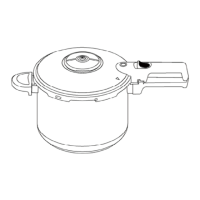

 To Next Page