Need help?
Do you have a question about the Savant SHC-S2-00 and is the answer not in the manual?
Details temperature, humidity, cooling, and BTU ratings for the Smart Host.
Provides height, width, depth, weight, and rack space information for the device.
Outlines the input power requirements and maximum power consumption of the host.
Lists supported wireless standards (Wi-Fi 802.11 b/g/n) and security protocols (WPA/WPA2).
Details FCC, CE, C-Tick, ICES-003, FCC ID, IC, and RoHS compliance information.
Specifies the minimum supported Savant OS version, da Vinci 8.6.
Instructions for resetting Ethernet settings by pressing and holding the reset button.
Guidance on connecting the 5V DC power supply to the device and an AC outlet.
Explanation of the different LED states: Off, Amber (booting), Amber Flashing (provisioning), Green (connected).
Description of the TOSLink (Optical) digital audio output port.
Details the 10/100/1000 Base-T auto-negotiating Ethernet port and its effect on Wi-Fi.
Information on the 8-pin RJ-45 RS-232 ports for serial data communication.
Description of the 6-pin connector for sending IR signals to control devices.
Details the 3-pin connector for basic on/off control of devices via Relay.
Information on 3-pin connectors for General Purpose Input/Output configuration.
Instructions for mounting the Smart Host in a rack using an optional ventilated shelf.
Guidance on using the included two-piece bracket to mount the host on a wall.
Pin-out details for RS-232 connections, including warnings about wire colors and unused pins.
Guidance on IR emitter placement and precautions regarding third-party emitters.
Recommendations for static IP or DHCP reservation to ensure stable network connectivity.
Methods to refresh the IP connection, such as hot-plugging Ethernet or cycling power.
References to documents on the Savant Customer Community for further deployment details.
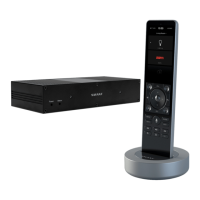
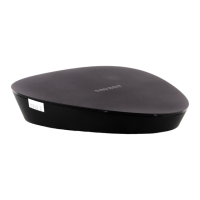
The Savant Smart Host with Control 2 (SHC-S2-00) is a central control unit designed to integrate and manage various smart home devices and systems. It acts as the brain of a Savant smart home, facilitating communication and automation between different components.
The Smart Host serves as the core processor for a Savant system, enabling users to control lighting, climate, entertainment, security, and other integrated technologies through a unified interface. It processes commands from user interfaces (like Savant apps or remotes) and translates them into actions for connected devices. The device supports both wired and wireless communication protocols, ensuring flexibility in system design and installation.
Its primary function is to execute programmed workflows and scenes, allowing for complex automation based on schedules, sensor inputs, or user triggers. For instance, a "Good Morning" scene could simultaneously open blinds, adjust the thermostat, and start a coffee maker. The Smart Host also manages the network connectivity of integrated devices, ensuring reliable operation and communication.
The device features a range of input/output ports to connect with various types of equipment. It includes RS-232 ports for serial communication with controllable devices, allowing for precise command and control of equipment like AV receivers, projectors, or specialized lighting systems. These ports support both transmit and receive serial binary data, and their handshaking availability (CTS/RTS) depends on the component profile.
Infrared (IR) output ports are provided for controlling devices that rely on IR signals, such as televisions, set-top boxes, and older audio equipment. The Smart Host can send IR signals to these devices via IR flashers, offering a versatile control solution for a wide array of entertainment and home appliances. It's important to note that the use of third-party flashing IR emitters with "Talk Back" is not recommended, as they can draw voltage away from the IR signal, potentially degrading performance.
General Purpose Input/Output (GPIO) pins offer flexible control options. When configured as an output, GPIOs can trigger actions within the system, such as switching a device on or off. When configured as an input, they can detect state changes (e.g., from a sensor or a button press) and initiate a workflow. This allows for custom integrations and event-driven automation. During the boot process, GPIO input pins are pulled high to +12V; connecting the PD (Pull-down) pin to the GPIO pin can force the GPIO output low during boot-up, ensuring specific states during system startup.
Relay outputs provide basic on/off control for devices requiring simple switching operations. Both Normally Open (NO) and Normally Closed (NC) outputs are available, offering flexibility for different control scenarios, such as controlling blinds, gates, or other low-voltage devices.
For audio integration, the Smart Host includes a TOSLink (Optical) digital audio output. This allows connection to a digital optical audio input on a switcher, enabling the use of the Audio Interrupt Service (AIS), which can be used for system alerts or announcements.
Network connectivity is handled via an 8-pin RJ-45 Ethernet port, supporting 10/100/1000 Base-T auto-negotiating. Connecting to this port disables Wi-Fi settings, ensuring a stable wired connection for critical system functions. The device also supports Wi-Fi (802.11 b/g/n 2.4 GHz) for wireless network integration, though 802.11r (fast roaming) is not supported.
The Smart Host is designed for flexible installation, supporting both flat surface placement (e.g., on a table, cabinet, or shelf) and wall mounting using the included two-piece bracket. When placing on a flat surface, the wall bracket should not be installed to ensure the host lays flat. For wall mounting, the bracket attaches to the bottom of the chassis with M3 x 6mm flat-head screws, and then the host slides onto the wall-mounted bracket. It's crucial to secure the wall bracket firmly, especially when mounting to drywall, using sturdy anchors. The installation location should be dry, well-ventilated, and out of direct sunlight to ensure optimal performance and longevity.
For rack installations, an optional ventilated shelf (RCK-3000-xx) can accommodate up to two Smart Hosts. In this scenario, the wall bracket should not be installed.
The device's status LED provides visual feedback on its operational state. An "Off" state indicates disconnection from the power supply. An "Amber" light signifies that the host is booting/rebooting or disconnected from the network. A rapidly blinking amber light (one second on, one second off) indicates that the host is in provisioning mode, ready to be added to a network, and has not yet been assigned an IP address. A "Green" light confirms that the host is connected to the local network and has been assigned an IP address.
Network configuration is a critical aspect of setting up the Smart Host. Savant recommends configuring a static IP address or DHCP reservation within the router to prevent IP address changes due to power outages. This ensures consistent communication with other devices and simplifies system management. The manual advises referring to the router's documentation for specific DHCP reservation instructions.
To refresh the IP connection after network changes (e.g., connecting to a new network, changing routers, or modifying the IP address range), users can either hot plug the Ethernet (LAN) connection or cycle power to the device.
The Smart Host is designed for robust and reliable operation, requiring minimal direct maintenance. However, certain actions can be performed to address common issues or reconfigure the device.
A reset button is provided on the rear panel. Pressing and holding this button for five seconds until the LED blinks red rapidly, then releasing it, will clear all Ethernet settings and revert them back to factory defaults. This can be useful for troubleshooting network connectivity issues or preparing the device for a new network environment.
Power is supplied via a 5V DC 3A wall wart power supply, which connects to a 115-240V AC surge-protected outlet. Ensuring a stable power source is key to the device's longevity and reliable performance.
For optimal IR performance, it's important to ensure that all IP emitters are within 15 feet (4.6 meters) of the controller's location. This helps maintain signal integrity and prevents degradation of IR performance.
The device's compliance with various regulatory standards (FCC Part 15, CE, C-Tick, ICES-003, RoHS) indicates that it meets specific safety and emissions requirements, contributing to its overall reliability and ease of integration into different environments.
The Savant Customer Community is a valuable resource for additional information and support, including the Savant Smart Host Deployment Guide and application notes on RS-232 conversion to DB9 and RS-422/485 pin-outs. These resources can assist users with advanced configurations and troubleshooting.
Overall, the Savant Smart Host with Control 2 is a sophisticated yet user-friendly device that forms the backbone of a comprehensive smart home system, offering extensive control capabilities and robust performance with straightforward maintenance procedures.
 General
| Model | SHC-S2-00 |
|---|---|
| Category | Remote Control |
| Control Type | Touchscreen |
| Color | Black |
| Compatibility | Savant Systems |
| Battery Type | Lithium-ion |
| Product Type | Remote Control |
| Wireless Technology | Wi-Fi |
| Connectivity | Wi-Fi |
| Display | Touchscreen LCD |
| Battery | Rechargeable |
| Charging Method | Docking Station |

 To Next Page