Need help?
Do you have a question about the Schleicher ASK 21 Mi and is the answer not in the manual?
Details the manual's revision history and update procedures.
Provides an overview of the aircraft and manual.
Sets the context for the flight manual's purpose and scope.
Details the regulatory standards and approvals for the aircraft.
Explains emphasis marks like Warning, Caution, and Note.
Provides key specifications and physical characteristics of the aircraft.
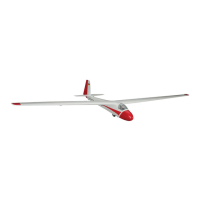
Illustrates the aircraft's overall dimensions and layout.
Outlines critical limits for safe aircraft operation.
Context for the operating limitations section.
Specifies critical airspeed limitations and their significance.
Explains the color codes and significance of airspeed indicator markings.
Details the engine specifications, power, and operating parameters.
Describes the markings and functions of the engine control unit.
Defines the maximum and minimum mass limits for safe operation.
Specifies the permissible center of gravity range for safe flight.
Lists the aerobatic and other maneuvers approved for the aircraft.
Defines the maximum load factors allowed during maneuvers.
Specifies crew requirements and seating arrangements.
Details the approved flight conditions and regulations.
Specifies fuel types, capacities, and oil requirements.
Lists the essential equipment required for flight operations.
Describes permitted methods for launching the aircraft.
Summarizes key operating limitations and placards.
Provides step-by-step instructions for handling emergencies.
Introduces the emergency checklist and procedures.
Instructions for safely ejecting cockpit canopies in an emergency.
Procedure for abandoning the aircraft in critical situations.
Methods for recovering from aircraft stalls.
Procedure for recovering the aircraft from a spin.
Steps to take to recover from a spiral dive.
Actions to take in case of engine malfunction at different altitudes.
Procedures for handling engine compartment fires.
Addresses various other potential in-flight emergencies.
Guides for standard flight operations and checks.
Overview of daily inspections and normal operating procedures.
Instructions for assembling and disassembling the aircraft.
Detailed checklist for daily pre-flight inspections.
Essential checks to perform before every flight.
Covers standard flight operations and optimal speeds.
Presents data on aircraft performance characteristics.
Context for EASA-approved performance data.
Contains official data approved by the European Aviation Safety Agency.
Details potential errors in the Airspeed Indicator readings.
Provides critical stall speed data based on flight conditions.
Specifies take-off distances and rolls under various conditions.
Describes climb rates, cruise speeds, and range with engine power.
Includes supplementary performance-related data.
Covers aircraft weight limits and center of gravity calculations.
Explains load distribution limits for safe operation.
Provides a form for recording aircraft loading and balance.
Details the aircraft's systems, components, and their functions.
Introduction to the aircraft systems and equipment.
Explains the operation of primary flight controls and trim systems.
Describes the function and operation of the air brake system.
Details the aircraft's landing gear configuration and tire pressures.
Covers cockpit layout, safety features, and instrument panel components.
Information on the aircraft's baggage carrying capacity.
Detailed description of the engine, its controls, and indicators.
Explains the fuel and oil systems, capacities, and consumption.
Details the aircraft's electrical circuits and components.
Describes the systems providing pressure data for flight instruments.
Covers optional equipment like ballast, oxygen, and ELT.
Provides guidance on ground handling, servicing, and upkeep.
Introduction to ground handling and maintenance procedures.
Specifies required inspection intervals and airworthiness renewal.
Guidelines for aircraft modifications and repair procedures.
Instructions for safe parking, handling, and transportation.
Recommendations for cleaning and maintaining the aircraft's exterior.
Contains additional information and optional equipment details.
Introduction to the supplements section.
Lists supplements that have been added to the manual.
 General
| Manufacturer | Alexander Schleicher GmbH & Co |
|---|---|
| Crew | 2 |
| Length | 8.35 m (27 ft 5 in) |
| Aspect Ratio | 16.1 |
| Max Speed | 280 km/h (174 mph, 151 knots) |
| Stall Speed | 65 km/h (40 mph, 35 knots) |
| Type | Glider |
| Wingspan | 17.00 m (55 ft 9 in) |

 To Next Page