EasyManua.ls Logo

Scout Boats 300 LXF - User Manual

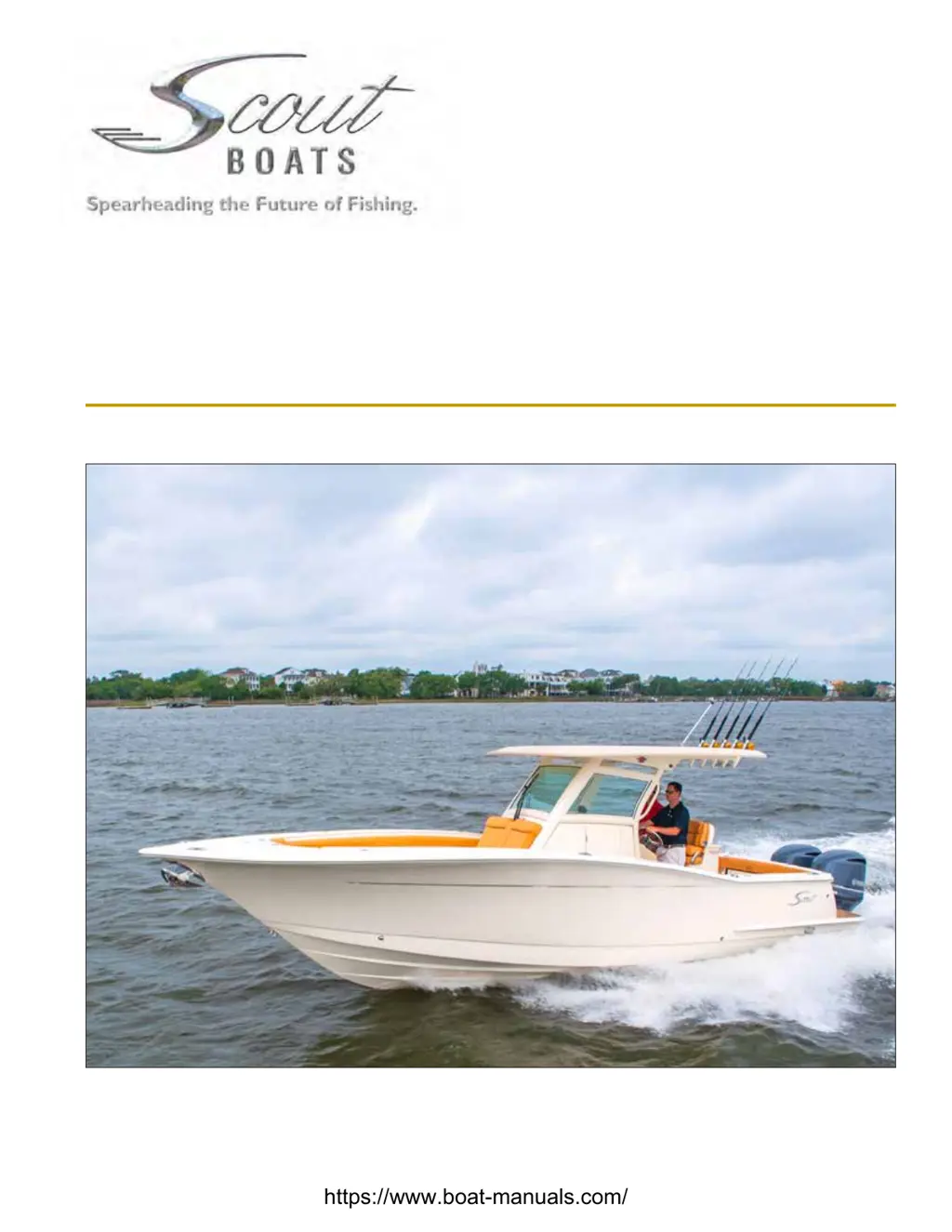
Scout Boats 300 LXF
173 pages
Print Icon
To Next Page IconTo Next Page
Loading...
1
Owner’s Manual
300 LXF
Scout Boats Inc.
2531 Hwy 78 West
Summerville, SC 29483
https://www.boat-manuals.com/

Table of Contents

Questions and Answers

  • K
    Kelly GreenSep 9, 2025
    Why does my Scout Boats 300 LXF head will not flush?
    • F
      frances05Sep 9, 2025
      If your Scout Boats Boat head won't flush, the fuse or circuit breaker for the head circuit may be blown, so replace the fuse or reset the circuit breaker. The holding tank could be full, so pump it out. Also, there might be a bad connection at the head pump or the switch, so repair the connection. Finally, the head pump could be defective and need replacement.
  • A
    Angela ChenAug 23, 2025
    What to do if my Scout Boats Boat engine is loosing RPM?
    • J
      Jennifer HowardAug 23, 2025
      If your Scout Boats Boat engine is losing RPM, consider these potential causes and solutions: * A faulty anti-siphon valve may be the issue. Try removing, cleaning, or replacing it. * The remote gasoline fuel filter or the primary fuel filter on the engine could be dirty. Inspect and replace the fuel filter. * The electronic engine control system or the fuel injection system may be malfunctioning. Consider repairing these systems.
  • D
    Derek PooleAug 25, 2025
    What to do if my Scout Boats 300 LXF engine suddenly will not operate over 2000 RPM?
    • K
      Katie HowardAug 25, 2025
      If your Scout Boats Boat engine suddenly won't operate over 2000 RPM, it could be due to the engine emergency system being activated, in which case you should find and correct the problem. Another possibility is a bad tachometer that needs to be replaced. It's also possible that a throttle control is not responding properly, so have the throttle setting checked by a qualified technician.
  • P
    Peter MurphyAug 27, 2025
    Why is my Scout Boats 300 LXF Boat engine alternator not charging properly?
    • C
      Craig CohenAug 27, 2025
      If your Scout Boats Boat engine alternator isn't charging properly, it could be due to a loose or corroded battery cable, so you should clean and tighten the battery cables. The alternator itself might be faulty and needs replacement. Also, check if the alternator drive belt is loose or worn; tighten or replace it as necessary. It is also possible that the battery needs to be replaced.
  • J
    Jon HammondAug 27, 2025
    What to do if the carbon monoxide detector sounds the alarm when the engines or generator are running on my Scout Boats 300 LXF?
    • K
      Katrina MooreAug 28, 2025
      If the carbon monoxide detector sounds the alarm on your Scout Boats Boat when the engines or generator are running, it could be because the canvas curtains are up and none of the forward-facing vents are open. Try opening the windshield and side curtains to provide proper ventilation. It's also possible that the boat is operating at slow speed and the wind is on the stern, pushing CO into the cockpit and cabin, in which case you should increase boat speed or change heading if possible. Before assuming the detector is faulty, have the boat checked by a professional.
  • A
    Anna HernandezAug 29, 2025
    What to do if my Scout Boats 300 LXF Boat fresh water pump fails to turn off after all outlets are closed?
    • J
      Jason BurnsAug 29, 2025
      If the fresh water pump on your Scout Boats Boat fails to turn off after all outlets are closed, there might be a leak in a pressure line or outlet, so you should repair the leak. An air leak in the intake line could also be the cause, so repair any air leaks. The pressure switch could be defective, requiring replacement. Low voltage to the pump, possibly due to corroded or loose wiring connections or a low battery, is another potential cause. Also, the strainer could be clogged, so clean it. Finally, the pump itself might be defective and need repair or replacement.
  • W
    wwoodSep 18, 2025
    How to fix a Scout Boats Boat holding tank that will not empty?
    • A
      Alexandra BurkeSep 18, 2025
      If your Scout Boats Boat holding tank will not empty, the holding tank vent or filter might be clogged, so clean the vent and vent hose or replace the filter. There could also be a vacuum leak in the hose from the holding tank to the deck pump out fitting, so tighten loose fittings or replace damaged hoses.
  • T
    Todd MullinsSep 19, 2025
    Why does the air conditioner on my Scout Boats 300 LXF Boat runs for a short time & then cuts out?
    • V
      Victoria MannSep 22, 2025
      If the air conditioner on your Scout Boats Boat runs for a short time and then cuts out, the intake scoop strainer for the raw water system might be clogged with weeds or debris, so back down the boat to clear debris or clean the scoop strainer. The air conditioner pump sea strainer could also be clogged, so clean the strainer. The raw water supply thru-hull valve might be closed, so open the valve. The raw water system could be air-bound, so make sure the thru-hull valve is open and run the boat above 15 m.p.h. Lastly, the air conditioner raw water pump might not be pumping and needs to be repaired or replaced.
  • C
    Christopher RodriguezSep 8, 2025
    What to do if there is no AC power to cabin breaker panel and shore cord is properly connected on my Scout Boats 300 LXF?
    • C
      Casey GarciaSep 8, 2025
      If there's no AC power to the cabin breaker panel on your Scout Boats Boat, and the shore cord is properly connected, check if the breaker at the shore outlet is off and activate it. The shore power cord could be damaged or defective, requiring replacement. Alternatively, the ELCI at the inlet connection may have detected a fault in the electrical system and tripped the breaker, so contact a qualified marine electrician to find and correct the problem.
  • O
    otuckerSep 4, 2025
    How to fix a Scout Boats Boat baitwell pump that runs, but does not pump water?
    • A
      Alexis BennettSep 4, 2025
      If your Scout Boats Boat baitwell pump runs but doesn't pump water, make sure the thru-hull valve is open. Ensure the pump is fully clamped to the base on the thru-hull fitting; properly install it if it isn't. The intake scoop strainer for the raw water system could be clogged with weeds or debris; back down the boat to clear it or clean the strainer. There might also be an air lock in the system, so prime the system.

Summary

Chapter 1: SAFETY EQUIPMENT

1.1 General

General overview of safety equipment and standards for boat operation.

1.2 Engine Alarms

Information on audible alarms for critical engine systems.

1.3 Neutral Safety Switch

Explanation of the safety switch preventing engine start in gear.

1.4 Engine Stop Switch

Details on the engine stop switch and lanyard operation.

1.5 Required Safety Equipment

Lists equipment required by the U.S. Coast Guard for safety.

1.6 Carbon Monoxide Monitoring System

Information on the installed CO detector and its function.

1.7 First Aid

Guidance on basic first aid and recommended kit contents.

1.8 Additional Safety Equipment

Suggestions for extra safety gear like EPIRBs and VHF radios.

1.9 Caution & Warning Labels

Examples and locations of important safety labels on the boat.

Chapter 2: OPERATION

2.1 General

Introduction to boat operation, pre-cruise checks, and general safety.

2.2 Rules of the Road

Basic navigation rules for safe boating and vessel right-of-way.

2.3 Pre-Cruise Check

Checklist for essential pre-operation checks before starting engines.

2.4 Operating Your Boat

Guidelines for safe boat operation, including responsibilities and conditions.

2.5 Docking, Anchoring & Mooring

Techniques and safety for docking, anchoring, and mooring the boat.

2.6 Controls, Steering, or Propulsion System Failure

Procedures for handling loss of engine, control, or steering.

2.7 Collision

Actions to take if the boat is involved in a collision.

2.8 Grounding, Towing & Rendering Assistance

Legal requirements and advice for assisting disabled vessels.

2.9 Flooding or Capsizing

Steps to take if the boat becomes flooded or capsizes.

2.10 Fishing

Safety considerations specific to fishing operations.

2.11 Water Skiing & Wakeboarding

Safety precautions and procedures for towing water sports participants.

2.12 Man Overboard

Procedures for recovering a person who has fallen overboard.

2.13 Tower Operation

Safety guidelines for operating the boat from an elevated tower.

2.14 Teak Surfing

Warning against the dangerous fad of teak surfing due to CO and propeller risks.

2.15 Trash Disposal

Regulations and practices for proper garbage disposal at sea.

2.16 Yacht Certification Plate

Information regarding the yacht certification plate and its location.

2.17 Transporting Your Boat

Guidelines for safely towing the boat on a trailer.

Chapter 3: PROPULSION SYSTEM

3.1 General

Overview of the 4-cycle outboard engines and their maintenance.

3.2 Drive System Corrosion

Explanation of marine growth and galvanic corrosion and prevention.

3.3 Engine Lubrication

Proper engine oil checks and changes for 4-cycle engines.

3.4 Engine Cooling System

How the raw water cooling system works and checks required.

3.5 Propellers

Information on propeller types, sizes, and the importance of proper balance.

3.6 Performance Issues & Propellers

Factors affecting boat performance and when to change propellers.

3.7 Engine Instrumentation

Description of helm instruments for monitoring engine operational condition.

Chapter 4: HELM CONTROL SYSTEMS

4.1 General

Overview of helm control systems: throttle, steering, trim tabs.

4.2 Engine Throttle & Shift Controls

Details on electronic engine controls, binnacle style operation, and features.

4.3 Neutral Safety Switch

Importance and testing of the neutral safety switch for engine starting.

4.4 Engine Power Tilt & Trim

Explanation of power tilt and trim features for engine adjustment.

4.5 Engine Stop Switch

Proper use and attachment of the engine stop switch and lanyard.

4.6 Steering System

Description of power assist hydraulic and electronic steering systems.

4.7 Joystick Controls

Operation and features of the optional joystick control system.

4.8 Trim Tabs

How trim tabs control hull attitude and their operation.

4.9 Control Systems Maintenance

Procedures for maintaining hydraulic and electronic steering systems.

Chapter 5: FUEL SYSTEM

5.1 General

Overview of the gasoline fuel system design and safety regulations.

5.2 Outboard Fuel System

Description of the fuel tank, withdrawal tubes, and selector valves.

5.3 Fueling Instructions

Procedures and safety precautions for fueling the boat at a marina.

5.4 Fuel System Maintenance

Routine checks for primer bulbs, connections, hoses, and fuel filters.

Chapter 6: ELECTRICAL SYSTEM

6.1 General

Overview of the 120V AC and 12V DC electrical systems and wiring code.

6.2 12 Volt DC System & Batteries

Details on the 12V DC system, battery types, switches, and distribution.

6.3 12 Volt Accessory Switch Panels

Explanation of the CZone digital switching system and accessory controls.

6.4 Ignition Switch Panels

Information on ignition switch panels and starting procedures.

6.5 Cabin DC Breaker Panel

Description of the cabin DC breaker panel and its controlled accessories.

6.6 DC Power Management

Strategies for managing DC electrical loads to prevent battery drain.

6.7 120 Volt AC Electrical System

How the AC system is supplied, protected, and distributed.

6.8 Bonding System & Galvanic Isolator

Purpose of bonding systems and galvanic isolators for safety.

6.9 Electrical System Maintenance

Routine maintenance for DC and AC electrical systems.

6.10 AC Line Load Estimator

Tool to estimate AC load requirements and manage electrical circuits.

Chapter 7: FRESH WATER SYSTEM

7.1 General

Components of the fresh water system: tank, lines, pump.

7.2 Fresh Water System Operation

Steps for filling, priming, and operating the fresh water system.

7.3 Fresh Water System Maintenance

Routine tasks for maintaining the fresh water system and sanitizing the tank.

Chapter 8: RAW WATER SYSTEM

8.1 General

Overview of raw water systems, pumps, and seacocks.

8.2 Raw Water System Operation

How the raw water pump is activated and operates based on pressure.

8.3 Baitwell

How seawater is supplied to the baitwell and its circulation pump.

8.4 Air Conditioning Pump

Function and location of the seawater pump for the air conditioner.

8.5 Raw Water System Maintenance

Routine checks for hoses, strainers, pumps, and valves in the raw water system.

Chapter 9: DRAINAGE SYSTEMS

9.1 General

How water is drained overboard via thru-hull fittings and the importance of checking drains.

9.2 Hardtop Drains

Location and purpose of drain holes in hardtop leg bases.

9.3 Bilge Drainage

Operation of manual and automatic bilge pumps and their protection.

9.4 Cockpit & Deck Drainage

How cockpit and deck water is channeled overboard through scupper drains.

9.5 Console Cabin Drains

Drainage paths for console sinks, cabin sole, and AC condensation.

9.6 Drainage System Maintenance

Periodic tasks to maintain proper drainage, including cleaning and testing pumps.

Chapter 10: VENTILATION SYSTEM

10.1 Cabin Ventilation

How ventilation is provided to the cabin via doors and port windows.

10.2 Windshield Ventilation

Ventilation provided by panels above the windshield.

10.3 Carbon Monoxide & Proper Ventilation

Dangers of CO and importance of proper boat ventilation when engines are running.

10.4 Maintenance

Maintenance for ventilation components like hinges, latches, and port windows.

Chapter 11: EXTERIOR EQUIPMENT

11.1 Deck

Description of deck hardware, cleats, bow roller, and anchor locker.

11.2 Hull

Information on the engine mounting system, swim platform, and boarding ladder.

11.3 Cockpit Features

Details on cockpit hatches, latches, and their proper securing.

11.4 Center Console & Cabin

Components located at the helm station and in the cabin, including windshield.

11.5 Canvas Enclosure (Optional)

Installation and care of optional canvas enclosures.

11.6 Aftermarket Hardtop or Tower

Scout's recommendation regarding aftermarket hardtops or towers.

Chapter 12: INTERIOR EQUIPMENT

12.1 Console Cabin

Features of the console cabin, including sink, berth, and lighting.

12.2 Marine Head System

Operation and maintenance of the TECMA ceramic marine head system.

12.3 Cabin Air Conditioner (Optional)

Operation and maintenance of the 12V DC cabin air conditioner.

12.4 Cabin Woodwork

Care and maintenance of simulated wood and teak woodwork.

Chapter 13: ROUTINE MAINTENANCE

13.1 Exterior Hull & Deck

Hull cleaning, bottom painting, anode monitoring, and gelcoat care.

13.2 Upholstery, Canvas & Enclosures

Cleaning and maintenance of vinyl upholstery, acrylic canvas, and enclosures.

13.3 Interior

Cleaning advice for cabin interior, cushions, and woodwork.

13.4 Engines and Fuel

Proper engine maintenance, fuel quality considerations, and ethanol blends.

13.5 Bilge, Pump & Components

Keeping the bilge clean, checking pumps, alarms, and through-hull fittings.

13.6 Drainage System

Maintenance for cockpit drains, hardtop leg drains, and through-hull valves.

Chapter 14: SEASONAL MAINTENANCE

14.1 Storage & Lay-up

Procedures for preparing the boat for storage, including fuel, water, and engines.

14.2 Winterizing

Detailed steps for winterizing fresh water, raw water, and other systems.

14.3 Recommissioning

Steps to take to prepare the boat after seasonal storage and before launching.

Appendix A: SCHEMATICS

Main Harness

Electrical schematic for the main boat wiring harness.

Console Harness

Electrical schematic for the console wiring harness.

Hardtop Harness

Electrical schematic for the hardtop wiring harness.

Hardtop Panel

Diagram of the hardtop electrical panel and its circuit breakers.

Windlass Harness

Electrical schematic for the windlass system.

Battery Box

Diagram illustrating the battery box layout and connections.

Fuel System

Schematic showing the boat's fuel system components.

Fresh Water System

Schematic illustrating the boat's fresh water system layout.

Raw Water System

Schematic diagram of the raw water system components.

Drainage System

Diagram showing the boat's drainage paths and components.

Waste System

Schematic illustrating the boat's waste system and its components.

Mercury Steering System

Diagram of the Mercury hydraulic steering system.

Mercury Steering System With Joystick

Schematic of the Mercury steering system with joystick control.

Yamaha Steering System

Diagram of the Yamaha electric steering system.

Appendix B: GLOSSARY OF TERMS

Appendix C: MAINTENANCE LOG

Appendix D: BOATING ACCIDENT REPORT

Appendix E: FLOAT PLAN

Appendix F: TROUBLESHOOTING GUIDE

CONTROL SYSTEMS

Common problems and solutions for hydraulic steering systems.

PERFORMANCE PROBLEMS

Troubleshooting for sluggish performance, lost speed, and vibration issues.

ENGINE PROBLEMS

Diagnosing and resolving issues with engine overheating, charging, and RPM.

ACCESSORY PROBLEMS

Troubleshooting for baitwell, fresh water, washdown, and bilge pumps.

ACCESSORY PROBLEMS

Troubleshooting for bilge pumps, head systems, and air conditioners.

ACCESSORY PROBLEMS

Diagnosing issues with CO detectors, AC power, and cabin outlets.

Scout Boats 300 LXF Specifications

General IconGeneral
BrandScout Boats
Model300 LXF
CategoryBoat
LanguageEnglish

Related product manuals