
 Need help?
Do you have a question about the Selecto SMF Series and is the answer not in the manual?
Critical information and conditions required before installing the Selecto SMF Series systems.
Procedures for safely removing the filter system from packaging and checking for damage.
Guidelines for locating and mounting the water filter unit for optimal operation and access.
Instructions on how to secure the filter system to the wall using appropriate mounting hardware.
Details on connecting the filter system inlet and outlet using approved fittings and tubing.
Steps to properly install the cartridge and fill the system with water, purging air.
Guidance on when to replace the filter cartridge based on pressure or time.
Criteria for replacing filter cartridges based on pressure drop or water quality degradation.
Procedure for safely shutting off water, relieving pressure, and removing the old filter cartridge.
Instructions for preparing and installing a new filter cartridge, ensuring a proper seal.
Methods and precautions for bypassing the filter system when necessary, e.g., for maintenance.
Procedures and timelines for submitting claims related to product damage or shortages.
Details of the product warranty, coverage, limitations, and exclusions.
Guidelines for returning products, including pre-approval and restocking fees.
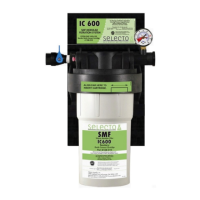
The Selecto Modular Filter (SMF) Series is a range of water filtration systems designed for the food service industry, specifically engineered to reduce sediment, dirt, and improve the taste of water. These systems also play a crucial role in preventing scaling and corrosion in connected equipment, thereby extending the lifespan and efficiency of appliances like ice machines, coffee brewers, espresso machines, and steamers. The modular design allows for flexibility in configuration, catering to various water quality needs and equipment types.
The primary function of the SMF Series filters is to provide clean, safe, and great-tasting ingredient water. This is achieved through a multi-stage filtration process that targets common water impurities. The systems are designed to address issues such as particulate matter (sediment, dirt), chlorine taste and odor, and the formation of scale, which can be detrimental to food service equipment. By removing these contaminants, the filters help ensure the quality of beverages and food prepared with the water, while also protecting the equipment from costly damage and downtime.
The filtration process typically involves mechanical filtration to remove larger particles, followed by activated carbon filtration to absorb chlorine and other organic compounds that cause undesirable tastes and odors. Some models may also incorporate scale inhibition technologies, which prevent minerals like calcium and magnesium from precipitating and forming scale deposits on heating elements and other internal components of equipment. This comprehensive approach ensures that the water delivered is not only aesthetically pleasing but also chemically optimized for specific applications in the food service environment.
The SMF Series systems are designed for ease of use and integration into existing plumbing systems. They are intended for cold water line use only, with specific pressure and temperature ranges to ensure optimal performance and prevent damage. The installation process is straightforward, involving mounting the filter system upright on a horizontal surface, connecting it to the cold water supply, and then to the equipment it will serve. The modular nature means that cartridges can be easily installed and replaced, minimizing complexity and the need for specialized tools.
A key usage feature is the quick-change cartridge design. Cartridges are inserted by aligning an ear on the cartridge with a notch in the filter head and pushing upwards, then turning clockwise until a definite stop is felt, ensuring a sealed connection. Removal is equally simple, by turning counter-clockwise and pulling downwards. This design minimizes contact with the filter media during changes, promoting hygiene and reducing mess.
The systems are equipped with a pressure gauge, which is a vital tool for monitoring the filter's performance. This gauge indicates the water pressure downstream of the filter housing. A drop in pressure, particularly when the needle stays in the "Red" area, signals that the cartridge is becoming clogged and needs replacement. This visual indicator helps operators proactively manage filter changes, preventing significant drops in water flow or quality.
Another important feature is the pressure relief button, typically red, located on the filter head. This button allows users to relieve pressure within the system before changing cartridges, making the process safer and cleaner by preventing water from spraying out when the cartridge is removed. The inlet ball valve, which controls water flow to the filter, also contributes to ease of use during maintenance, allowing the system to be isolated from the main water supply.
The SMF Series is designed to be robust, with housings built to withstand typical operating pressures in commercial settings. However, specific precautions are highlighted, such as protecting the unit from freezing temperatures, which can crack the filter housing and lead to leaks. The systems are also not intended for use with microbiologically unsafe water or water of unknown quality without adequate disinfection, emphasizing their role in improving already potable water.
Maintenance of the SMF Series filters primarily revolves around timely cartridge replacement and leak detection. The recommended cartridge change schedule is once yearly, or sooner if the pressure gauge indicates a significant drop in pressure (staying in the "Red" area) or if bad tastes and odors return. This proactive approach ensures consistent water quality and protects equipment.
The cartridge changing process is detailed and user-friendly:
Troubleshooting guidance is provided for common issues, particularly leaks. The manual distinguishes between leaks at threaded connection points, leaks at the junction of modular fittings to the filter head, and leaks between the cartridge and filter head. For threaded connections, the solution involves applying additional thread sealant, with a warning against overtightening plastic parts. For leaks at modular fittings, the process involves removing the retaining clip, gently removing the fitting, lubricating the O-ring, and re-inserting it, potentially replacing the O-ring or retaining clip if damaged. For leaks between the cartridge and filter head, the solution involves ensuring the cartridge is properly engaged and inspecting/replacing the cartridge's O-ring.
The availability of replacement O-rings and lubricant as part of the maintenance kit underscores the design's focus on long-term usability and repairability. The detailed instructions and visual aids in the manual empower users to perform routine maintenance tasks themselves, reducing the need for professional service and minimizing operational interruptions. The emphasis on proper lubrication of O-rings during cartridge changes is a small but critical detail that significantly impacts the system's leak-free performance.
 General
| Operating Temperature | 40-100°F |
|---|---|
| Application | Residential, Commercial |
| Contaminant Removal | Sediment |
| Micron Rating | 5 microns |
| Operating Pressure | 100 psi |
| Inlet/Outlet Size | 1 inch NPT |
| Filtration Media | Sediment filter |
| Valve Type | Not applicable |

 To Next Page