C
-
5K
KEROSENE
Locating and using proper kerosene is the single most important thing you, the owner, can do to ensure
your satisfaction in the use of the heater. The correct grade of kerosene will be labeled 1-K, which
means it has been carefully refined to eliminate virtually all but the merest trace of sulphur. Sulphur
causes the "rotten egg" smell. Kerosene containing sulphur will cause your heater to produce a
disagreeable odor and make using it unpleasant.
All heaters will produce a slight odor on start up and turn down. This is normal, unavoidable, and to be
expected. Some people are much more sensitive to this odor than others. Once your heater has reached
its proper operating temperature (7-10 minutes) and is operating normally, there is no odor.
Kerosene may be purchased either crystal clear or dyed red. Kerosene deteriorates rapidly in storage,
so fresh kerosene should be used at all times. Kerosene is easily contaminated by water which
condenses in the fuel seller's tank. You can test kerosene for water by tilting your container and drawing
four cups from the lowest part of the container into a clear glass jar. Let it sit for a few hours and then
examine the bottom of the jar for little pin-heads (or BB's) which are actually water droplets. Water
droplets will infiltrate your wick, but cannot pass through it. Instead, they block the flow of kerosene
causing your heater to not burn properly.
If you buy kerosene in bulk, be certain to store it in a blue container. NEVER store kerosene in a red
container which is the universal symbol for gasoline. NEVER attempt to use any other fuel such as
gasoline, alcohol, white gas, or camping stove fuel in your kerosene heater. These fuels are very volatile
and can cause uncontrolled flames.
Kerosene deteriorates with age and will not burn properly in the heater. It should be stored away from
direct sunlight or other sources of heat. NEVER store kerosene in your living quarters.
A kerosene heater cannot function properly if the kerosene is contaminated with even a small amount of
water. Water is frequently present in kerosene which is purchased from bulk storage. This water is due to
condensation and comes out of the air which replaces kerosene when a large tank is emptied. For this
reason, it is better to buy bulk kerosene from a dealer who dispenses it from a 55-gallon drum.
When purchasing kerosene in bulk, you must rely on the reputation of your dealer. Even the best dealer
can occasionally receive a "bad batch" from his fuel distributor.
Poor quality kerosene, kerosene contaminated with water or traces of other fuel oils, or kerosene with
more than a very small trace of sulphur can cause: odor and smoke, low flame, difficulty in lighting or
extinguishing the heater, excessive tar deposits on the wick, reduced wick life. If you experience any of
the above, the first thing to do is check your kerosene. If there is any doubt as to its quality, dispose of it
properly and retest your heater using a gallon of prepackaged kerosene.
Kerosene stored below 40
o
F will not vaporize easily and will not produce the expected amount of heat
until it has warmed up in the tank of the heater in which it is being used. The best idea is to store the
heater itself, or a tank full of kerosene, indoors if you intend to use your heater under severe winter
conditions in a shed, garage, or ice-fishing house.
Kerosene in the USA is sometimes dyed red due to tax laws and the red dyed kerosene should be
translucent (able to be seen through) and not cloudy.
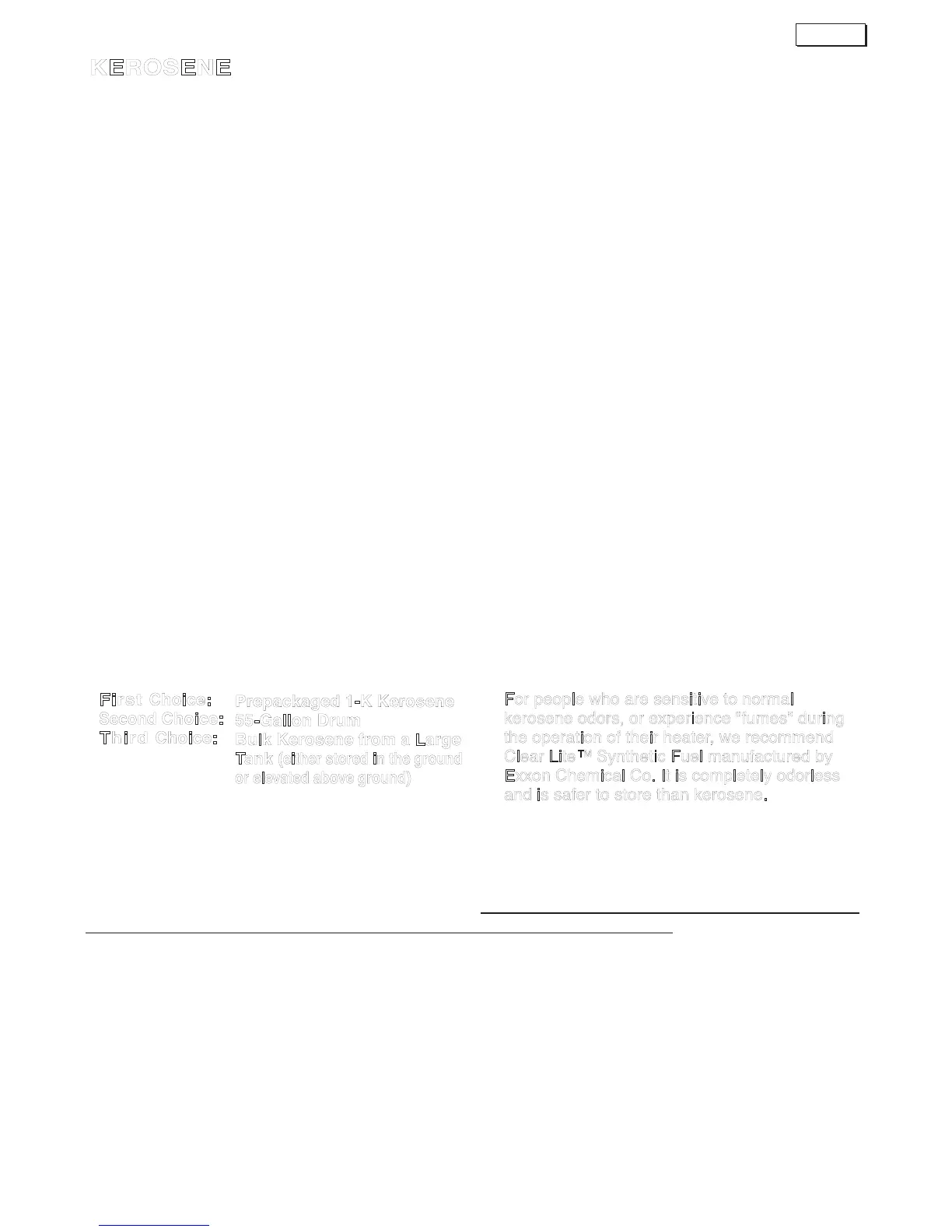
First
Choice:
Second
Choice:
Third
Choice:
Prepackaged 1-K Kerosene
55-Gallon Drum
Bulk Kerosene from a Large
Tank
(
either stored in the ground
or elevated above ground
)
For people who are sensitive to normal
kerosene odors, or experience "fumes" during
the operation of their heater, we recommend
Clear Lite
TM
Synthetic Fuel manufactured by
Exxon Chemical Co. It is completely odorless
and is safer to store than kerosene.
-
16
-


 To Previous Page
 Loading...