EasyManua.ls Logo

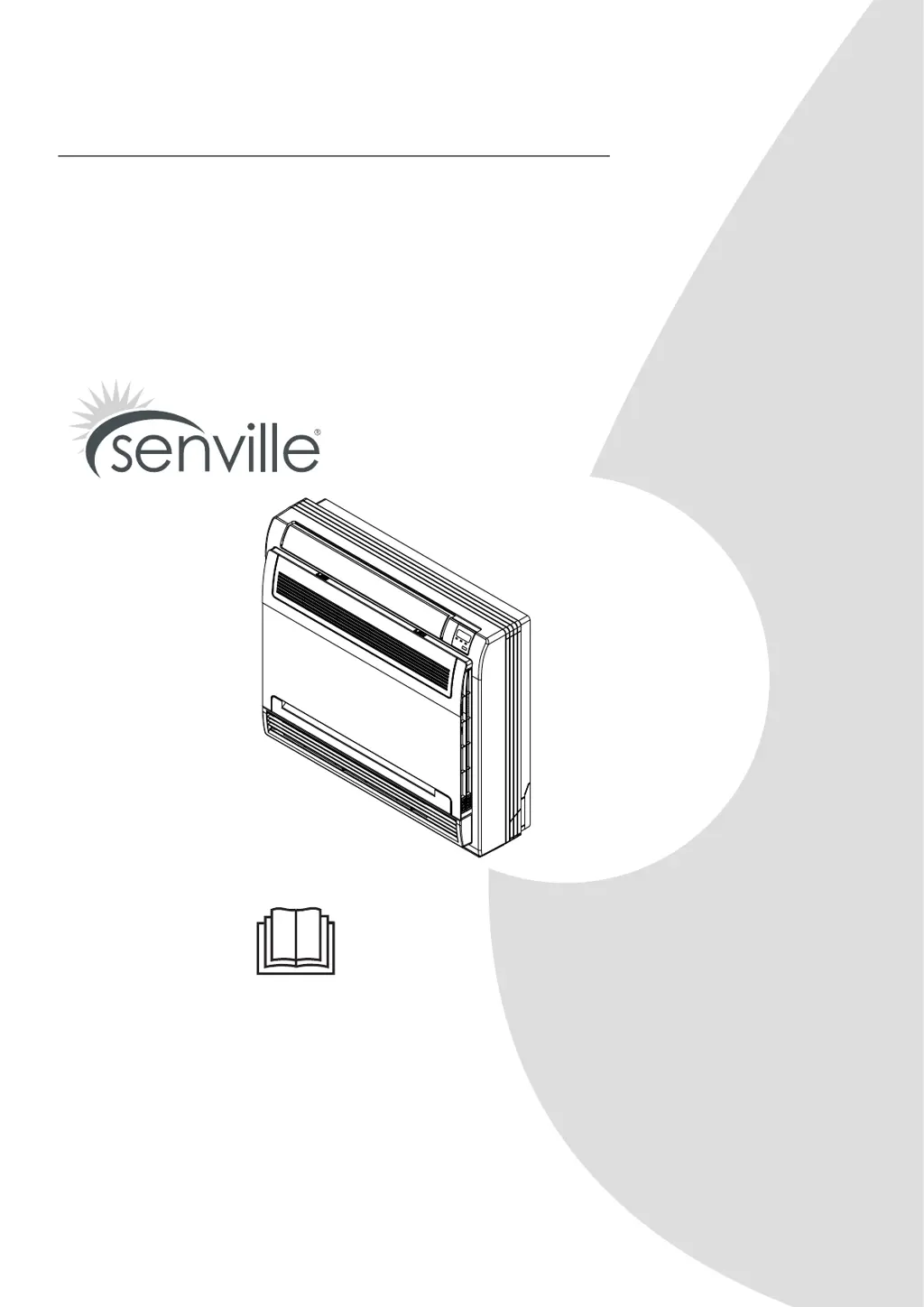
Senville SENA-012HF - User Manual

Senville SENA-012HF
38 pages
Print Icon
To Next Page IconTo Next Page
Loading...
Owner’s Manual &
Installation Manual
IMPORTANT NOTE:
Read this manual carefully before installing
or operating your new air conditioning
unit. Make sure to save this manual for
future reference.
Please check the applicable models, technical
data, F-GAS(if any) and manufacturer information
from the “Owner's Manual - Product Fiche ”
in the packaging of the outdoor unit.
(European Union products only)
FLOOR-STANDING TYPE AIR CONDITIONER

Questions and Answers

  • J
    Jessica SanchezAug 16, 2025
    What to do if my Senville SENA-012HF is not working?
    • K
      Kayla HowellAug 17, 2025
      If your Senville Air Conditioner isn't working, first, check for a power failure and wait for the power to be restored. Ensure that the power is turned on. If the fuse is burned out, replace it. Check the remote control batteries and replace them if they're dead. Also, the unit’s 3-minute protection may have been activated, wait three minutes after restarting the unit. Finally, check if the timer is activated and turn it off.
  • S
    Stephanie KaiserAug 27, 2025
    Why does my Senville SENA-012HF Air Conditioner start and stop frequently?
    • D
      Deborah ColemanAug 27, 2025
      Frequent starting and stopping of your Senville Air Conditioner can be due to several reasons. There might be too much or too little refrigerant in the system, so check for leaks and recharge the system. Incompressible gas or moisture may have entered the system; in this case, evacuate and recharge the system with refrigerant. Another cause may be system circuit blockage, so determine which circuit is blocked and replace the malfunctioning equipment. The compressor could be broken, requiring replacement. Lastly, the voltage might be too high or too low; install a manostat to regulate the voltage.
  • U
    upetersonNov 5, 2025
    Why is my Senville SENA-012HF not cooling properly?
    • J
      Jennifer KleinNov 5, 2025
      Several factors can cause poor cooling performance in your Senville Air Conditioner. The temperature setting might be set higher than the room's ambient temperature, so try lowering it. The heat exchanger on either the indoor or outdoor unit could be dirty; clean the affected heat exchanger and the filter according to instructions. Also, check if the air inlet or outlet of either unit is blocked, and remove any obstructions. Ensure all doors and windows are closed during operation to prevent heat entry. Excessive heat from sunlight can also impact cooling, so close windows and curtains. Too many heat sources in the room may also affect cooling performance, so try to reduce the amount of heat sources. Finally, low refrigerant levels due to leaks or long-term use can be a factor; check for l...

Summary

Safety Precautions

Product Use Safety Warnings

General safety guidelines for using the air conditioner, including warnings about electrical hazards and product misuse.

Cleaning and Maintenance Safety

Safety precautions to follow during cleaning and maintenance activities to avoid electrical shock or damage.

Electrical Safety Warnings

Critical warnings related to electrical connections, power cords, grounding, and internal wiring.

Product Installation Safety

Safety guidelines that must be followed during the installation process to prevent injury or damage.

Fluorinated Greenhouse Gases Information

Information regarding the presence and handling of fluorinated greenhouse gases in the air conditioning unit.

Unit Specifications and Features

Indoor Unit Display and Controls

Details about the indoor unit's display panel, indicators, and manual operation button.

Operating Temperature Ranges

Recommended operating temperature ranges for COOL, HEAT, and DRY modes for optimal performance.

Additional Unit Features

Descriptions of features such as default settings, auto-restart, louver angle memory, and refrigerant leak detection.

Adjusting Air Flow Direction

Instructions on how to manually adjust the horizontal and vertical airflow direction using the unit's controls.

Care and Maintenance Procedures

Cleaning the Indoor Unit and Filter

Instructions for safely cleaning the indoor unit and its air filter, including warnings.

Maintenance for Extended Non-Use

Steps to prepare the air conditioner for long periods of non-use, including cleaning and drying.

Pre-Season Inspection Guide

Tasks recommended for pre-season inspection, such as checking wires, cleaning filters, and checking for leaks.

Troubleshooting Common Issues

Critical Safety Precautions

Essential safety actions to take before attempting any troubleshooting, including when to contact service.

Common Operational Problems

A list of common issues, their possible causes, and recommended solutions for normal operation.

Performance and Error Code Diagnostics

Troubleshooting for unit operation, frequent stops, heating performance, and understanding indicator lamp patterns.

Detailed Error Code Reference

A comprehensive guide explaining various error codes (E, F, P) and their corresponding issues.

Accessories and Installation Overview

Included and Optional Accessories

List of accessories included with the system and information on optional accessories.

Installation Step-by-Step Summary

A visual overview of the entire installation process, from indoor unit to test run.

Unit Parts Identification

Indoor Unit Components

Identification and labeling of the key components of the indoor air conditioning unit.

Outdoor Unit Components

Identification and labeling of the key components of the outdoor air conditioning unit.

Indoor Unit Installation Guide

Selecting the Indoor Unit Location

Guidelines for choosing the proper location, standards, and areas to avoid for indoor unit installation.

Mounting the Indoor Unit Body

Instructions for fixing mounting plates and hanging the indoor unit onto the wall bracket.

Accessing Internal Components

Steps to open the front panel and face plate to access internal parts for pipe connection.

Connecting Piping and Drain Hose

Procedures for drilling wall holes, connecting the drain hose, and insulating piping.

Drainpipe Installation Best Practices

Important notes and considerations for drainpipe installation, including slope and extensions.

Outdoor Unit Installation Guide

Outdoor Unit Location Selection

Guidelines for selecting the outdoor unit's location, including spatial requirements and areas to avoid.

Outdoor Unit Installation Steps

Procedures for installing the drain joint and anchoring the outdoor unit to its base.

Mounting Dimensions and Series Installation

Specifications for outdoor unit dimensions, mounting feet, and relationships for series installation.

Refrigerant Piping Connection

Pipe Length, Bend, and Oil Trap Guidelines

Requirements for refrigerant pipe length, number of bends, drop height, and installation of oil traps.

Pipe Cutting and Flaring Procedures

Instructions for accurately cutting refrigerant pipes, removing burrs, and properly flaring pipe ends.

Connecting and Securing Pipes

Detailed steps for connecting copper pipes between indoor and outdoor units and securing them.

Torque and Bend Radius Specifications

Recommended torque values for tightening pipe connections and minimum bend radius guidelines.

Electrical Wiring Procedures

General Electrical Safety Regulations

Essential regulations and precautions to follow before performing any electrical or wiring work.

Outdoor Unit Wiring Connections

Instructions for connecting wires to the outdoor unit, including cable selection and preparation.

Indoor Unit Wiring Connections

Instructions for connecting wires to the indoor unit, including cable preparation and securing.

Wiring Diagram and Cable Size Guide

Visual wiring diagram and table for selecting power wire size based on minimum circuit amps.

Refrigerant System Evacuation and Charging

Evacuation Preparations and Procedures

Precautions and step-by-step guide for evacuating the refrigerant circuit using a vacuum pump.

Refrigerant Release and Leak Check

Steps for releasing refrigerant after evacuation and verifying system pressure and potential leaks.

Adding Refrigerant (R410 a) Guidelines

Formulas and procedures for calculating and adding additional refrigerant based on pipe length.

Test Run Procedures

Pre-Test Run Checklist

Essential points to confirm before performing the operational test run of the installed system.

Overall System Test Instructions

Detailed steps for conducting the test run, including initial setup and mode selection.

Indoor Unit Functionality Checks

Specific checks for the indoor unit's remote control, louvers, indicators, and manual buttons.

Outdoor Unit Operation Checks

Specific checks for the outdoor unit, including refrigeration system integrity and noise levels.

Drainage System Test

Procedure to verify the smooth flow of the drainage system and check for leaks.

Senville SENA-012HF Specifications

General IconGeneral
RefrigerantR410A
Weight (Outdoor Unit)66.1 lbs
TypeMini Split
PhaseSingle
Cooling Capacity12000 BTU
Heating Capacity12000 BTU
Voltage115V/60Hz
Cooling Area450-550 sq. ft
FeaturesSleep Mode
Operating Temperature (Heating)5°F - 86°F
Refrigerant Pipe Connection1/4" & 3/8"

Related product manuals