
 Need help?
Do you have a question about the Siare Sirio S2 / T and is the answer not in the manual?
Details the main features of the SIRIO S2/T lung ventilator, including ventilation modes and measured parameters.
Explains the necessary connections and power sources for the correct operation of the SIRIO S2/T lung ventilator.
Lists the standards and norms according to which the SIRIO S2/T lung ventilator is manufactured.
Provides critical safety warnings and disclaimers regarding the use and maintenance of the SIRIO S2/T ventilator.
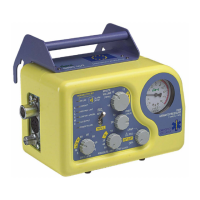
Identifies and describes the main components and controls visible on the front panel of the SIRIO S2/T ventilator.
Details the ports and identification labels located on the left and right sides of the SIRIO S2/T ventilator.
Describes the identification label and mounting points on the bottom of the SIRIO S2/T ventilator.
Guides on the correct electrical connection of the SIRIO S2/T, emphasizing safety and conformity to norms.
Provides instructions and warnings for connecting the SIRIO S2/T to medical gas supplies or cylinders.
Illustrates and explains the correct connection of the silicone patient circuit to the SIRIO S2/T ventilator.
Emphasizes the importance of preliminary functional tests before connecting the SIRIO S2/T to a patient.
Explains how to use the different operating modes: OFF, AUT+AST, PSV, and CPAP on the SIRIO S2/T.
Describes optional functionalities like vehicular power supply, internal battery usage, PEEP adjustment, and variable trigger settings.
Details general warnings and responsibilities regarding the periodic checks and maintenance of the SIRIO S2/T.
Outlines the scheduled maintenance tasks that can be performed by the operator, focusing on cleaning.
Provides instructions for washing disassembled components of the SIRIO S2/T, including recommended pH and rinsing.
Explains the procedure for disinfecting disassembled parts using cold immersion and subsequent rinsing and drying.
Specifies the use of original SIARE spare parts and the recommended replacement intervals for certain components.
Addresses the proper disposal of special waste materials like batteries and accumulators according to local regulations.
Details the tools, connections, and procedures for performing electric and pneumatic calibration on the SIRIO S2/T.
Provides step-by-step instructions for the pneumatic calibration of the SIRIO S2/T, including air source, regulators, and simulator connections.
Outlines the procedures for testing the SIRIO S2/T, including external aspect verification, label checking, and operative mode validation.
Tests the correct operation of different ventilation modes: AUT+AST, PSV, PEEP, and CPAP.
Tests breathing rate, oxygen mixer accuracy, and the power failure alarm functionality.
Tests bronchomanometer accuracy, circuit leakages, and low pressure/apnea alarms.
Tests high pressure and gas supply alarms, and confirms overall unit functionality.
Provides a schematic diagram illustrating the electrical connections within the SIRIO S2/T ventilator.
Presents a schematic diagram showing the pneumatic pathways and components of the SIRIO S2/T ventilator.
Diagram of the main electronic board of the SIRIO S2/T, showing component layout and key parts.
Schematic of the power board for the SIRIO S2/T, detailing power supply circuits and components.
Diagram of the analogic board for the SIRIO S2/T, illustrating signal processing and sensor interfaces.
Schematic of the logic board for the SIRIO S2/T, showing the microcontroller and associated circuitry.
Specifies intended applications and patient types (adults, children, newborns) for the SIRIO S2/T.
Details ventilation types, control modalities, and available operating modes for the SIRIO S2/T.
Lists key performance ranges: frequency, I:E ratio, pressure limits, PEEP, tidal/minute volumes.
Covers safety devices, alarms, power supply, and battery operation details for the SIRIO S2/T.
Describes external connections, user interface, and gas feeding requirements of the SIRIO S2/T.
Provides definitions for key abbreviations used in the SIRIO S2/T manual, such as PAW, RATE, and alarms.
The Sirio S2/T is a portable lung ventilator designed for emergency, first-aid, and intra-hospital transportation, suitable for use with adults, children, and newborns. It offers various ventilation modes and adjustable functions to cater to diverse patient needs.
The Sirio S2/T operates as a time-cycled ventilator, capable of automatic ventilation synchronized with the patient's spontaneous breathing activity (AUT+AST mode). It also supports assisted ventilation with pressure support (PSV) and continuous positive airway pressure (CPAP). The device measures and displays instantaneous airway pressure, spontaneous patient activity in AUT+AST and PSV modes, and provides alarms for various critical conditions. These alarms include low airway pressure/apnea, gas supply issues, low battery, high airway pressure/limit, and power failure.
The ventilator's front panel features several control knobs and indicators for easy operation. The "MINUTE VOLUME" knob allows setting the liters per minute delivered to the patient, with suggested settings marked for adult and pediatric patients. The "MODES" knob enables selection between OFF, AUT+AST, PSV, and CPAP operating modes. In AUT+AST mode, the "RATE" scale is used to adjust the breathing cycle frequency. The "PRESSURE LIMIT" knob regulates the maximum airway pressure, while the "PEEP" knob sets the end-tidal positive pressure. An oxygen mixer allows selection between 50% O2 and 100% O2, operating when connected to an oxygen supply. The device also includes a mechanical airway pressure gauge ("PAW AIRWAYS PRESSURE") for real-time monitoring.
For safety, an "ALARM RESET" button silences acoustic alarms for 20 seconds, re-enabling if airway pressure exceeds 8 cmH2O. This button also silences the "POWER FAILURE ALARM." It is recommended to connect a breathing monitor for critical patients to verify ventilation volumetrically.
The Sirio S2/T can be powered by a built-in battery, providing at least 6 hours of autonomy when fully charged. An external 12 Vdc battery, such as from an ambulance or helicopter, can also be used. The device includes an internal system for recharging its battery via the main power supply.
The trigger level, which detects spontaneous patient activity, is set by default at -1 cmH2O but can be varied from -1 to -6 cmH2O. This adjustment is made by switching on the ventilator while holding the "ALARM RESET" key, then pressing it again to cycle through sensitivity levels. The selected sensitivity is maintained until the unit is switched off, reverting to the default upon restart.
Connections for the patient circuit include an "EXP. VALVE" for the expiratory line and an "INSP. VALVE" for the inspiratory line. An "AIR FILTER" allows the patient to inspire ambient air during spontaneous ventilation if the ventilator stops or provides insufficient volume. The "GAS SUPPLY" inlet connects to oxygen or medical compressed air at 2.8-6 bar.
Routine maintenance, including cleaning, disinfecting, and sterilizing parts, is crucial for the equipment's longevity and patient safety. The housing can be cleaned with a disposable cloth moistened with regular detergent or disinfectants like Buraton 10F. Care must be taken to prevent liquid from entering internal parts. Halogenated compounds, strong organic acids, and oxygenated compounds should not be used as detergents.
Disassembled components can be washed with a pH 4-8.5 detergent and rinsed with running water, preferably decalcified, then thoroughly dried. For disinfection, components can be immersed in a disinfectant solution according to manufacturer instructions, followed by rinsing and drying.
Scheduled maintenance, including inspections and tests, should be performed by SIARE authorized personnel every 800 operating hours or at least every 6 months for limited use. All maintenance activities are recorded in the equipment's maintenance file. Only original SIARE spare parts or SIARE-checked parts should be used for replacements. The patient circuit components are recommended for replacement every 6 months, and the 12Vdc battery should be replaced every 24 months.
Special waste materials, such as batteries, accumulators, and O2 cells, must be disposed of in appropriate containers according to local norms. They should not be incinerated, opened, or recharged.
The service manual provides detailed instructions for electric and pneumatic calibration, including necessary tools like multimeters, manometers, oscilloscopes, and flow analyzer testers. Calibration procedures involve adjusting trimmers and regulators to ensure accurate frequency, voltage, flow, and pressure readings. Comprehensive testing procedures are outlined to verify external aspects, label presence, operative modes (AUT+AST, PSV, PEEP, CPAP), RATE accuracy, oxygen mixer functionality, power supply failure alarms, bronchomanometer readings, leakage absence, and low pressure/apnea alarms. These tests ensure the ventilator operates safely and correctly according to its design specifications.
 General
| FiO2 | 21 - 100% |
|---|---|
| Airflow | Up to 180 L/min |
| Frequency | 50/60 Hz |
| Ventilation modes | SIMV, CPAP, PSV |
| Respiratory rate | 4 - 80 bpm |
| Voltage | 100 - 240 VAC |

 To Next Page