EasyManua.ls Logo

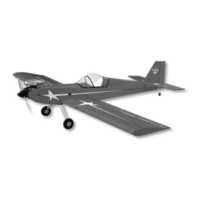
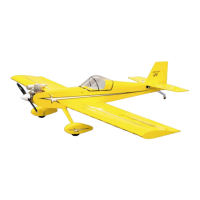
SIG FOUR-STAR 60 - User Manual

SIG FOUR-STAR 60
18 pages
Print Icon
To Next Page IconTo Next Page
Loading...
1
FOUR-STAR 60 ARF ASSEMBLY MANUAL
INTRODUCTION:
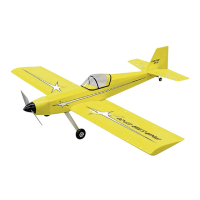
SIG’s FOUR-STAR 60 ARF combines the classic looks and
performance of Sig’s Four-Star series in an almost ready to fly
package. The FOUR-STAR 60 ARF is easy to fly and makes an
ideal choice for your first low wing airplane. Intermediate and
advanced flyers will love the maneuverability and smooth handling
of the Four-Star 60 ARF, making it the sport model you'll want to
take to the flying field every time.
Set the control throws at the suggested low rates for your first
flights, throttle back and enjoy a truly honest, gentle airplane. As
your skill level advances, dial-up the control throws a little to enjoy
a very aerobatic airplane. Inside and outside loops, rolls, inverted
flight, and snap maneuvers are all in the FOUR-STAR 60 flight
envelope.
The FOUR-STAR 60 ARF kit has been engineered to get you into
the air quickly as possible with an R/C model that will truly last.
The airframe has been expertly built and covered with AeroKote
.
This material is both rugged and easy to repair. The covering trim
scheme is provided on three large peel & stick mylar decal sheets.
This assembly manual has been specifically sequenced to get
your FOUR-STAR 60 ARF assembled and into the air very quickly.
We strongly suggest that you read through the manual first to get
familiar with the various parts and their assembly sequences. The
proper assembly and flying of this aircraft is your responsibility. If
you are new to the sport/hobby of radio control, we urge you to
seek the assistance of a qualified person to help you assemble this
model airplane. If you do not understand a particular assembly
step or sequence, do not guess - find qualified help and use it.
RADIO EQUIPMENT:
The FOUR-STAR 60 ARF requires a standard 4-channel radio
system and five standard servos. We have used and can highly
recommend both the Hitec
and Airtronics
®
systems. Both of
these very affordable and reliable radio systems offer all the
features you’ll need for this and the many other R/C aircraft in your
future. For reference, this assembly manual shows the installation
of a Hitec
radio system with standard servos. In addition, you will
need two aileron 12” servo lead extensions and a 6” aileron servo
Y-harness for connection to the receiver.
ENGINE SELECTION:
Engine choices for the FOUR-STAR 60 ARF are many. The
FOUR-STAR 60 ARF has been designed to produce excellent
performance when using the recommended engine sizes. Do not
use an engine larger than recommended.
2-stroke engines are a perfect choice to power your FOUR-STAR
60 ARF. Any plain-bearing or bearing equipped .60 to .75 sport
engine would be a good choice. For example, a great choice
would be the Irvine .61 engine. Like all Irvine engines, the .61 is
powerful, reliable, and quiet. Whatever engine you choose, take
the time to carefully break it in according to the manufacturer’s
instructions. A good running, reliable engine is a minimum
requirement for the enjoyment of this or any R/C model aircraft.
The FOUR-STAR 60 ARF can also use a variety of 4-stroke
engines. Any 4-stroke engine in the .65 - .90 displacement range
should provide plenty of power. An important thing to remember is
that typical 4-stroke engines have their throttle arms usually
located differently than throttle arms on 2-stroke engines. If you
want to power this model with a 4-stroke engine, you will likely
have to install a new, relocated throttle cable tube. While this is not
difficult, it is something to consider when choosing an engine.
COVERING MATERIAL:
Your FOUR-STAR 60 ARF has been professionally covered using
AeroKote
. This material is well known for its ease of application,
light weight, and consistency of color. If you live in a dry climate,
you may notice that some wrinkles might develop after removing
the covered parts from their plastic bags. This is perfectly normal
in low humidity climates. Your model was built and covered in a
part of the world with relatively high humidity and therefore the
wood was likely carrying a fair amount of moisture. When exposed
to drier air, the wood typically loses this moisture, dimensionally
“shrinking” in the process. In turn, this may cause some wrinkles.
However, wrinkles are easy to remove by just using a hobby type
heat iron.
R
Question and Answer IconNeed help?

Do you have a question about the SIG FOUR-STAR 60 and is the answer not in the manual?

Summary

Introduction to the Four-Star 60 ARF

About the Four-Star 60 ARF

Introduces the SIG Four-Star 60 ARF, highlighting its ease of flight and maneuverability for hobbyists.

Engine Selection and Requirements

Engine Type Recommendations

Discusses suitable 2-stroke and 4-stroke engines for optimal performance.

Covering Material Specifications

AeroKote Covering Properties

Details the AeroKote™ covering material, its durability, and how to manage minor wrinkles.

Radio Equipment and Setup

Required Radio System

Specifies the need for a 4-channel radio system and five standard servos for the aircraft.

Required Tools for Assembly

Essential Assembly Tools

Lists necessary tools and materials for assembling the model airplane kit.

Additional Items Required

Optional Items for Assembly

Lists items not provided in the kit but needed for completion.

Assembling the Wing

Installing Aileron Servos

Guides on preparing wing panels and installing aileron servos and their extensions.

Installing Ailerons, Horns, and Pushrods

Attaching Aileron Control Horns

Details the process of attaching control horns to the ailerons.

Connecting Aileron Pushrods

Explains how to connect pushrods to servos and control horns for aileron function.

Joining the Wings

Wing Panel Assembly Procedure

Instructions for joining the two wing panels into a single unit using joiners.

Fitting the Wing to the Fuselage

Attaching Wing Assembly to Fuselage

Describes how to mount the assembled wing onto the aircraft fuselage.

Assembling the Fuselage

Preparing Fuselage for Tail Surfaces

Details opening up necessary slots and holes on the fuselage for tail components.

Installing the Main Landing Gear

Mounting Main Landing Gear

Provides steps for attaching the main landing gear assembly to the fuselage.

Engine and Fuel Tank Installation

Fuel Tank Setup and Installation

Guides on assembling and installing the fuel tank into the aircraft's compartment.

Engine Installation

Engine Mount Components

Lists components required for mounting the engine and preparing the motor mount.

4-Stroke Installation Details

Adapting for 4-Stroke Engines

Specific instructions for installing 4-stroke engines, including pushrod housing relocation.

Tail Surface Installation

Fuselage Preparation for Tail Surfaces

Describes removing spacer blocks from the fuselage to accept the horizontal stabilizer and vertical fin.

Hinges for Elevator Assembly

Details the process of hinging the elevator halves using joiner wire and epoxy.

Radio Installation

Installing Receiver and Servos

Guides on installing the radio receiver and remaining servos into the fuselage.

Pushrod Assembly and Connection

Throttle Pushrod Connection

Explains how to connect the throttle pushrod from the engine to the servo.

Rudder & Elevator Pushrod Connections

Details connecting rudder and elevator pushrods to their respective servos and control horns.

Spinner Assembly

Installing the Spinner Assembly

Instructions for fitting the spinner back plate, propeller, and nose cone.

Canopy Installation

Securing the Canopy to the Fuselage

Describes the procedure for attaching the canopy using silicon washers and screws.

Control Surface Travel Chart

Recommended Control Surface Throws

Provides recommended low and high rate travel settings for control surfaces.

Flying the Four-Star 60 ARF

Pre-Flight Checks and Setup

Covers essential checks and radio range checks before the first flight.

Takeoff and Initial Climb

Details the procedure for taking off and climbing to a safe altitude.

Landing Approach and Execution

Provides guidance on performing landings, including crosswind corrections and three-point landings.

Safety and Disclaimer Information

Safety and Operator Responsibility

Emphasizes safety, user responsibility, and the capabilities of the model.

Contacting Sig Manufacturing

Provides contact information for customer support, parts ordering, and technical assistance.
SIG FOUR-STAR 60 Specifications

General IconGeneral
BrandSIG
ModelFOUR-STAR 60
CategoryToy
LanguageEnglish

Related product manuals