MRMap Development Team 14/01/2009
Introduction:-
The concept of re-broadcasting:-
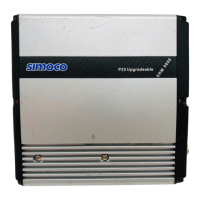
The devices to be described are intended to act as two-way signal enhancement units to enable
radio communications into difficult-to-reach areas. To this end, a system using two simplex
transmissions on different frequencies has been adopted where the Base or Incident Command
Post (ICP) transmits and receives on one channel and the Hill-Parties do likewise on their Team
Working Channel (TWC). From this it can be seen that operation at the Hill-Party end remains
simplex for normal comms on the hill. Hand-portables can still speak to each other whilst taking
advantage of the increased area or distance coverage provided by the re-broadcast device.
The device itself is nominally mounted in a vehicle that is dynamically positioned to allow for the
translation of the Base transmission onto the frequency used by the Hill-Party and vice versa.
When using the re-broadcast unit, Base cannot
speak directly to the Hill-Party radios. It must go
via the re-broadcast device hence the positioning of this vehicle is critical to operation of the
system as a whole. Having said that, it is strongly recommended that Bases / ICPs do monitor
the TWC as it is then often possible to make direct contact with a party that is not in the cover-
age area of the rebroadcast unit.
As originally agreed in negotiations with OfCom for permission to use such a device, it must be
clearly stated from the outset that permanent operation of re-broadcast transmitters was not
agreed by the authorities. Re-broadcast should be used to alleviate individual communications
problems on a case-by-case basis. When normal methods of communications fail. That is, when
direct communications between the Base/ICP and the deployed Hill-Party hand-portable radios is
not directly possible due to the nature of the immediate terrain and not the terrain in general.
More rebroadcast channels have been requested so that if the topography of any Team’s area
forces continuous use of a re-transmission system then they may deploy a unit on a more per-
manent basis. At the time of update August 2008, no additional link channels have been author-
ised.
We are, however, now authorised for operation of re-broadcast devices from perma-
nent locations.
It is important that this is fully understood by any Team wishing to use re-broadcast as there are
almost certainly going to be incidences of mutual interference between different Teams during
the initial testing phase and, indeed, in their normal operational usage. Any team operating out-
side the conditions of use of re-broadcast devices has no redress if it receives an unacceptable
level of interference. Conversely, any team causing interference to others may well find OfCom
on their doorstep. Always bear in mind that the new ‘MR’ channels are subject to the same level
of official monitoring that is applied to the rest of the marine band.
Rob Brookes/Tom Taylor 14 January 2009


 To Next Page
 Loading...