14 15
Additional Tips (Continued)
Boat bottom cleaners containing muratic or
other acids have a highly corrosive effect on both
painted, galvanized or aluminum trailers and
should not be allowed to contact the trailer.
Use caution when cleaning tires with steel wool
or bristle brush. These types of abrasive materials
must not come in contact with the wheels.
Never allow any harsh chemicals or tire cleaner
to contact with the wheels, as they will damage
the appearance of the wheel permanently. Never
spray cold water on extremely hot wheels. Always
allow time to cool before cleaning with soap and
water or the recommended wheel cleaner
Wheel Installation
Clean and inspect all stud threads and mounting
surfaces before installation. Threads must not
be lubricated, but must be free of corrosion, rust,
burrs and fractures. Replace studs if they are
corroded beyond reasonable repair, if threads are
stripped, or a fracture is found. Check and make
sure the approved lug nuts are correct for the
application. When placing the wheel on the studs,
there will be an apparent looseness of fit, until the
lug nuts are applied.
Check the lug nut thread engagement. Every stud
must be long enough to thread into the lug nut
a length at least equal to the stud diameter. For
example: a 1/2” thread diameter must thread into
the lug nut at least a 1/2”. Check for this problem
on every stud, some may be different lengths. If
there is less than one stud thread engagement, do
not install wheels.
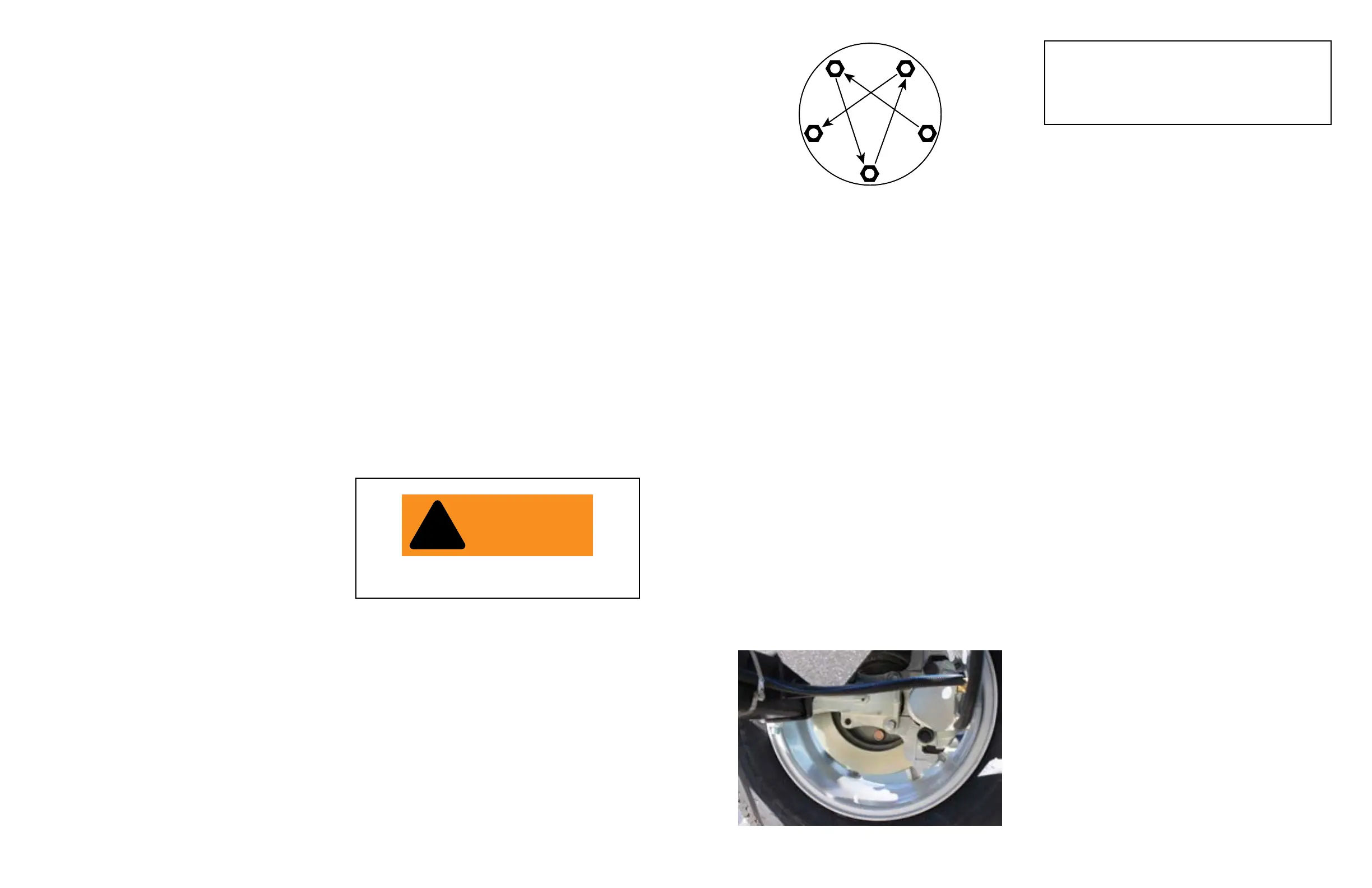
Lug nuts must be applied in a star or crisscross
pattern until desired torque is reached.
Wheel Alignment
A wheel alignment adjusts the angles of the
wheels so they are positioned correctly relative to
the vehicle’s frame. This adjustment maximizes
the life of your tires. These adjustments require
special equipment and should be performed by a
qualified technician.
Tire Repair
The proper repair of a punctured tire requires a
plug for the hole and a patch for the area inside
the tire that surrounds the puncture hole.
Punctures through the tread can be repaired
if they are not too large, but punctures to the
sidewall should not be repaired. Tires must be
removed from the rim to be properly inspected
before being plugged and patched.
Check All Nuts and Bolts
Even though SKEETER uses self-locking, vibration
resistant nuts, it is the owner’s responsibility to
make sure all of the fasteners are tight before
using the trailer not just the first time you use it,
but on a regular basis.
Check you lug bolts or nuts tightness before every trip.
Lug Bolt or Nut Tightening Method
Initially tighten to 20-25 lbs, using a criss-cross
tightening sequence on a 5 bolt wheel. Finish
torquing per manufacturer’s recommendations
on all new trailers. SKEETER is not responsible for
damage from loose lug nuts. Re-torque after 25-
50 miles of use and on a periodic schedule from
then on. Lug bolts or nuts should be clean and dry.
Do not put grease or other lubricant on them.
WARNING
!
Lug Nut Pattern
Most state laws require brakes on trailers, check
laws in your state.
Always keep tie-downs tightly fastened. Always
use tie-downs or similar securing devices to secure
the boat to the trailer, as well as the winch strap/
cable and safety chains/cables supplied with your
trailer.
Trailer Braking Systems
All four braking systems offer excellent trailer
braking, but each have unique qualities.
Hydraulic Surge (Disc Brakes)
Hydraulic surge disc brakes operate on the same
idea as hydraulic surge drum brakes. The disc
brake needs a special actuator with a back-up
solenoid wired into the tow vehicle’s reverse
lights. When the tow vehicle is put in reverse, the
solenoid locks out the braking system allowing
the trailer to back up on level ground without the
brakes locking up. Since you can see most of the
disc brake components, they are easy to keep
clean and maintain. See the brochure in your new
trailer packet for further information or visit
www.ufpnet.com
In many states, trailers are required to have brakes
on all wheels.
Brake Operation and Maintenance
Contact your state motor department, your
SKEETER Dealer or www.boats.com/trailerclub/
traileringlaws.asp for the trailer brake
requirements in your state.
Inspect your brake system on a regular basis and
adjust if necessary and replace any damaged or
worn parts. Your SKEETER Dealer can also inspect
your brakes. Replace brake fluid with DOT3, which
is available from most auto part stores.
Trailer brake manufacturers recommend that when
the boating season is over, the brake drums should
be removed and the brake assembly should be
inspected. All parts should be clean, dry and free
from corrosion.
With hydraulic brakes, do not shift to a lower
gear and use your engine as a brake when going
downhill. This could activate the trailer’s brakes
continuously for the duration of the downhill
run, causing overheating and fading to the point
of possibly losing your trailer’s braking ability
completely.
A better way is to slow down as you approach
the top of the hill, and maintain an even, slow,
controlled downhill speed with repeated
applications of your tow vehicle’s brakes, allowing
enough time in between for the brakes to cool off.
Brake Adjustments
Only a qualified mechanic trained in the repair and
maintenance of braking systems should attempt
brake adjustment, repair and replacement. To
make the brake adjustments to your SKEETER
trailer, follow the method explained below. If you
are not sure about making these adjustments,
your SKEETER Dealer can make these adjustments
for you.
Tighten
First
1
2
3
5
4
Tighten
Last
IMPORTANT


 To Next Page