X
T
= =
b
MAC
1,5
X
L
= m
X
T
= % MAC
Connected with chosen engine and equipment, the airplane empty weight is 220 to 290 kg.
This weight would never extend 296 kg !
For normal range of crew weight range from minimum 65 kg of one pilot to maximum crew weight :
Centers of gravity positions of the basic weight MUST BE in the range
47 to 52 % MAC
Forward centers of gravity positions (under 47 % MAC) are the resource of bigger forces and force gradients to the
controls. Backward centers of gravity positions (over 52 % MAC)
are INADMISSIBLE
for the holding
of positive force gradients in the controls - especially during higher flight speeds and speeds near the stall speed.
This center of gravity position of basic empty weight accords with technical specification and secures the
observance of specified operating
centers of gravity positions from 21 to 36,6 %
MAC for
approving range of the crew weight according to the flight manual.
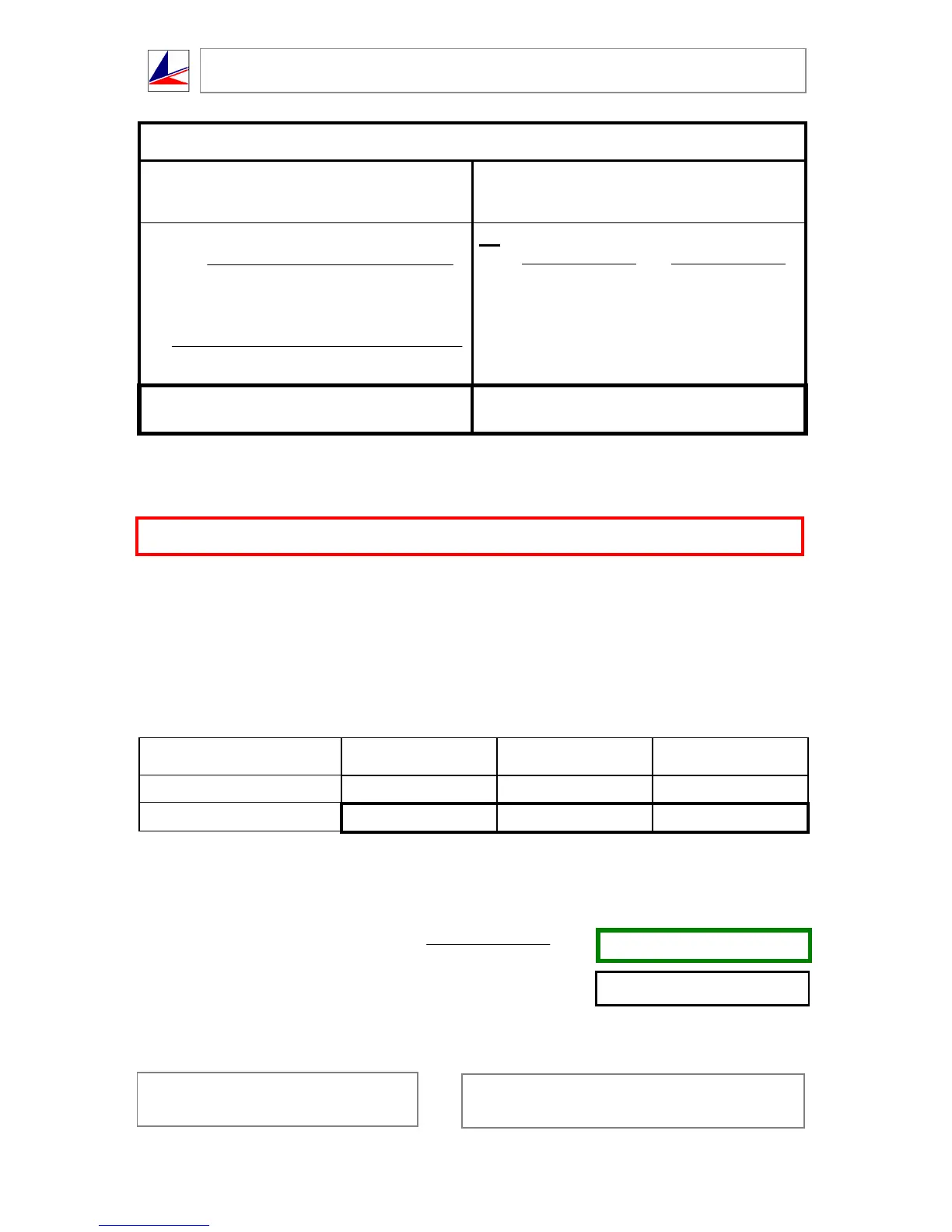
Maximum crew weight is 450 kg – M
L
( the empty weight of this aircraft ) – fuel weight (circa 0,72 kg/l ):
Quantity of the fuel in the tank
¼
of fuel (circa 7 kg)
½
of fuel (circa 14 kg )
Full tank
(circa 28 kg
)
Maximum crew weight [ kg ]
Maximum crew weight [ lb ]
If you want to reduce the control forces for flying in maximum take-off weight configuration and you have no
problem with lower weight single flights, you can use rearer centers of gravity positions too.
For this purpose, you need to recalculate minimum single pilot weight ( for 2
°
forward swept wing ) :
M
L
* ( X
L
- 0,55 )
Minimum single Pilot weight limit = =
0,85
… or measure the airplane including some concrete lower weight pilot on the pilot seat to decide 36,6% gravity
position limit. For this measurement you can use the same table ( excluding additional ballast of course ).
Date : Technician worker :
kg
lb


 To Next Page
 Loading...