CUSTOMER SERVICE 1-800-723-0316 FROM 8:00AM TO 5:00PM PST MONDAY-FRIDAYCUSTOMER SERVICE 1-800-723-0316 FROM 8:00AM TO 5:00PM PST MONDAY-FRIDAY
PAGE 4 PAG E 5
WEIGHT LIMITS
The weight limit of the adjustable base is 750 pounds evenly distributed across the
surface. The weight limit includes the weight of the mattress and users. Exceeding this
weight limit could damage the adjustable base and/or cause injury and will void the
warranty. This product is not designed to support or lift the total maximum weight limit
by the head or the foot section only. Consumers should not enter or exit the adjustable
base with any portion of the adjustable base in the raised position; always return the
adjustable base to a flat position prior to use. If the weight limit is exceeded on the
head or foot mechanism, the master control box will stop all functions. Exceeding the
recommended weight limit restrictions could damage the adjustable base and void the
warranty.
OPERATING NOISES
The massage function emits a noticeable tone during operation. As the massage intensity
level is increased, the tone will intensify. The noise will be less audible on a carpeted floor
and more noticeable on a hard floor surface.
During typical operation, the wheels, which allow the adjustable base to articulate, will
make contact with the steel platform supports of the adjustable base, creating a contact
noise. When entering, exiting, or shifting weight on the adjustable base, this contact
noise may be audible as the wheels make contact with the steel platform supports of
the adjustable base. This is normal. Depending on the incline of the adjustable base, the
noise levels can also potentially increase.
SAFETY INFORMATION
SAFETY INFORMATION
ZERO CLEARANCE BEDFRAME REQUIREMENTS
If the legs on the adjustable base are not used, it is the consumer’s responsibility to:
* Ensure the surface or bedframe paired with the adjustable base can withstand
and support the combined weight of the mattress, users and adjustable base in a
zero clearance setup.
* Ensure the adjustable base will not slide, shift or fall off the surface or bedframe.
* Ensure the adjustable base is level and supported on all 4 corners.
* Ensure the power cord and wires are not pinched or strained.
* The consumer may need to contact the manufacturer of any furniture paired with
the adjustable base to verify if the zero clearance option is safe.
FCC COMPLIANCE
This device complies with part 15 of the FCC Rules. Operation is subject to the following
two conditions: (1) This device may not cause harmful interference and (2) this device
must accept any interference received, including interference that may cause undesired
operation.
To comply with the FCC RF exposure compliance requirements, no change to the
antenna or the device is permitted. Any change to the antenna or the device could
result in the device exceeding the RF exposure requirements and void user’s authority
to operate the device.
Radio Frequency: 2.4 GHz
SAFETY
FEATURES
* Wireless Remote
* Head up/down
* Foot up/down
* Pillow Tilt up/down
* Flat Position Preset
* Zero Gravity Preset
* Anti-snore Preset
* TV Lounge Preset
* Memory Button
* Dual or isolated massage massage at the head and/or foot with three
intensities and a timer for 10, 20, or 30 minute intervals.
* Bluetooth
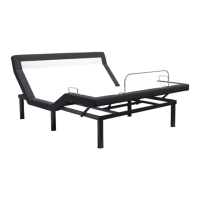
* Mattress Retainer Bar
* Side Retainer Bars
* Emergency Battery Strip
TWIN XL/CKS SIZES ONLY
* Connecting Straps: prevents two adjustable bases from drifting apart if used without a
bedframe.
* Synchronization Cable: to synchronize two adjustable bases in movement and
features.
* Velcro Securing Straps: for zero clearance applications to secure the adjustable base
to a bedframe slat system.
INTRODUCTION
INTRODUCTION
Mattress Retainer BarSide Retainer BarsPillow Tilt
CAPABILITIES
* Zero Clearance: designed to sit on top of a flat surface or compatible bed
frame, without the use of legs.
* Weight limit: 750 lbs. including the mattress and users.
* Adjustable bases can be used:
* Within a bedframe with or without slats
* On top of a platform bedframe
* As a standalone bed
INTRODUCTION


 To Next Page
 Loading...