Instructions for Use30
Ice Formation on the Inner Rear Wall
As long as the defrost water runs to the
channel and through the outlet to the drain pan
on the compressor, automatic defrosting of the
appliance is assured.
In case the ice formation on the inner back wall
is increased (3-5 mm), ice should be manually
defrosted.
Set the thermostat knob to STOP (0) position
and leave the door open. Never use electric
devices for defrosting and do not scrape the
ice or frost layer with sharp objects.
After completed defrosting, turn the knob to
desired position and close the refrigerator door.
The cause of increased ice formation may be
one of the following:
− the door does not seal well (clean the
gasket if it is contaminated, or replace it
if it is damaged);
− the door was frequently opened or it
was left opened for too long;
− the food stored in the refrigerator was
warm;
− the food or dish is touching the inner
back wall.
Water is Leaking From the Refrigerator
In case the discharge water outlet is clogged,
or the defrost water drips over the channel,
water leaks from the refrigerator.
• Clean the clogged outlet, for example with a
plastic straw.
• Manually defrost the increased ice layer.
See Ice Formation onthe Inner Rear Wall.
Noise
Cooling in refrigerating-freezing appliances is
enabled by the cooling system with
compressor, which produces noise. How noisy
the appliance is depends on where it is placed,
how it is used and how old the appliance is.
• During the operation of the compressor the
noise of liquid is heard and when the
compressor is not operating, the refrigerant
flow is heard. This is a normal condition and
it has no influence whatsoever on the
lifetime of the appliance.
• After starting the appliance, the operation
of the compressor and the refrigerant flow
may be louder, which does not mean that
something is wrong with the appliance and it
has no influence on the lifetime of the
appliance. Gradually the noise is reduced.
• Sometimes unusual and stronger noise is
heard, which is rather unusual for the
appliance. This noise is often a
consequence of inadequate placing.
− The appliance shall be placed and
levelled firmly on solid base.
− It should not touch the wall or kitchen
units standing next to it.
− Check the accesories in the interior of
the appliance, they should be placed
correctly in their positions; also check
the bottles, tins and other vessels that
might touch each other and rattle.
Bulb Replacement
Before replacing the light bulb, disconnect the
appliance form the power supply.
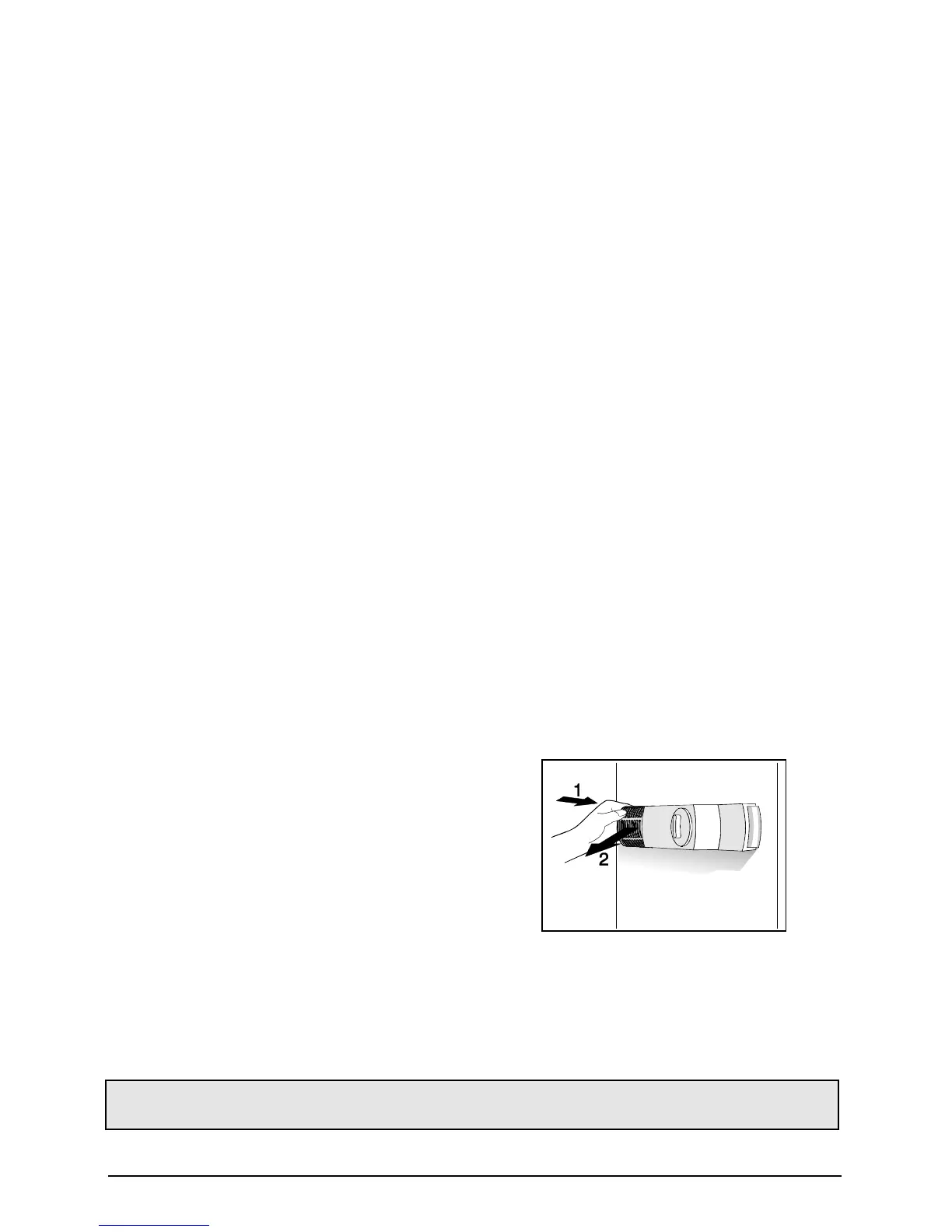
Press the cover at the rear side (in the arrow 1
direction) and remove the plastic cover (in the
arrow 2 direction). Replace the bulb with a new
one (E14, max. 15 W).
Don't forget: the old bulb does not belong to
organic waste.
Light bulb is consuming good therefore our
in-guarantee service does not relate to it.
WE RESERVE THE RIGHT TO ALTER THE SPECIFICATIONS WITH NO INFLUENCE
ON THE OPERATION OF THE APPLIANCE.



 To Previous Page