19
Operating Class
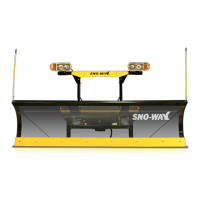
The 22 series Sno-Way plow is specifically designed for
applications on light duty trucks and SUVs.
Before the Season Begins
1. Inspect plow vehicles brakes, headlights, plowing
lights, windshield wipers, flashers, electrical system, and
cooling system for proper operation.
2. Inspect plow assembly including sub frame for any
damage or excessive wear. Replace parts as necessary.
3. Inspect all fasteners to insure they are properly
tightened. Re-tighten loose fasteners to the proper torque
(Refer to torque specification chart in this manual).
4. Apply a small amount of light oil to: Quick-tatch pin
and handle assemblies, pivot pins between the blade and
swing frame, and pivot pins at lift and swing cylinders.
Also lubricate jackstand pins. (See Figure 2-1).
5. If wear is noticed between the A-frame and the swing
frame apply a good quality anti-seize lubricant to this
area.
6. Clean and repaint any exposed metal parts with
corrosion resistant enamel.
7. Check free play between the a-frame and swing
frame pivot. Adjust if necessary. (See "Break In Period"
on page 14).
8. Check the oil level and repair any oil leaks. (See
"THEORY OF OPERATION" on page 27).
9. Inspect electrical connectors. Make sure the contacts
are clean, and apply a small amount of dielectric grease.
10. Install auxiliary and flashing lights (if not equipped).
Ensure auxiliary lights are aimed properly (with the plow
raised).
11. If ballast is required, position and secure ballast
behind rear wheels, for optimum performance.
Transporting Vehicle With Plow Attached
1. Always install the cylinder lock clamp when the plow
is raised and the operator is not engaged in plowing
operations.
NOTE: Note: If cylinder lock clamp is not installed during
transport equipment failure or inadvertent operation of
the controls could allow the plow to fall.
2. Position the blade out of the beam path of the
headlights before driving.
3. Do not exceed 45 M.P.H. when driving with the
snowplow attached. Braking distance is increased and
handling impaired at speeds above 45 M.P.H.
4. Reduce speed when crossing railroad tracks or when
road conditions deteriorate.
5. Never change blade angle or height while driving.
6. Inspect plow and attaching hardware for damage
before transporting or plowing.
Plowing Like A Pro
NOTE: The air bag is factory set to deploy at a certain
acceleration level. The air bag will deploy with the plow
attached if an obstruction is hit with enough force to
reach this level. Always plow within the recommended
plowing speeds and know the area you are plowing to
avoid any obstructions.
NOTE: For better clean up of hard packed snow; raise
the disc shoes so that the cutting edge of the blade
comes into direct contact with pavement. Use the lowest
possible gear to place maximum power behind the cut-
ting edge.
For instructions on using the plow controller to manipulate
the plow see the manual included with your plow control
package.
CAUTION
Remove the plow when driving extended
distances at temperatures above 40 deg. F, the
plow blocks enough airflow to cause it to
overheat at temperatures above 40 deg. F.
WARNING
Wear your seat belt! Contact with a hidden
obstruction can cause serious personal injury
from bodily contact within the vehicle cab or
whiplash from sudden stops.
FAILURE TO FOLLOW CAN RESULT IN INJURY
OR DEATH
PLOWING OPERATION


 To Next Page
 Loading...