63
GB
Additional Information
AM tuner section
Tuning range
Antenna Loop antenna
Intermediate frequency
450 kHz
General
Power requirements
Power output (DIGITAL MEDIA PORT)
DC OUT: 5 V, 0.7 A MAX
Power consumption
Power consumption (during standby mode)
0.3 W
Dimensions (width/height/depth) (Approx.)
430 × 145 × 306 mm
including projecting parts
and controls
Mass (Approx.) 7.7 kg
Speaker section
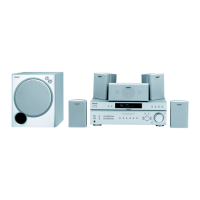
• Front speakers (SS-MSP700)
• Center speaker (SS-CNP700)
• Surround speakers (SS-SRP700)
Front/center speakers
Full range, magnetically
shielded
Surround speakers Full range
Speaker unit 70 mm, cone type
Enclosure type Close type
Rated Impedance 6 ohms
Dimension (width/height/depth) (Approx.)
Front/surround speakers
92 × 99 × 102 mm
Center speaker 152 × 99 × 102 mm
Mass (Approx.)
Front speakers 0.57 kg
Center speaker 0.69 kg
Surround speakers 0.45 kg
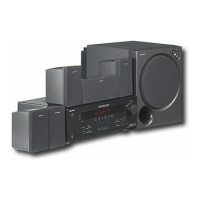
• Sub woofer (SS-WP700)
Speaker system Magnetically shielded
Speaker unit 200 mm, cone type
Enclosure type Bass reflex
Rated Impedance 6 ohms
Dimensions (width/height/depth) (Approx.)
270 × 330 × 305 mm
including front panel
Mass (Approx.) 4.7 kg
Supplied speakers
• Front speakers (2)
• Center speaker (1)
• Surround speakers (2)
• Sub woofer (1)
Supplied accessories
Operating instructions (this manual)
Quick Setup Guide (1)
FM wire antenna (1)
AM loop antenna (1)
Coaxial digital cord (1)
Speaker cords
• Long (2)
• Short (3)
Foot pads
• Speakers (20)
• Sub woofer (4)
Remote commander (RM-AAU025) (1)
R6 (size-AA) batteries (2)
Optimizer microphone (ECM-AC2 or
ECM-AC2a) (1)
Design and specifications are subject to
change without notice.
Area code Tuning scale
10 kHz step 9 kHz step
CEL, CEK, AU – 531 –
1,602 kHz
Area code Power requirements
CEL, CEK 230 V AC, 50/60 Hz
AU 230 V AC, 50 Hz
Area code Power consumption
CEL, CEK, AU 220 W
For details on the area code of the
component you are using, see page 3.



 To Next Page