2
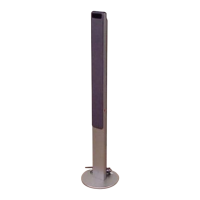
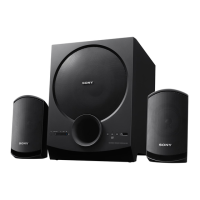
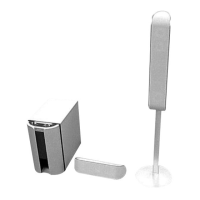
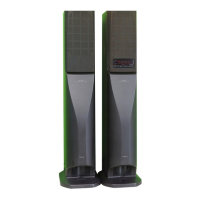
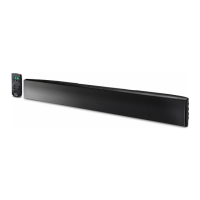
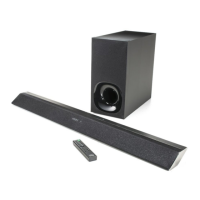
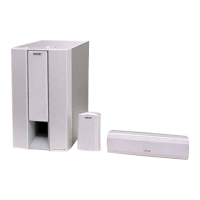
SA-TSLF1H/SS-CTLF1H/TSLF1H/TSLF1HW
TABLE OF CONTENTS
1. SERVICING NOTES ................................................ 3
2. GENERAL ................................................................... 7
3. DISASSEMBLY (SA-TSLF1H)
3-1. Disassembly Flow ........................................................... 8
3-2. Grille Frame (A) Assy ..................................................... 8
3-3. Loudspeaker (7 x 12 cm) (SP901)................................... 9
3-4. Bracket (A) Terminal....................................................... 9
3-5. Loudspeaker (2.5 cm) (SP902), DIAT PD Board............ 10
3-6. DIAT AMP Board............................................................ 11
3-7. Partition ........................................................................... 11
4. DISASSEMBLY (SS-CTLF1H)
4-1. Disassembly Flow ........................................................... 12
4-2. Grille Frame (C) Assy ..................................................... 12
4-3. Loudspeaker (7 x 12 cm) (SP901)................................... 13
4-4. Loudspeaker (2.5 cm) (SP902)........................................ 13
4-5. MOUNTED PC Board .................................................... 14
5. DISASSEMBLY (SS-TSLF1H/TSLF1HW)
5-1. Disassembly Flow ........................................................... 15
5-2. Grille Frame (P) Assy ...................................................... 15
5-3. Loudspeaker (7 x 12 cm) (SP901)................................... 16
5-4. Loudspeaker (2.5 cm) (SP902)........................................ 16
5-5. Partition ........................................................................... 17
5-6. MOUNTED PC Board .................................................... 18
6. DIAGRAMS
6-1. Block Diagram ................................................................ 20
6-2. Printed Wiring Board — DIAT PD Board —.................. 21
6-3. Schematic Diagram — DIAT PD Board — .................... 22
6-4. Printed Wiring Board — DIAT AMP Board — .............. 23
6-5. Schematic Diagram — DIAT AMP Board (1/4) — ........ 24
6-6. Schematic Diagram — DIAT AMP Board (2/4) — ........ 25
6-7. Schematic Diagram — DIAT AMP Board (3/4) — ........ 26
6-8. Schematic Diagram — DIAT AMP Board (4/4) — ........ 27
6-9. Printed Wiring Boards — LED Board,
RETAINER Board, SPK JACK Board — ....................... 28
6-10. Schematic Diagram — LED Board,
RETAINER Board, SPK JACK Board — ....................... 29
7. EXPLODED VIEWS
7-1. Overall Section (SA-TSLF1H)........................................ 36
7-2. Overall Section (SS-CTLF1H) ........................................ 37
7-3. Overall Section (SS-TSLF1H) ........................................ 38
7-4. Overall Section (SS-TSLF1HW)..................................... 39
8. ELECTRICAL PARTS LIST .................................. 40
Notes on chip component replacement
• Never reuse a disconnected chip component.
• Notice that the minus side of a tantalum capacitor may be
damaged by heat.
UNLEADED SOLDER
Boards requiring use of unleaded solder are printed with the lead-
free mark (LF) indicating the solder contains no lead.
(Caution: Some printed circuit boards may not come printed with
the lead free mark due to their particular size)
: LEAD FREE MARK
Unleaded solder has the following characteristics.
• Unleaded solder melts at a temperature about 40 °C higher
than ordinary solder.
Ordinary soldering irons can be used but the iron tip has to be
applied to the solder joint for a slightly longer time.
Soldering irons using a temperature regulator should be set to
about 350 °C.
Caution: The printed pattern (copper foil) may peel away if
the heated tip is applied for too long, so be careful!
• Strong viscosity
Unleaded solder is more viscou-s (sticky, less prone to flow)
than ordinary solder so use caution not to let solder bridges
occur such as on IC pins, etc.
• Usable with ordinary solder
It is best to use only unleaded solder but unleaded solder may
also be added to ordinary solder.
Ver. 1.1



 To Next Page