
 Need help?
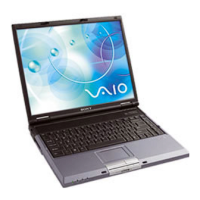
Do you have a question about the Sony Vaio PCG-FX501 and is the answer not in the manual?
Essential introductory information, copyright, and disclaimer information.
Details safety warnings, electrical hazards, and environmental considerations.
Advice on proper computer positioning and posture for user comfort.
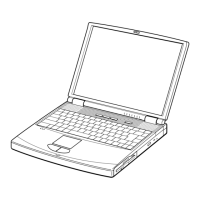
Identifies ports and buttons on the right, left, front, back, and bottom.
Instructions for starting, shutting down, and managing power sources and batteries.
Explains the keyboard layout, touchpad, and function key combinations.
Instructions for using CD/DVD drives, including burning and playback.
Guides for using PC Cards and Memory Sticks for data storage and expansion.
Setting up the modem and utilizing power saving modes like Standby and Hibernate.
Connecting to a port replicator and external monitors, TVs, or projectors.
Connecting speakers, microphones, and USB peripherals like mice.
Instructions for connecting printers and digital video devices via i.LINK™.
Instructions for connecting the notebook to a network (LAN) via Ethernet.
Information on support resources, online help, and contact information.
Step-by-step solutions for hardware, software, and connectivity problems.
Safety guidelines for handling the notebook, memory, and storage media.
Precautions for diskettes, CDs, and battery pack care.
Detailed technical data for different VAIO PCG-FX models.
Definitions of technical terms used in the user manual.
 General
| Processor | Intel Pentium III |
|---|---|
| Clock Speed | 850 MHz |
| RAM | 128 MB |
| Maximum RAM | 512 MB |
| Hard Drive | 20 GB |
| Resolution | 1024 x 768 |
| Battery | Lithium-Ion |
| Operating System | Windows XP |
| Optical Drive | DVD-ROM/CD-RW Combo |
| Ports | Ethernet |
| Model | Sony Vaio PCG-FX501 |


 To Next Page