Need help?
Do you have a question about the Southwest Microwave 385 and is the answer not in the manual?
Provides three-dimensional protection with a detection range up to 400 ft (122 m).
K-band operation offers less susceptibility to interference from airport radar systems.
Positively rejects microwave targets beyond a preselected range, preventing false alarms.
Reduces nuisance alarms from close-range effects like rain, vibration, and windblown objects.
Enables operation in close proximity with other transceivers without mutual interference.
Features a plug-in test meter for easy and rapid system setup and adjustment.
Details detection range, width, and how sensitivity adjustments affect the pattern.
Explains how the transceiver detects motion, establishes reference levels, and generates alarms.
Covers detection range, width, target size, velocity, and probability of detection.
Includes self-supervision, range cutoff function, spurious emissions, and sync selection.
Details DC input, alarm/tamper contacts, LED indicators, operating environment, and weight.
Instructions on specifying the Model 385 and ordering optional accessories.
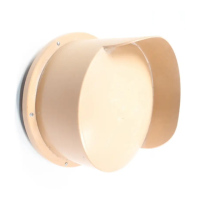
The Southwest Microwave Model 385 is an outdoor K-Band microwave transceiver designed to provide reliable three-dimensional protection in outdoor environments. It offers a detection range of 100 to 400 feet (30 to 122 meters) and is capable of detecting human intruders walking, running, or crawling on hands and knees.
The Model 385 operates by radiating a controlled pattern of microwave energy into the protected area. In the absence of intrusion, the receiver establishes a reference level based on reflected signals. When an intruder moves within the pattern, the received signal changes relative to this reference level, triggering an alarm.
A key feature is the patented Range Cutoff (RCO) Circuit, which positively rejects microwave targets beyond a preselected range of 100 to 400 feet (30-122 meters). This makes the Model 385 immune to alarms from objects outside the RCO distance, even large targets like semitrailers, trees, trains, or aircraft. The RCO distance is fixed and not affected by the sensor's sensitivity adjustment.
The device operates at K-band, which is less crowded than X-band, making it less susceptible to interference from airport landing systems, aircraft radar, and other microwave intrusion systems. The higher K-band frequency (2.5 times higher than X-band) also results in a 2.5 times higher multipath signal generated by an intruder, improving the detection of slow-moving intruders.
Another patented feature is the Zero-Range Suppression (ZRS) Circuit. This circuit reduces the amplitude of microwave targets at very close range, significantly reducing nuisance alarms caused by rain, vibration, birds, and windblown objects. Neither the RCO nor the ZRS circuit affects the detection pattern.
The Model 385 includes a Built-In Multiplex System, allowing it to operate in close proximity with other Southwest Microwave Transceivers and T/R Links without mutual interference. For multiplexed operation, a synchronizer wire (twisted pair) connects to each sensor. One sensor acts as the "master," and others as "slaves." In a group of up to sixteen sensors, only one sensor operates at a given time.
 General
| Brand | Southwest Microwave |
|---|---|
| Model | 385 |
| Category | Accessories |
| Language | English |


 To Next Page