Hardware Overview
Power
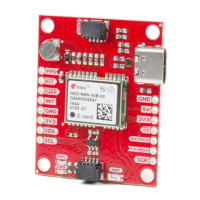
Power for this board is 3.3V and we have provided multiple power options. This first and most obvious is the USB-
C connector. Secondly, are the Qwiic Connectors on the top and bottom of the board. Thirdly, there is a 5V pin
on the PTH header along the side of the board that is regulated down to 3.3V. Make sure that power your provide
to this pin does not exceed 6 volts. Finally, just below the 5V pin is a 3.3V pin that should only be provided a clean
3.3V power signal.
GPS Basics
The Global Positioning System (GPS) is an
engineering marvel that we all have access to for a
relatively low cost and no subscription fee. With the
correct hardware and minimal effort, you can determine
your position and time almost anywhere on the globe.
Serial Peripheral Interface (SPI)
SPI is commonly used to connect microcontrollers to
peripherals such as sensors, shift registers, and SD
cards.
I2C
An introduction to I2C, one of the main embedded
communications protocols in use today.
How to Work with Jumper Pads and PCB Traces
Handling PCB jumper pads and traces is an essential
skill. Learn how to cut a PCB trace, add a solder
jumper between pads to reroute connections, and
repair a trace with the green wire method if a trace is
damaged.
Getting Started with U-Center for u-blox
Learn the tips and tricks to use the u-blox software tool
to configure your GPS receiver.
Three Quick Tips About Using U.FL
Quick tips regarding how to connect, protect, and
disconnect U.FL connectors.

 To Next Page
 Loading...