6
ENFRDEITPTNLDKPLFREE ES
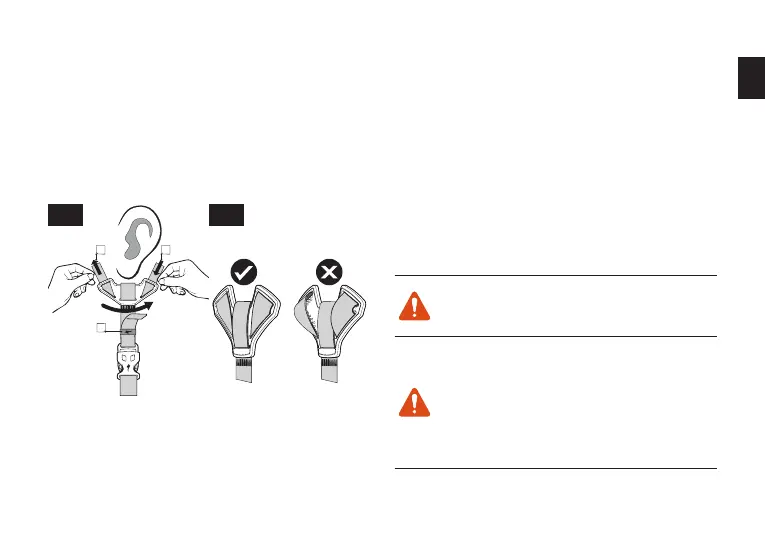
FIG. 2.1
Your Specialized helmet includes a simple, intuitive TriFix
strap management system (Fig. 2.1) that makes strap
adjustment a quick process.
With the helmet properly positioned low on your
forehead, the TriFix system should be centered just
below your ears and the straps positioned so that they
do not cover the ears (A).
Insert the pronged end of the buckle into the clip to
fasten (B).
C
AB
2.32.2
FIG. 2.2 & 2.3
If your helmet has an adjustable TriFix, you can adjust
the straps' position relative to your ear for a more
comfortable fit. Pull one strap (Fig. 2.2 A) through the
TriFix, then take up the slack on the opposing strap (Fig.
2.2 B). Adjust the straps until they lie flat behind your
ears. Repeat on the other side of the helmet to ensure
both sides are even.
Make sure the straps lie completely flat in the TriFix
system (Fig. 2.3) and do not cover any part of your ears.
For half-shell helmets, with the chin buckle fastened,
pull the chin strap through the buckle until it is
positioned firmly but comfortably under the chin, away
from the jawbone, and back against the throat. Position
the o-ring to hold the excess strap length in place (Fig.
2.2 C).
With the chin strap buckled and the helmet properly
positioned as shown in Fig. 1.1 CORRECT, the chin strap
should pull firmly against your chin and throat when you
open your mouth.
WARNING! The helmet is designed to be retained
by a strap under the lower jaw. A properly
adjusted chin buckle is critical for the helmet to
stay on your head during a crash.
WARNING! Always make sure the buckle is
securely fastened before each ride. Failure to
follow this instruction could result in serious
personal injury as the helmet may not stay in
position while riding or during a fall. For proper
use, make sure the loose end of the strap is
tucked through the o-ring. Even a correctly
fitted helmet can be ejected off the head in some
accidents.



 To Next Page