This document provides a comprehensive guide for the Sportneer Exercise Bike, model DY110, covering its functions, technical specifications, usage, and maintenance.
The Sportneer Exercise Bike is designed to improve fitness and muscle tone, and when used in conjunction with a calorie-controlled diet, it can also aid in weight loss. It promotes body metabolism, delays the physiological effects of age, reduces stress, and increases self-confidence. The bike is intended for consumer use and is built to provide maximum safety, though users must adhere to all safety precautions.
Important Technical Specifications:
- Maximum user weight: 110 kg (240 lbs)
- Machine weight: 28.2 kg (62.2 lbs)
- Size: 111.2 cm x 59.5 cm x 136.1 cm (43.8" x 23.4" x 53.6")
- Total surface area (footprint) of equipment: 6616.4 cm²
- Power requirements: 2 AAA Batteries
- Operating voltage: DC 3V
- Frequency band: 2.402 GHz ~ 2.480 GHz
- Maximum transmission power: ≤ 4.54 dBm
Safety Precautions:
Users are advised to consult a doctor before starting any exercise program. If dizziness, nausea, chest pains, or other symptoms occur, exercise should stop immediately, and medical attention should be sought. The machine must be used on a level, solid surface with adjusted feet for stability. Hands should be kept away from joints and moving parts. Appropriate athletic clothing and shoes should be worn, avoiding baggy clothes that could get caught. The bike should only be used for its intended purpose, and accessories not recommended by Sportneer Fitness should be avoided. Sharp objects should not be placed near the bike. Individuals with physical or coordination limitations should use the bike only with assistance from a qualified person or doctor. Warm-up stretching exercises are recommended before use. The bike should not be used if it is not working correctly and must be thoroughly inspected for proper assembly before each use. A perimeter of 24" (0.6 meters) around the bike should be maintained during operation. Repairs should only be performed by authorized and trained technicians. The warning label must be replaced if damaged, illegible, or removed. The bike is designed for a single user at a time. The high-speed flywheel should not be touched to avoid serious personal injury. When not in use, the resistance knob should be rotated to the end in the resistance increase direction to lock the equipment. This product should be recycled according to prescribed methods at an approved waste center.
Exercise Instructions and Training Guidelines:
It is crucial to cycle at the recommended exercise level and avoid over-exertion. If pain or discomfort occurs, exercise should stop, and a doctor should be consulted. Warm-up stretches are essential before working out, and a cool-down period is recommended after exercise. The exercise bike should be mounted and dismounted slowly and securely. Users should select a program or workout option that aligns with their interests and start slowly, gradually increasing pace.
Components of Physical Fitness:
- Strength: The capacity of muscles to exert force against resistance, contributing to power and speed.
- Muscular Endurance: The capacity to exert force repeatedly over time.
- Flexibility: The range of motion of joints, improved by stretching muscles and tendons.
- Cardio-Respiratory Endurance: The efficient functioning of the heart and lungs, essential for physical fitness.
- Aerobic Fitness: Low-intensity, long-duration exercise that uses oxygen in the body's metabolic process.
- Anaerobic Training: Intense exercise that triggers anaerobic metabolism, producing energy when oxygen supply is insufficient.
- Oxygen Uptake: The ability to deliver oxygen to working muscles, which can be increased by vigorous exercise.
Training Threshold:
This is the minimum exercise level required to achieve significant improvements in physical fitness. Exercise should be above the comfort level, with intensity, duration, and frequency gradually increasing as the body adapts. Consistency is key; benefits gained from exercise will be lost if workouts are infrequent or stopped.
Pulse Count:
The pulse count, taken for ten seconds after stopping exercise, approximates the beats per minute (BPM) rate during exercise. The target BPM varies by age, and users should not over-exert to reach specific figures.
Muscle Soreness:
Slight muscle soreness in major muscle groups during the first week is normal and indicates an effective program. Major discomfort suggests the program is too advanced or has increased too rapidly. Pain during or after exercise warrants consulting a doctor.
What to Wear:
Light clothing that allows freedom of movement and body cooling is recommended. Excessive clothing that causes profuse sweating offers no advantage, as weight loss from perspiration is body fluid and will be replaced by water intake. Athletic shoes should always be worn.
Breathing During Exercise:
Breathing normally and avoiding holding breath is crucial, as breathing supplies oxygen to working muscles.
Rest Periods:
Once an exercise program begins, it should be completed without interruption. Rest periods between exercises may vary.
Schematic Diagram of Accessories:
The manual includes a schematic diagram of all accessories and an exploded view drawing, along with a detailed parts list specifying each component, its specification, and quantity.
Assembly Instructions:
Before assembly, select a hard, level surface with a minimum workout area of 2.4m x 1.8m (94" x 69"). It is recommended to assemble the bike with assistance.
- Front Stabilizer Installation: Attach the front stabilizer set (E) to the main frame set (A) using screws (I1), spring washers (I2), flat washers (I3), and tighten with a hexagon socket wrench (I7).
- Rear Stabilizer Installation: Attach the rear stabilizer set (D) to the main frame set (A) using screws (I1), spring washers (I2), flat washers (I3), and tighten with a hexagon socket wrench (I7).
- Support Tube of Handlebar Installation: Install the quick release knob (A47) on the main frame set. Connect the electronic line from the main frame to the support tube of the handlebar (B) using the pulling rope (B1). Insert the threaded support tube into the main frame, loosen the knob, pull it outwards, install the handlebar support tube, and tighten the knob to fix it.
- Handlebar Set Installation: Connect the handlebar set (C) to the support tube of the handlebar. Connect the electronic wires, then install the support tube of the handlebar to the main frame set using screws (I4), spring washers (I5), flat washers (E4), and tighten with a hexagon socket wrench (I7).
- Seat Installation: Install the seat (F) to the main frame set. Adjust the seat to the correct direction and tighten the nut (Fa) with an outer hexagon wrench (I8).
- Left & Right Pedal Installation: Screw the left pedal (G1) (marked L) counterclockwise to the left crank (marked L), and the right pedal (G2) (marked R) clockwise to the right crank (marked R). Tighten firmly with an outer hexagon wrench (I8). Incorrect installation can damage threads.
- Bottle Holder Installation: Align the bottle holder (H) with the screw hole and tighten it using Philip flat screws (I6) and a hexagon socket wrench (I7).
- Console Battery Installation: Remove the electronic cover on the back of the console, install two AAA batteries (J1), and close the cover.
Instructions for Use:
- Height Adjustment of Handlebar Set: Loosen the quick release knob, pull it outwards, adjust the handlebar set to the desired height, release the knob, and tighten it. The "STOP" mark indicates the maximum adjustment height.
- Resistance Adjustment: Resistance is adjustable by rotating the knob: counterclockwise for reduction, clockwise for increase. Push down the knob for braking or emergency stop. To lock the flywheel when not in use, rotate the knob to the end in the resistance increase direction.
- Height Adjustment of Saddle Support Tube: Loosen the quick release knob, pull it outwards, adjust the saddle support tube to the desired height, release the knob, and tighten it. The "STOP" mark indicates the maximum adjustment height.
- Pedal Positioning Tightness Adjustment: Adjust the tightness of the pedal rope by pressing the clamp, pulling the rope, and then releasing the clamp.
- Leveling the Exercise Bike: If the workout area is uneven, adjust the levelers on each side of the stabilizers. Lift the stabilizer slightly, turn the knob to adjust the foot, and ensure the bike is level and stable before exercising. Do not adjust levelers to a height where they detach, as this may cause injury or damage.
Console Operations:
The console displays various data:
- SCAN: The triangle indicator flashes, and the console is in working condition.
- TIME: Press MODE to display total movement time.
- SPD (Speed): Press MODE to display current exercise speed.
- DST (Distance): Press MODE to display total distance from the start of exercise.
- ODO (Odometer): Press MODE to display total mileage of the exercise.
- CAL (Calories): Press MODE to display total energy burned.
- PULSE (Heartbeat Measurement): When the pulse pad detects a heartbeat, the triangle indicator flashes at the PULSE position, and the corresponding value is displayed after a short period. For accurate readings, use both hands on the pulse pad. The heart rate monitoring system may be inaccurate, and excessive exercise can cause serious injury or death. The approximate maximum heart rate (MHR) is calculated as 220 minus age. A diagram is provided to help users select an exercise program based on heart rate zones (VO2 Max, Anaerobic, Aerobic, Fat Burning, Warm Up/Recovery, and Out of Zone).
App Usage:
- Download the APP: Search for "Sportneer" in the App Store or Google Play (IOS12+, Android 6.0+).
- Registration & Connection: Open the app, sign up (or sign in), verify email, set a password, complete personal information (nickname, gender, birthday, weight), and then set weight and height. Select preferred training categories.
- Equipment Connection & Course Training: In the Sportneer APP, navigate to "Training course," then "My Devices," and select "+." Choose "Courses," select "Exercise Bike," and enter "Device Search." Follow in-app prompts to connect the exercise equipment.
Maintenance & Cleaning:
The equipment is factory-adjusted and lubricated. Users are not recommended to service internal components; instead, seek service from an authorized service center. The outer surface can be cleaned with a soft cloth dampened with warm water. Avoid aerosol sprays or pump bottles, as they may leave sediment on the console. Harsh chemicals can damage the protective coating and cause static build-up.
Manufacturer:
Thousandshores Deutschland GmbH, Bredowstraße 17, Hamburg 22113, DE.

 Need help?
 General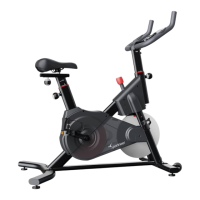

 To Next Page