
 Need help?
Do you have a question about the StarCharge Aurora 11kW and is the answer not in the manual?
Document review, liability, modifications, and usage information.
Rights reserved for document disclosure, duplication, and utilization.
Conditions under which warranties are voided for product and accessories.
Guidelines for safe operation, installation, and prohibited usage scenarios.
Explanation of warning, caution, hint, and disposal symbols on equipment.
Detailed technical parameters including supply, output, protection, and communication.
Electrical specifications like voltage, current, frequency, and connection terminals.
Details on vehicle connection type, output voltage, current, and power.
Safety features like residual current, overcurrent, and energy metering.
Information on controllers, communication, card readers, and protocols.
Environmental limits, safety class, protection ratings, and mechanical impact.
Details on mounting posts, dimensions, material, color, and packaging.
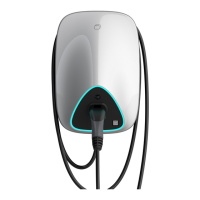
Visual identification of components for Aurora charging station Case B.
Visual identification of components for Aurora charging station Case C.
Explanation of LED colors and patterns for different charging station states.
List of items included in the Aurora charging station package.
Criteria for selecting an appropriate location for installing the charger.
List of tools and equipment needed for Aurora installation.
Detailed steps for securely mounting the Aurora charger on a wall.
Recommended distances for column-type installations in parking spaces.
Procedures for installing the charging pile on a column or pedestal.
Essential safety checks before starting the commissioning process.
Procedures for wiring the charging pile and inserting the SIM card.
Steps for troubleshooting and resolving issues during operation.
Requirements for setting up wireless connection and backend configuration.
Guidelines for integrating with external management systems.
Overview of connecting the charger and initiating charging sessions.
Steps for starting and stopping charging using RFID cards.
Detailed process for using RFID cards for charging authentication.
Steps for authorization and starting charging via QR code scanning.
Instructions on using the app for starting and stopping charging with QR codes.
Table explaining the meaning of different LED status indicators on the charger.
Recommended schedule and tasks for regular maintenance of the charger.
Overview of the system's building blocks and control logic.
Diagram illustrating the interconnected components of the charging system.
Diagram and explanation of the control pilot circuit for EV charging.
Troubleshooting steps for when the charger fails to power on.
Steps to resolve issues where the vehicle does not recognize the charging connection.
Diagnosing and resolving overvoltage or undervoltage faults.
Troubleshooting steps for earth fault conditions and grounding issues.
Addressing issues where charging is incomplete or the connection fails.
 General
| Charging Power | 11 kW |
|---|---|
| Output Voltage | 400V AC |
| Connector Type | Type 2 |
| Mounting Type | Wall-mounted |
| Frequency | 50/60 Hz |
| Input Voltage | 400V AC |
| Input Current | 16A |
| Output Current | 16A |
| Protection | Overcurrent protection, Overvoltage protection, Surge protection |
| Operating Temperature | -30°C to 50°C |
| Compliance | IEC 61851, IEC 62196 |
| Charging Cable Length | 5m |

 To Next Page