3. Install the plug.
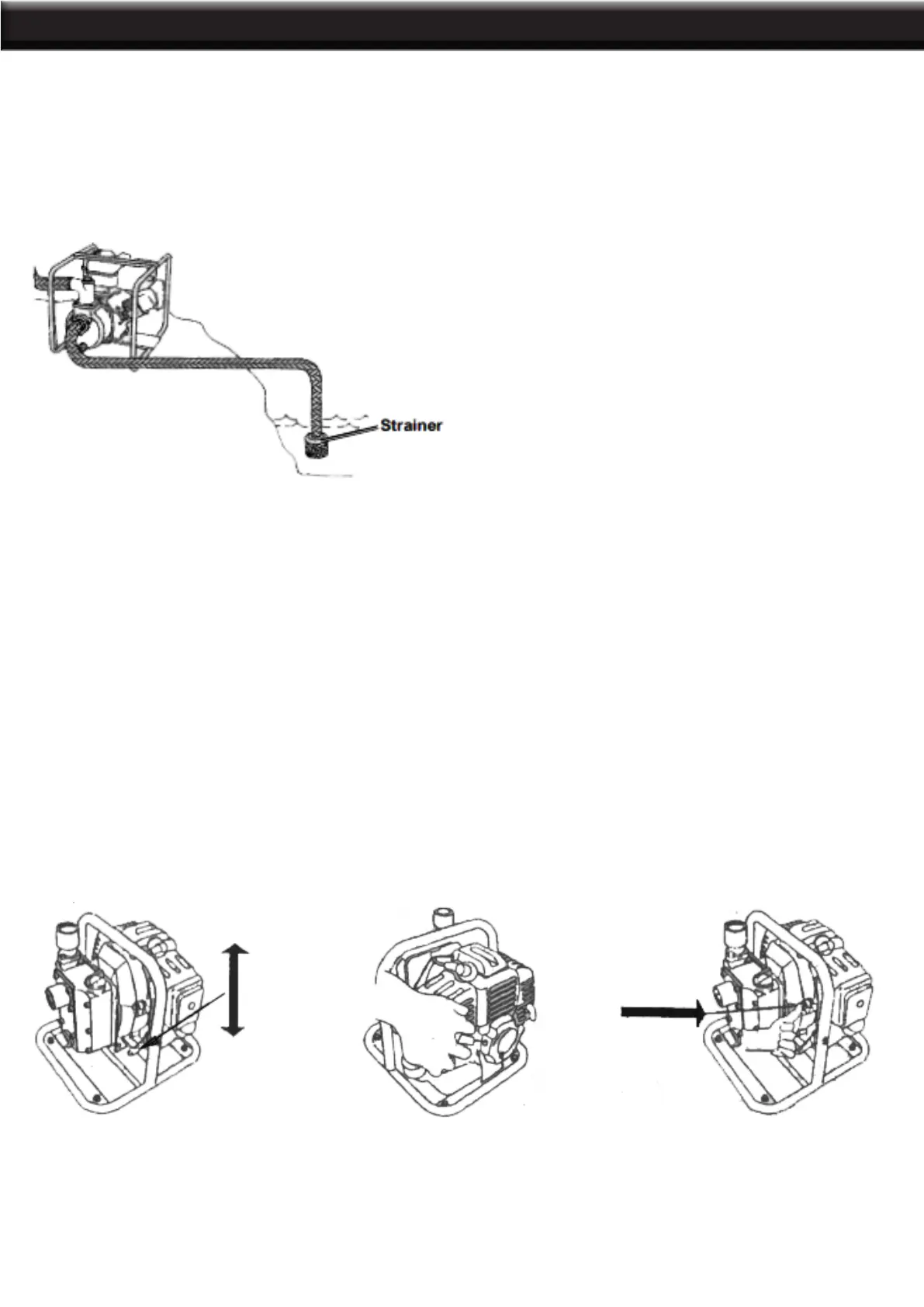
2. Route the Intake Hose with the Intake Strainer fully immersed in the water supply source.
3. Place Strainer into water to be pumped. NOTICE: Immerse strainer fully in water. Do not operate Pump
without Strainer connected to end of suction hose. Keep Strainer out of sand or silt by placing Strainer in a
bucket or on stones.
NOTICE: Air leaks must not appear in the suction line. If there is an air leak in the suction line, you will not
be able to prime the pump. Use a thread sealant to seal air leaks.
4. Secure the Intake Hose in place to keep it from moving once the Pump is turned on. The Intake Hose
should be as short as possible for more efcient operation.
5. Route the discharge hose to the desired discharge location. If necessary, connect additional discharge
hoses to direct the discharge to the desired location. Make sure to secure the discharge hose in place to
keep it from moving once the Water Pump is turned on. The discharge hose should be kept as short as
possible for more efcient operation.
STARTING THE ENGINE
1. When the engine has warmed sufciently, adjust the throttle handle in accordance to the desired speed.
DO NOT accelerate abruptly due to bad lubrication of the engine at the beginning of start up.
2. Avoid the speedy idle motion and over speed motion. If the throttle is totally opened, the engine will over
run. This not only shortens the life of the engine but can also cause further issues in the engine.
3. Draw the starter several times slowly, then draw quickly. After the engine starts, run it for 3-5 minutes
at a slow speed.
4. Press the stop switch and stop the engine.
STOPPING THE ENGINE
1. To stop the engine in an emergency, turn the engine to OFF.
2. Under normal conditions, to stop the engine slide the throttle to SLOW, then switch the engine to OFF.
6
OPERATION


 To Next Page