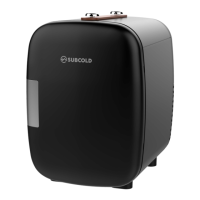
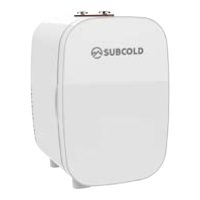
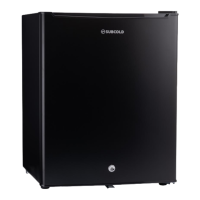
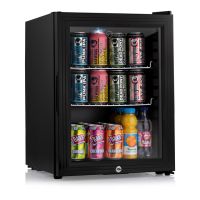
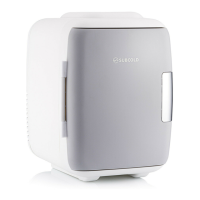
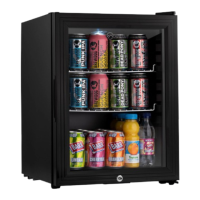
This document serves as an instruction manual for Subcold Beer & Wine Fridges, specifically covering Super models 35, 50, 65, 85, and 115. It provides comprehensive guidance on the safe and effective operation, maintenance, and disposal of these appliances.
Function Description
The Subcold Beer & Wine Fridges are designed for indoor use within households and similar applications, excluding catering and non-retail environments. These appliances are specifically engineered for storing non-perishable items, such as beer and wine, and are not suitable for freezing food. They operate optimally within a room temperature range of 16°C to 32°C. The primary function is to maintain a stable internal temperature to preserve the quality of beverages. The refrigerator's temperature can be manually adjusted using a control dial located at the lower right side of the compartment, allowing users to set the desired level of coolness. A higher number on the thermostat corresponds to a colder internal temperature. The unit features a cooling cycle that can be stopped by turning the dial to "0," though this does not disconnect the unit's power. The temperature range for these fridges is typically between 3°C and 18°C.
Usage Features
Before initial use, it is crucial to remove all inner and outer packaging components and verify that all items, including removable shelves, the operating manual, and a set of two keys, are present. To ensure proper functioning, the appliance should stand upright for a minimum of two hours before being connected to a power supply, which helps minimize the risk of refrigeration system malfunction due to transport handling.
Installation requires maintaining adequate ventilation clearance: 5-10cm at the sides and back, and at least 5cm at the top, ensuring these openings remain unobstructed. The unit should be positioned on a sturdy, level surface, with the front feet adjusted for stability. It is important to install the appliance away from direct sunlight and heat sources, as prolonged exposure can damage the unit's coating and increase power consumption. Extreme ambient temperatures can also affect proper operation. The unit is designed exclusively for indoor use and is not intended for installation in unheated buildings, outbuildings, or garages. Users should ensure the drip tray above the compressor is properly positioned before connecting the unit to the power supply.
For initial use, the temperature dial should be set to "5." After 24 hours, it can be adjusted to suit individual needs, with "3" and "4" being recommended settings for home or office use. To switch off the appliance, the dial should be turned to "0." If the unit is unplugged or turned off, a waiting period of 3 to 5 minutes is recommended before restarting to prevent malfunctioning.
The appliance is intended for use by individuals aged 8 years or older, including those with reduced physical, sensory, or mental abilities, provided they are under appropriate supervision. Cleaning and user maintenance activities should also be overseen. It is important to prevent child entrapment by exercising caution and ensuring children do not interact with the appliance unsupervised, as it is not designed for play.
To prevent food contamination, users should avoid prolonged door openings, as this can significantly increase the internal temperature. The internal temperature may vary based on content placement (top, middle, or bottom), and adjustments may be needed depending on the ambient temperature. Placing a thermometer inside the fridge for regular monitoring is advisable.
In the event of a power failure, the appliance can maintain normal storage for several hours. During such outages, users should refrain from adding new items and minimize door openings. For short vacations, all items should be removed before securely closing the door. For extended vacations, the appliance should be disconnected from the power source, defrosted, cleaned, wiped dry, and the door left open to prevent unpleasant odors or mold.
Maintenance Features
Regular upkeep and cleaning are essential for optimal performance and safety. Before initiating any cleaning procedures, the appliance must always be disconnected from the main power source.
For interior maintenance, the inside of the appliance should be cleaned with clean water and a non-hazardous cleaner, then wiped dry with a soft cloth.
Door gasket maintenance is crucial to prevent potential damage and increase operational life. The door gaskets should be cleaned thoroughly to ensure they remain effective.
Outer maintenance involves removing dust using a dry, clean cloth to maintain the external cleanliness of the appliance.
Defrosting becomes necessary when frost accumulation reaches a thickness of 5mm, as excessive frost can impact refrigeration efficiency and escalate energy consumption. The manual defrosting process involves several steps:
- Remove all contents from the appliance.
- Take out the shelves.
- Unplug the power cable.
- Open the doors and allow for natural thawing.
- Wipe away the defrost water with a dry cloth.
It is important not to use alternative equipment or methods to aid the defrosting process, as this can cause damage to the cooling system. If there is excessive ice, the drip tray may overflow, requiring users to wipe with dry cloths or paper towels.
When moving the fridge, it should first be emptied of all contents and disconnected from the power source. The power cable and any loose parts inside should be secured. The feet should be adjusted to their minimum height to prevent damage during transport, and the door should be securely locked to keep it closed. The appliance should be maintained in an upright position throughout the transportation process.
Troubleshooting guidance is provided for common issues. If the appliance does not work, users should check for proper connection, tripped circuit-breakers or blown fuses, and verify the power socket. If the appliance is not cold enough, the temperature setting may need adjustment, especially in high ambient temperatures. Limiting frequent door openings, ensuring the door is fully closed with the seal correctly positioned, and allowing sufficient space for ventilation are also important. If ice is present, a manual defrost is required. If the appliance operates continuously, users should ensure the ambient room temperature is within the operating range, reduce the number of items inside, minimize door openings, confirm the door is completely closed with the seal properly positioned, check/adjust the temperature control setting, and ensure sufficient ventilation space.
For issues with the light, users should check the power supply connection, circuit-breaker/fuse, and ensure the light button is not in the "OFF" position. The LED lighting may need replacing. If the appliance makes too much noise or vibrates, it should be leveled correctly, and shelves should be properly positioned within their grooves. If the door does not close properly, the appliance should be leveled, shelves or contents obstructing closure adjusted, and the lock and locking plate checked for correct positioning. Water under the device may indicate an issue with the drip tray, which should be checked for correct water collection, proper placement, and damage. If the appliance was disconnected for defrosting, the drip tray may overflow with excess water.
Conditions not indicative of malfunction include dew formation on the exterior glass during high humidity, which can be wiped away, normal operational noises from refrigerant flow, and elevated temperatures on the product's sides, which are designed to prevent condensation.
In case of a damaged power cable, replacement must be carried out by the manufacturer, its service agent, or qualified individuals to mitigate potential hazards. All affected or faulty parts, including the light, should be replaced by a certified technician.
For proper disposal, the device should be recycled responsibly at public collection points to promote the reuse of material resources and avoid harm to the environment or human health. Older refrigerators may contain CFCs that destroy the ozone layer, and users should contact their nearest waste treatment center for details on proper disposal procedures.



 To Next Page
 General