Document No. 8128000560
Software Revision – N1B (07 Oct 04)
7-73
RT-9000 B
2. If the ALE transmission DOES NOT contain the station CALL ID of the RT-9000 B -equipped station
hearing the call, the RT-9000 B will pass through the ALE signaling tones but NOT transmit an ALE
response.
3. If the ALE transmission DOES contain the station CALL ID of the RT-9000 B -equipped station
hearing the call, the RT-9000 B will pass through the ALE signaling tones, determine the appropriate
action, and transmit an ALE response.
4. The Initiating Station will normally transmit the ALE Point-to-Point call on every frequency (Channel)
in the selected Channel Group and measure the received responses BEFORE Linking. In this way,
both Initiating and Called stations acquire the data needed to calculate Link Quality Analysis (LQA)
values for each frequency and its current condition. For large Channel Groups with many
frequencies, this step and its actions may occupy more time than the user might expect without an
apparent result.
5. After working through the Channel Group once, the Initiating Station will normally proceed directly to
the frequency (Channel) with the best LQA value and attempt to Link with the Called Station.
NOTE: If the Initiating and Called stations were previously Linked within
approximately the last two (2) hours but not currently Linked, a new
attempt to re-establish the Link will usually proceed directly to the last
used Linking frequency. If either station’s equipment was been powered
down or the previous Link was terminated more than two (2) hour ago,
Linking attempts will likely execute the entire calling process without any
shortcuts.
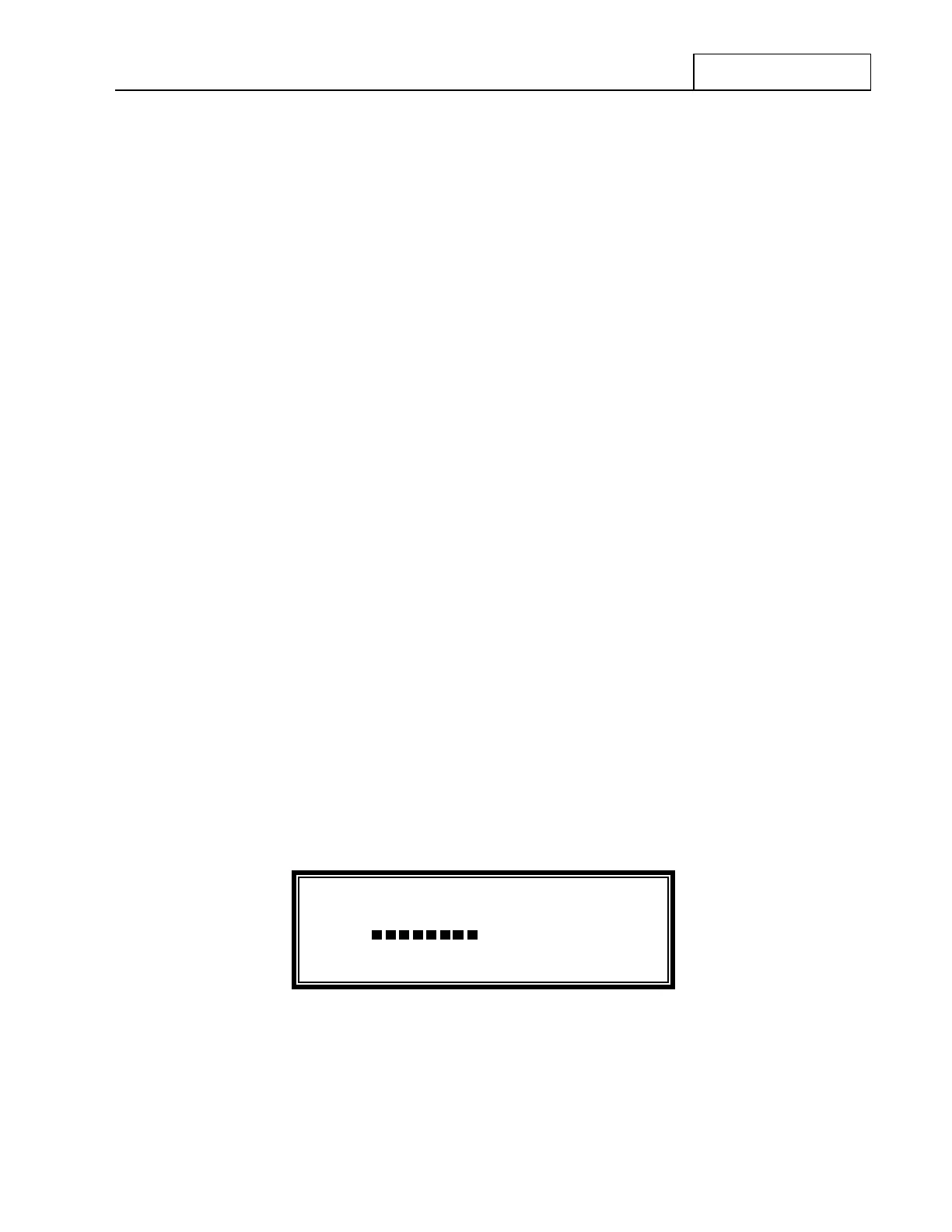
6. Figure 7.3.4.19 shows an example of how the Called Station’s Operational Display appears after the
Linking process is finished.
7. Once the Link is established, the same alerting tones as those used for “Transmitting a Point-to-Point
Call” are sounded to alert the operator that a call was received and a Link established. This alerting
feature is particularly useful in operating environments where to operators are doing many different
things at the same time and need an effective notification mechanism..
8. This Link will remain intact for up to approximately two (2) hours. If no activity occurs with this time
period, the RT-9000 B will transmit a “Link Terminate” message and abandon the Link. Any activity
within the two (2) hour interval resets the timer to its original time limit. The transmission information
displayed in Figure 7.3.4.19 will remain intact until more recent ALE activity overwrites it or the
operator leaves ALE mode.
Figure 7.3.4.19 ALE Point-to-Point Call - Called Station Display - After Linking
The Operational Display shown in Figure 7.3.4.19 indicates the following information: 1) Operating frequency
and Channel Number, 2) ‘LK’ = Link established, 3) ‘SUN1’ = station CALL ID this station is Linked with, and
4) ‘J’ = Link Quality Analysis (LQA) value of the Linking frequency. The table shown in Figure 7.3.4.18 gives
Displayed Link Quality Analysis (LQA) Value vs. SINAD conversion values.
RC
MHZ
FUNCTION/
STATUS
CH 0314.21200
LK SUN1 J
METER
S3 S6 S9 +20 +40 +60
20 60 100 150 FWD


 To Next Page
 Loading...