
 Need help?
Do you have a question about the Suzuki DP-77 and is the answer not in the manual?
Carefully unpack all piano components and set them aside. Ensure hardware and power cord are unpacked from protective foam.
Using two people, lift the piano from its carton and place it on a soft surface like a carpet or blanket.
Remove protective outer packing materials from the piano using only your hands to avoid scratching the finish.
Remove the cable slot cover, lay the pedal cable from the pedal cross bar, and then insert the cover.
Attach the Pedal Crosspiece to the leg using the M6x20 Screw.
Align the Privacy Board to the backside of the leg stands and install using M6x15 and M4x16 screws.
Using two people, lift the piano onto the assembled leg stands and pedal board.
Place the piano body on the stand, attach with M6x20 screw, install headphone holder, and plug in pedal connector.
Place piano in final position, turn Pedal Brace Knob to touch floor, and tighten all screws.
Locate the power receptacle on the piano bottom, plug in the power cord, and connect to a wall socket.
Refer to the Owner's Manual for detailed instructions on piano operation.
Call 1-800-854-1594 for any questions or problems regarding the piano.
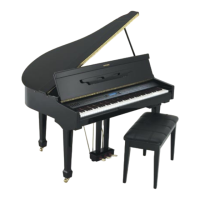
The Suzuki Home Digital Piano is a sophisticated musical instrument designed for both aspiring musicians and seasoned players, offering a rich and authentic piano experience in a home setting. This digital piano combines traditional aesthetics with modern technology, providing a versatile and enjoyable platform for musical expression. Its design emphasizes ease of assembly and user-friendliness, ensuring that users can quickly set up and begin playing their new instrument.
At its core, the Suzuki Home Digital Piano functions as a high-quality electronic keyboard that emulates the sound and feel of an acoustic grand piano. It achieves this through advanced digital sound sampling and a carefully engineered key action mechanism, which provides a realistic touch response. The piano is equipped with a full set of keys, allowing for a complete range of musical compositions and performances. Beyond its primary function as a piano, it often includes a variety of other instrument sounds, such as organs, strings, and various percussion instruments, expanding its versatility for different musical genres and creative explorations.
The digital nature of the piano offers several advantages over traditional acoustic pianos. It typically features volume control, allowing users to practice silently using headphones or adjust the output for different environments without disturbing others. This makes it ideal for apartment living or late-night practice sessions. Many digital pianos also include recording capabilities, enabling users to capture their performances, listen back, and analyze their playing for improvement. Metronome functions are commonly integrated, providing a steady beat for practice and helping musicians develop their rhythm and timing.
Connectivity options are another key functional aspect. The Suzuki Home Digital Piano likely includes ports for headphones, external amplifiers or speakers, and potentially USB or MIDI connections. These allow for integration with computers, music software, and other digital devices, opening up possibilities for music production, learning applications, and interactive lessons. The pedal system, typically comprising sustain, sostenuto, and soft pedals, replicates the expressive control found on acoustic pianos, allowing for nuanced musical phrasing and dynamics.
The instrument is designed to be a central piece in a home environment, offering both musical utility and aesthetic appeal. Its sturdy construction and elegant finish ensure it can complement various interior designs while providing a reliable musical outlet. The focus on a "home digital piano" suggests an emphasis on features that cater to personal practice, learning, and enjoyment within a domestic context, rather than solely professional performance settings.
The Suzuki Home Digital Piano is designed with user convenience and an intuitive playing experience in mind. The assembly process, as highlighted in the provided guide, is straightforward, emphasizing that users should read the instructions carefully before beginning. This ensures a smooth setup and prevents potential damage. The guide specifically mentions the importance of two people for lifting the piano body, indicating the instrument's substantial build and the need for careful handling during setup.
Once assembled, the piano is ready for immediate use. The power cord connection is a simple plug-and-play operation, connecting the instrument to a standard wall socket. The inclusion of a "Pedal Brace Knob" suggests a mechanism for stabilizing the piano and ensuring the pedals are firmly positioned for optimal use. This attention to detail enhances the playing experience by providing a stable and responsive pedal system.
The digital interface, while not explicitly detailed in the assembly guide, is typically designed for easy navigation. Users can expect intuitive controls for selecting different instrument sounds, adjusting volume, activating the metronome, and accessing other features. The ability to connect headphones is a significant usage feature, allowing for private practice without disturbing others, which is particularly beneficial in shared living spaces or for late-night sessions.
The "Easy Assembly Guide" itself is a usage feature, providing clear, step-by-step instructions with illustrations. This approach minimizes frustration and ensures that even users with limited technical experience can successfully set up their piano. The emphasis on using only hands to remove protective materials and avoiding sharp tools underscores a commitment to preserving the instrument's finish and functionality from the very beginning.
The inclusion of a toll-free helpline for questions or problems further enhances the user experience, providing direct support for any issues that may arise during assembly or initial use. This customer service aspect is crucial for ensuring user satisfaction and confidence in the product. The overall design and accompanying documentation aim to make the Suzuki Home Digital Piano accessible and enjoyable for a wide range of users, from beginners taking their first lessons to experienced players seeking a convenient and high-quality instrument for home use.
While the provided assembly guide focuses primarily on initial setup, several implicit maintenance features and best practices can be inferred for the Suzuki Home Digital Piano.
Firstly, the robust construction and quality materials used in the piano's design contribute to its long-term durability and reduce the need for frequent maintenance. The instruction to "DO NOT ASSEMBLE YOUR PIANO BEFORE READING THIS GUIDE!" and the warning to "DO NOT OVER TIGHTEN THE SCREWS" during assembly are crucial for preventing structural damage that could lead to future maintenance issues. Proper assembly ensures the piano's stability and integrity, minimizing wear and tear on its components.
The advice to "Use only your hands to remove the protective materials. Sharp tools may damage the piano" highlights the importance of protecting the instrument's finish. Digital pianos, like any furniture, benefit from careful handling to prevent scratches, dents, or other cosmetic damage. Regular dusting with a soft, dry cloth is typically sufficient to keep the piano looking its best. Avoiding abrasive cleaners or harsh chemicals is essential to preserve the surface finish and prevent discoloration.
Unlike acoustic pianos, digital pianos do not require tuning, which is a significant maintenance advantage. This eliminates the need for professional tuners and the associated costs, making the Suzuki Home Digital Piano a more economical choice in the long run. The electronic components are generally sealed and designed for reliability, reducing the need for internal servicing.
The instruction to "Refer to the Owner's Manual for piano operation" suggests that the owner's manual will contain more detailed information on care and maintenance, including troubleshooting tips and guidelines for optimal performance. This manual would likely cover aspects such as proper cleaning techniques, environmental considerations (e.g., avoiding extreme temperatures or humidity), and basic troubleshooting for common issues.
The design of the piano, with its enclosed components, helps protect the internal electronics from dust and spills, further contributing to its low maintenance requirements. The "Pedal Cable Cover" and "Cable Slot Cover" mentioned in the assembly process suggest an organized internal cabling system, which not only contributes to a clean aesthetic but also protects the cables from damage and wear.
In summary, the Suzuki Home Digital Piano is designed to be a low-maintenance instrument. Its digital nature eliminates the need for tuning, and its sturdy construction, combined with proper initial assembly and basic care, ensures long-lasting performance and aesthetic appeal. The emphasis on careful handling during unpacking and assembly sets the stage for a well-maintained instrument throughout its lifespan.
 General
| Category | Digital Piano |
|---|---|
| Polyphony | 64 notes |
| Touch Sensitivity | Yes |
| Built-in Speakers | Yes |
| MIDI Compatibility | Yes |
| Keyboard | 88 keys |
| Number of Sounds | 8 |
| Keys | 88 |
| Tones | 8 |
| Power Supply | AC adapter |



 To Next Page