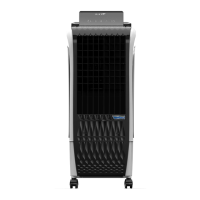
This document serves as a user manual for the Diet 3D Low Energy Evaporative Cooler, a device designed for natural cooling and air purification. The cooler is equipped with i-PURE TECHNOLOGY, which incorporates a multi-stage air purification system.
Function Description
The Diet 3D is a versatile appliance that functions as an air cooler, humidifier, and air cleaner. It operates on the principle of evaporative cooling, where water evaporates into the air, creating a mixture of air and water molecules. This chemical change draws heat from the water molecules, resulting in a spot cooling effect. This makes it an effective alternative spot cooling solution for rooms and spaces that cannot be sealed or traditionally air-conditioned, particularly in well-ventilated large rooms and commercial spaces.
The multi-stage air purification system, powered by i-PURE TECHNOLOGY, includes several specialized filters:
- ALLERGY FILTER (TiO2): This filter is coated with TiO2, which attracts, reacts with, and deactivates various allergens.
- BACTERIA FILTER: Made of carbon fabric treated with microbial agents, this filter traps and destroys harmful bacteria and microorganisms from the air.
- ODOUR FILTER: A carbon filter designed to effectively absorb odours, smoke, chemicals, fumes, and Volatile Organic Compounds (VOCs) from the air.
- PM2.5 FILTER: This cellulose-based filter utilizes flowing water to strip the air of unwanted impurities, specifically targeting fine particulate matter.
- DUST FILTER: This filter eliminates microparticles such as pollen, skin cells, dust mites, pet dander, and mould spores, removing larger particles that contribute significantly to air pollution.
The device can operate in air cleaner mode without water, but the evaporative cooling mode requires a sufficient water level in the tank.
Usage Features
The Diet 3D cooler offers a range of features designed for user convenience and optimal performance:
- Fan Speeds and Oscillation: It provides three fan speeds (low, medium, and high) allowing users to adjust between maximum cooling and quiet operation. An oscillation setting enables the airflow to gently swing from left to right, distributing cool air more broadly. The vertical direction of the airflow can also be adjusted manually.
- Control Panel and Remote Control: The unit features easy-to-use pop-up touchscreen controls on the device itself. Additionally, a magnetic remote control allows users to operate all functions from a distance of up to 6 metres, pointing it towards the receiver on the front of the air cooler.
- Timer Function: Users can set a timer for the unit to automatically turn off after a selected duration, up to a maximum of 7 hours.
- Water Tank: The cooler has a large, easy-to-fill water tank located at the front of the unit. It is crucial to ensure the water level does not exceed the MAX level and does not fall below MIN during operation. For low-temperature use (as a humidifier), filling the tank with warm (but not hot) water is recommended. An overflow outlet at the rear helps prevent spillage during overfilling. A "WATER TANK EMPTY" indicator on the display panel alerts users when the tank needs refilling for cooling mode.
- Mobility: Equipped with wheels (castors), the unit offers great mobility, allowing it to be easily moved from one room to another. When moving, it must always be kept upright and placed on an even surface.
- Energy Efficiency: The Diet 3D utilizes an inverter motor, contributing to improved energy efficiency and quieter operation.
- Optimal Placement: For maximum efficiency, the unit should be placed near an open door or window to facilitate cross-ventilation. Evaporative air coolers perform best in drier climates (relative humidity 60% or lower) and should not be used in enclosed or sealed spaces. The ambient operating temperature range for the unit is 5°C to 40°C.
Maintenance Features
Regular maintenance is essential to ensure the longevity and optimal performance of the Diet 3D cooler:
- Safety First: Before performing any cleaning or maintenance, always turn off the appliance and disconnect it from the mains power supply.
- Surface Cleaning: The plastic housing can be cleaned with a duster or a soft, wet cloth. Avoid using chemical solvents (such as benzene, alcohol, or gasoline) as they can cause irreversible damage. Care should be taken to prevent water from entering the control panel.
- Water Tank Cleaning: The water reservoir should be drained and refilled with fresh water at least once a week. This practice helps reduce mineral deposits and keeps the filters clean. The unit should not be run in cooling mode with stale water in the tank.
- Honeycomb Filter Pads Maintenance: The appliance comes with three honeycomb cooling/filter pads (at the back and sides). The cleaning frequency for these filters depends on local air and water conditions. In areas with high mineral content in the water (hard water), mineral deposits may build up on the filters, restricting airflow. If mineral deposits are present, the filters should be washed under fresh water. It is recommended to clean the honeycomb filter at least every two months, or more frequently based on individual needs.
- Drying Filters: For best results, allow the honeycomb filter to dry after each use by turning off the cooling function for 15 minutes (with an empty water tank) before completely turning off the unit.
- End of Season Maintenance: At the end of the cooling season, the tank should be emptied and washed. The honeycomb pads should be allowed to drain and cleaned. After cleaning, the unit should be covered and stored in a dry place.
- Filter Odour: When the product is used for the first time, the honeycomb cooling media may have an odour, which should dissipate within a week of use. If the honeycomb filter develops mould or bacterial growth, it should be cleaned with a mild antibacterial solution and dried before use.
The manual also provides troubleshooting steps for common issues like no power, no dust elimination, and odour emission, advising users to contact the service centre if solutions are not found. It emphasizes that unauthorized repair attempts will invalidate the warranty and may cause bodily harm.


 To Next Page
 General