2.3 - Weather
• Never underestimate the wind and sea conditions.
• Consult the local forecast before setting out.
* Never attempt to kitesurf in changing or stormy weather conditions.
* Never attempt to kitesurf if the wind is strong and gusty.
* Never attempt to kitesurf if the wind is off shore, blowing you away from land.
* Never ride in or near electrical storms as the lines will massively increase your chances of electrocution.
• Find out about tides and areas with strong currents.
• Beginners must sail in calm sea conditions.
• Take time to gauge the wind speed once you have reached your chosen sailing area.
• If you are not confident in evaluating the forecast, speak to someone who is competent in forecast interpretation.
• Wear suitable equipment to avoid hypothermia-related accidents (wetsuits and drysuits).
* Safety helmets and impact vests are strongly recommended.
2.4 – Beginners
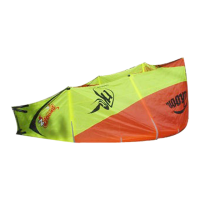
• TAKOON kites (specially Skoop2) are a performance kite which is not suitable for beginners.
• We highly recommend practising on a very small traction kite before attending a kitesurf school, as you will find
this dramatically reduces the time it takes you to learn the basics.
• Learn how to fly the kite on land in wide open spaces before venturing to the water.
• Always choose the size of kite that corresponds to your weight and level of competence.
2.5 – Good conduct
• Be respectful of other people out on the water: swimmers, surfers, windsurfers, jet skis, pleasure craft etc…
• Follow the rules of priority on the water.
• Make sure your lines are not laid out in an area used by pedestrians. Wind up your lines when not in use.
• Do not let anyone move between you and your kite.
• Help other kitesurfers with launches and landings. You’ll appreciate their help when it’s your turn!
• If necessary, explain the essential safety rules to other kitesurfers.
• Don’t touch other kitesurfers’ equipment unless specifically asked.
• Usually check and test your quick releases
2.6 – Appropriate clothing
The following is a list of indispensable kitesurfing
gear:
Never forget: it’s easier to kitesurf if you’re alive !
sunblock
Life jacket/impact vest
Line cutter Gloves and boots
essential recommended
helmet
Neoprene wet suit
3- Wind: Basic principles
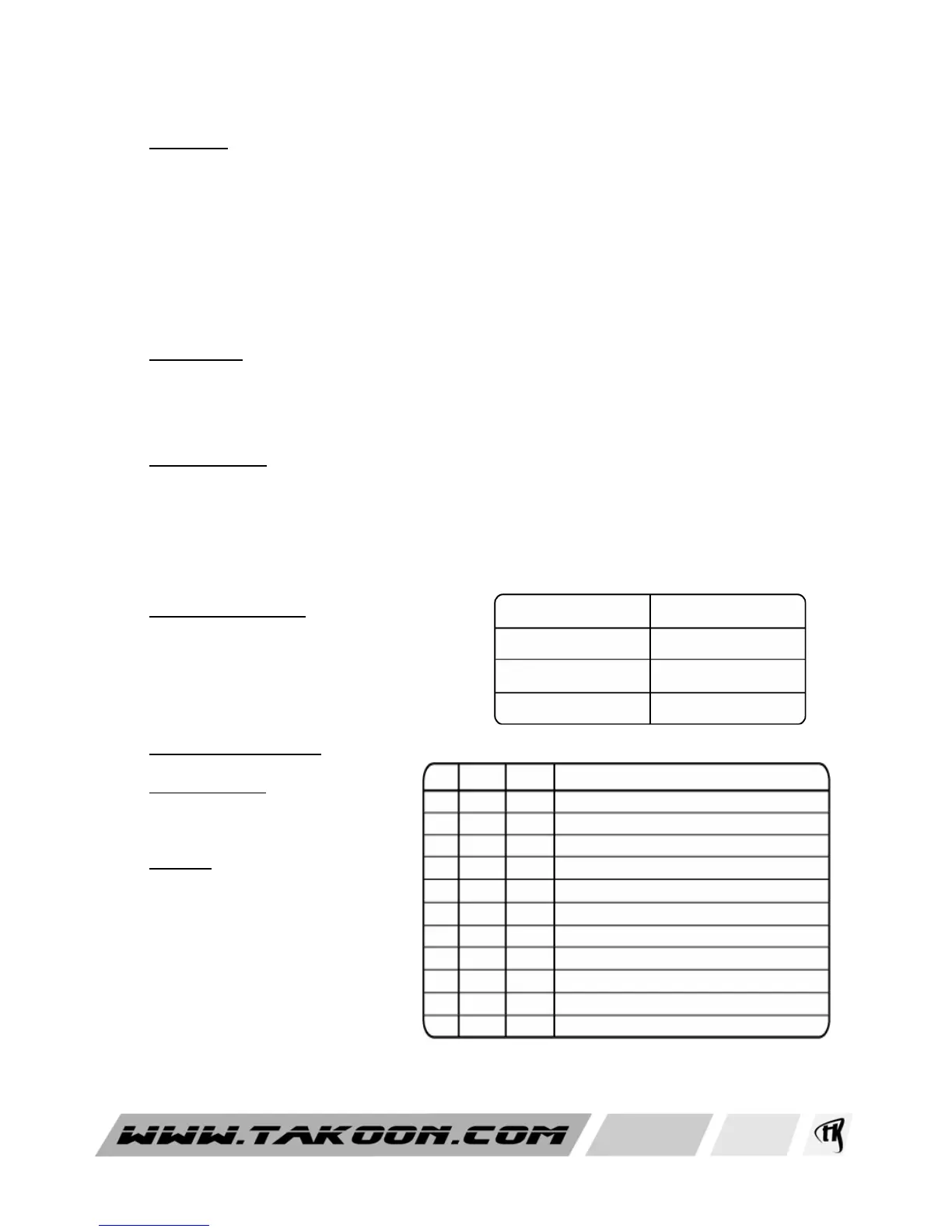
Bft Km/h Knots Description
0 <1 <1 Calm, smoke raises vertically
1 1-5 1-3 Light air
2 6-11 4-6 Gentle breeze
3 12-19 7-10 Flags extended
4 20-28 11-16 First white caps appear
5 29-38 17-21 Trees begin to sway
6 39-49 22-27 Sand blows on the beach/not for beginners
7 50-61 28-33 Breaking waves blow in streaks
8 62-74 34-40 Resistance felt in walking against wind
9 75-88 41-47 High waves and large spray
10
+ >89 >48 Go home and drink a beer
3.1 – Wind strength
Wind strength can be measured with the
Beaufort scale, miles/kilometres per hour, or
knots.
Important:
the wind scale supplied below is
merely for guidance and should not be your
only criterion for gauging wind strength: you
should also take into account its ‘density’ and
how gusty it is.
Never use your kite in extremely gusty
conditions : even if you do escape injury you
won’t enjoy the experience anyway!
1 knot = 1,852 km/h


 To Next Page
 Loading...