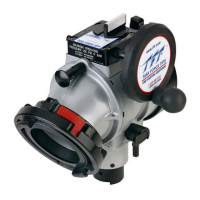
©Copyright Task Force Tips, Inc. 2004-2009 LIA-202 October 20, 2009 Rev01
2
1.0 MEANING OF SAFETY SIGNAL WORDS
A safety related message is identied by a safety alert symbol and a signal word to indicate the level of risk involved with a particular
hazard. Per ANSI standard Z535.6-2006, the denitions of the four signal words are as follows:
DANGER indicates a hazardous situation which, if not avoided, will result in death or serious
injury.
WARNING indicates a hazardous situation which, if not avoided, could result in death or serious
injury.
CAUTION indicates a potentially hazardous situation which, if not avoided, may result in minor
or moderate injury.
NOTICE is used to address practices not related to personal injury.
2.0 GENERAL INFORMATION
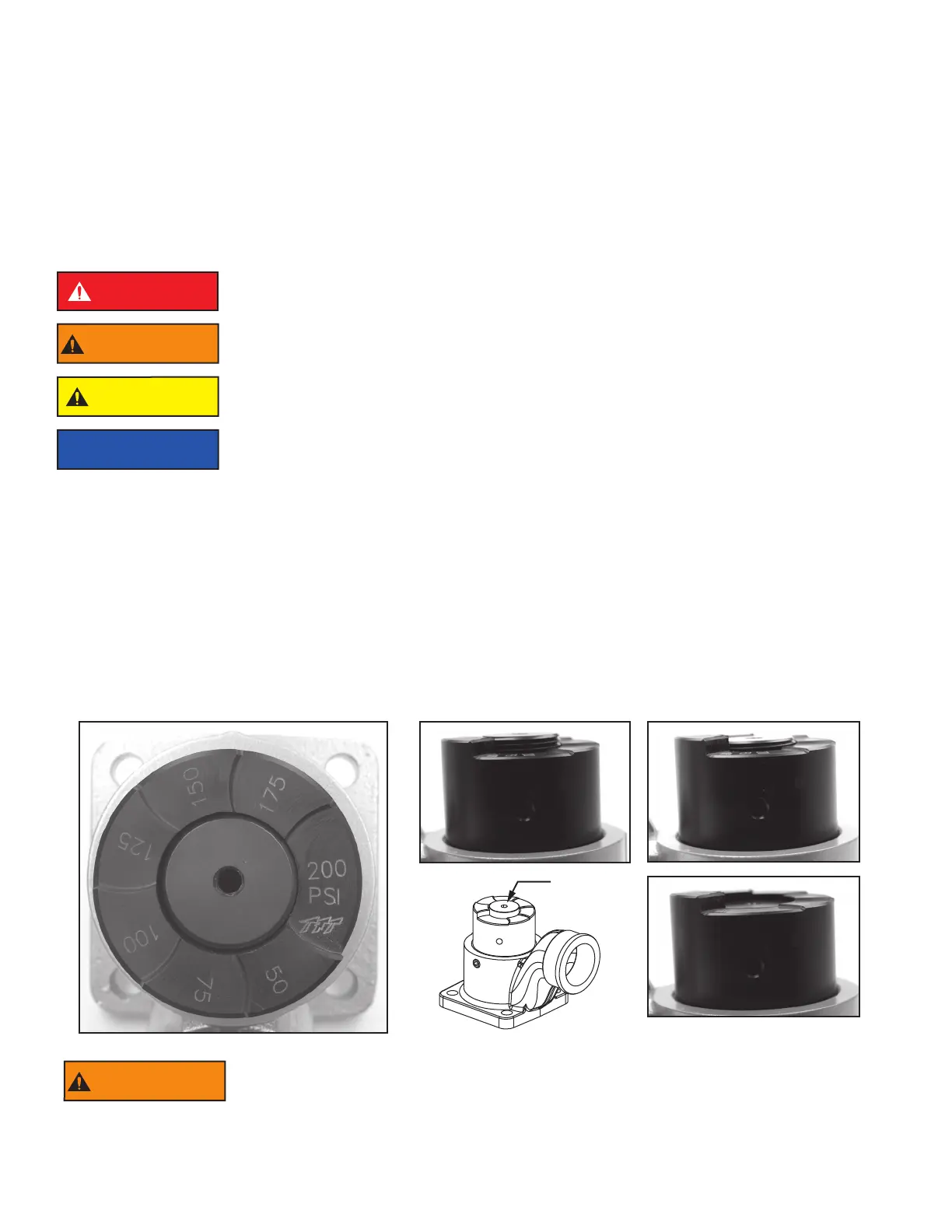
The Pressure Relief Valve may be set to any pressure between 50 and 200 psi. Its function is to protect the pump and the supply
hose from excess pressure. The relief valve may be mounted with its opening facing the front, back, right or left. A section of tubing
or pipe may be mounted on the round spout to route the water in any direction. To install the Pressure Relief Valve;
1) Install the O-ring in the groove on the Pressure Relief Valve.
2) Install four 7/16” bolts through the Pressure Relief Valve ange. Use a drop of thread locking compound on the threads of the
bolts to prevent them from coming loose.
3.0 RELIEF VALVE PRESSURE SETTING
To set the relief valve pressure turn the adjusting screw on the relief valve housing until the surface of the screw is even with the
desired pressure. Do not cap or plug discharge opening.
The Pressure Relief Valve will open to relieve excess pressure but it may not have enough
ow capacity to protect against large pressure spikes such as those caused by water hammer.
Excess pressure can cause equipment failure and directly or indirectly lead to injury or death.
Always operate valves slowly to avoid the risk of water hammer.
Table Of Contents
50 PSI 125 PSI
200 PSI
1.0 MEANING OF SIGNAL WORDS
2.0 GENERAL INFORMATION
3.0 RELIEF VALVE PRESSURE SETTING
4.0 RELIEF VALVE FLOW vs PRESSURE CURVE
5.0 DRAWING AND PARTS LIST
6.0 MAINTENANCE AND INSPECTION
7.0 WARRANTY


 To Next Page
 Loading...