The TBB POWER M12-100 Lithium Battery Module is a standard and high-performance lithium iron phosphate battery system designed for various applications requiring a safe and stable power supply. It supports parallel connection, offering advantages in terms of safety, energy density, service life, and environmental protection. This user manual provides detailed information on product structure, parameters, basic procedures, and methods of installation, as well as operation and maintenance.
Function Description:
The M12-100 is a 12V lithium battery with a capacity of 100Ah. It features a positive electrode made of lithium iron phosphate (LiFePO4) material, which ensures good safety performance and a long cycle life of 3000 cycles at 25°C, 0.5C charge and discharge. The module is equipped with a high-performance Battery Management System (BMS) that offers over-discharge, over-charge, over-current, temperature, and other protection functions. This automatic charge and discharge management and single cell balance function enhance the battery's reliability and lifespan. The battery supports a maximum 200A discharge current and can be connected in parallel for systems requiring up to 8 units, allowing for a total capacity reaching 12V 800Ah. It also features external charging activation, where the battery can actively wake up and allow charging and prohibit discharging if the voltage is >14V. The module can be equipped with an optional MEH-B display panel for battery switch and battery status (voltage, current, SOC) display. It has a low self-discharge rate, with standby power consumption after the battery is turned on being <50mA, and it can be reduced to <0.1mA after the battery is turned off. The battery operates within a wide working temperature range of -30°C to +60°C, ensuring good cycle life and discharge performance at high temperatures. An optional low-temperature heating unit allows the battery to operate in colder conditions, enabling automatic battery thermal management under low-temperature conditions. With external power supply (mains power, solar energy, vehicle engine), the battery temperature can be automatically heated to meet the requirements of charging and discharging under low-temperature conditions. It takes about 30 minutes from -20°C to +5°C. The battery is designed to be small, light, and have high energy density.
Important Technical Specifications:
- Model: M12-100
- Cell type: LiFePO4
- Rated capacity: 100Ah
- Rated power: 1.28kWh
- Rated voltage: 12.8V
- Charging voltage: 14.2V
- Recommended charging current: 50A
- Maximum charging current: 100A
- Continuous discharge current: 100A
- Maximum discharge current: 150A (30 minutes), 200A (13 minutes for M12-100/H and M12-100/P models)
- Cell operating temperature (charging): 2°C ~ 60°C
- Cell operating temperature (discharging): -30°C ~ 60°C
- Storage temperature range (<1 month): -20°C ~ 45°C, 20% ~ 80% SOC, <65% RH
- Storage temperature range (<=6 months): -20°C ~ 35°C, 20% ~ 80% SOC, <65% RH
- Operating humidity range: 10% ~ 90% RH
- Dimensions: 310mm × 165mm × 187mm
- Weight: 11kg
- IP protection: IP20
- Certifications: CE, UN38.3
- Shipping class: UN3480
- Cycle life: >3000 (0.5C charge and discharge, DoD100%, @25°C)
- Heating element: NO (YES for M12-100/H and M12-100/P models)
- Maximum number of parallel: 8
- Display unit (optional): MEH-B
Usage Features:
- Installation: The battery module requires careful installation. It is crucial to connect wires properly, ensuring positive and negative poles do not reverse. For safety, the product should be grounded properly before normal use. The battery is designed for parallel connection, with up to 8 units supported.
- Wiring: The manual provides detailed wiring diagrams for single lithium battery wiring and parallel connection. Recommended wire diameters and lengths are specified for different connections (L1-L8) to an inverter load.
- Accessories: Optional accessories include fuse holders (BANL-B or ANL350, 350A/32V), power cables (70 mm², 0.3m, red braided cable), MEH-B display panel, and remote battery switch.
- MEH-B Display Panel: This optional external display unit provides current operating information of the lithium battery. It connects to the battery through a UTP standard network cable and features a built-in Bluetooth module for monitoring via an APP.
- Remote Battery Switch: An optional remote battery switch can be connected to the Battery Switch interface to turn the battery on and off.
- Safety Precautions: The manual emphasizes several safety precautions, including:
- Always pay attention to safety signs on the product and manual.
- Strictly follow installation, operation, and maintenance regulations.
- Do not short-circuit lithium batteries.
- Lithium batteries must be installed in a dry and clean environment.
- Do not stab, hit, trample, or strike the battery.
- Ensure positive (+) and negative (-) polarities are correctly connected.
- Do not charge the lithium battery for a long time when not in use.
- When charging, use the correct charger and charging voltage.
- During use, if the system needs to be moved or rewired, the power must be completely cut off.
- Do not place metal tools on the battery.
- Ensure all cables have good electrical characteristics and suitable wire diameter.
- Use a dry powder fire extinguisher in case of fire.
- Lithium batteries should be kept away from water, dust, and pollution sources.
- High voltage inside the battery.
- The DC fuse must be turned off before servicing.
Maintenance Features:
- General Maintenance: Before cleaning and maintaining the lithium battery, disconnect all loads and charging equipment. Ensure a protective cover is in place to prevent the risk of short circuits.
- Security Check: Regularly check connection points for loose or broken wires, cracks, deformation, leakage, or other types of damage. If damage is found, it must be replaced immediately.
- Surface Clean: Clean the lithium battery surface with a soft, dry cloth or paper towel. Do not use liquids, solvents, or abrasive tools.
- Long-Term Storage: If the battery is not used for a long time, turn the rocker switch on the MEH-B to "O" or turn the Power switch on the lithium battery to "OFF" to prevent damage caused by over-discharge. For long-term storage, the battery should be charged to 80% capacity regularly, and the charging cycle is required to be less than 3 months.
- Low Temperature Environment: In a low-temperature environment, the cell temperature is ≤2°C, and the lithium battery will report a low-temperature fault alarm. The external charger is turned on, and the charging voltage is 14-14.2V. The lithium battery will automatically turn on the heating function. After the automatic heating, the lithium battery will be charged. The battery can be charged normally, and the battery low temperature alarm will be released. For M12-100, it will take about 90 minutes to heat from -20°C to a temperature that allows charging.
- Over-Discharged Battery: If the battery is shut down due to over-discharged status, it will not be charged without being charged in 10 minutes. To wake up the battery, turn the battery switch or rocker switch of MEH-B OFF and then ON. Charge the battery in 10 minutes if it wakes up. If the battery fails to wake up, charge the battery directly with a charge voltage of 14.0V or greater. The battery will wake itself up and start charging as long as it measures a voltage of 14.0V or greater.
- Storage: Store the lithium battery in a manual-specified service life of the lithium battery during storage. If the storage instructions are not followed, the lithium battery may be over-discharged and damaged. The optimal storage conditions are 0°C ~ 35°C, 20% ~ 80% SOC, <65% RH. Short-term storage conditions (within one month) are -20°C ~ 45°C, 20% ~ 80% SOC, <65% RH. The self-discharge rate of the lithium battery is less than 3%/month.
- Disposal and Recycle: Dispose of the lithium battery to SOC 0% before discarding it. Use electrical tape or other insulating tape to insulate the positive and negative poles. Lithium batteries can be recycled to the manufacturer for disposal.
- Troubleshooting (FAQ): The manual provides a comprehensive FAQ section to address various issues, including:
- Output short circuit protection
- Discharge over current protection
- Charging over current protection
- Low voltage protection of the battery
- Cell low voltage protection
- High voltage protection of the battery
- Cell high voltage protection
- Discharge high temperature protection
- Discharge low temperature protection
- Charging high temperature protection
- Charging low temperature protection
- BMS circuit high temperature protection
- BMS circuit low temperature protection
- External input overvoltage protection
- BMS internal failure
- Continuous flashing (parallel communication failure)
For each issue, suggestions are provided, such as checking ambient temperature, battery wiring, wire diameter, discharge current, charging voltage, and contacting the dealer if the problem persists.

 Need help?
 General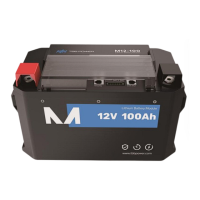

 To Next Page