This document is the user manual for TDS (Technical Dive System) scuba diving regulators, covering 1st stages, 2nd stages, and octopus regulators. The manual provides instructions for use, maintenance, and service for the OCEANUS, PROTEUS, GULL Z, and TAC BLACK models.
Function Description:
The TDS regulators are on-demand respiratory protective devices (DPO) designed for SCUBA diving, manufactured in accordance with the harmonized standard EN 250:2014 and Directive 89/686/EEC (PPE) for Category III devices. They are designed to deliver air to the diver on demand, converting high-pressure air from a SCUBA cylinder to a breathable pressure. The system consists of a 1st stage, a 2nd stage, and an LP-5-27”-BK rubber hose assembly, which can be configured to the diver's needs. Some models are also suitable for use as an octopus regulator, providing an alternative air source.
Important Technical Specifications:
1st Stage:
- Maxima Pressure Work: INT: 3300 PSI / 232 Bar; DIN: 4350 PSI / 300 Bar.
- Average Pressure: 140 +/- 5 PSI (9.65 +/- .35 BAR).
- Number and Size of Ports: 2 HP 7/16", 5 MP 3/8".
- ANSI Tested Depth: 80 METERS.
- Certified Depth: 50 METERS.
- Gas Composition: Air (OCEANUS, PROTEUS, TAC BLACK), Nitrox (GULL BLACK).
- HP Ports: 1 (OCEANUS), 2 (PROTEUS, GULL, TAC BLACK).
- LP Ports: 3 (OCEANUS), 4 (PROTEUS, TAC BLACK), 5 (GULL).
- Material: Machined marine brass and chrome for durability.
- Intermediate Pressure: Adjustable in PROTEUS, GULL BLACK, and TAC BLACK models.
- Format: DIN or INT.
2nd Stage:
- Material: Thermoplastic and marine brass with chrome plating for greater durability.
- Nozzles: Multiple nozzles available for a comfortable fit.
- WOB (Work of Breathing): 0.9 J/L.
- Respiratory Resistance: 2.0-5.0 mbar (0.8-2.0 inch-H2O).
- Cold Water Use: Demand regulators not designed for cold water use are marked "> 10°C". Those suitable for water temperatures below 10°C (50°F) are marked EN250A. If marked EN250A> 10°C, they are suitable for use above 10°C (50°F).
Usage Features:
- Assembly: The manual details the assembly of the 1st stage to the bottle valve, including specific instructions for both INT and DIN type connectors. It emphasizes hand-tightening only and checking the O-ring condition.
- Pre-dive Verifications: Before diving, users must inspect all hoses for secure connections and damage, visually check the regulators for external damage, ensure the nozzle is intact, verify the submersible pressure meter is at zero, and correctly orient the hoses.
- Pressurizing the Regulator: Instructions include slowly opening the bottle valve, checking for leaks, verifying the submersible pressure meter reading, purging the 2nd stage, and inhaling to ensure easy breathing. A warning is given not to reposition hoses under pressure.
- Diving in Cold Water: Specific precautions are outlined for diving in cold water (below 10°C/50°F), including protecting the regulator from water inflow, keeping equipment warm and dry, performing pre-dive checks in a warm place, avoiding breathing through the regulator or purging in very cold air before immersion, and avoiding removing the regulator from the mouth underwater.
- Octopus Use: If used as an octopus, it is recommended to cover the nozzle to prevent foreign object intrusion. If free-flowing underwater, turn the regulator so the nozzle points down.
Maintenance Features:
- After the Dive: Instructions for removing the regulator from the bottle, emphasizing rinsing the regulator completely with fresh water before depressurizing to prevent contaminants from entering. Care must be taken to prevent moisture from entering the 1st stage inlet or DIN valve opening.
- Cleaning: The manual recommends periodically disinfecting the 2nd stage with an FDA-approved solution. For thorough cleaning, the regulator should be connected to a pressurized SCUBA bottle and fully immersed in a freshwater bath, then rinsed vigorously with a strong stream of water, especially the main spring cavity of environmentally unsealed 1st stages and the 2nd stage nozzle/front cover openings.
- Storage: After cleaning and drying, the regulator should be stored in a clean, sealed equipment box, away from extreme heat, ozone, chlorine, and UV rays, which can degrade rubber and plastic components. Never store the regulator connected to the bottle valve.
- Prohibited Substances: A warning against using solvents, petroleum-based substances, or aerosols for cleaning or lubrication, as they can damage rubber and plastic parts.
- Annual Inspection and Service: Factory-prescribed service by an authorized TDS Technician is required at least once a year, regardless of use. For training purposes or intensive use, service may be needed every three to four months.
- Scheduled Service Exceptions: If the regulator is used for less than 50 dives per year, a review every two years with an inspection procedure in "inactive" years is allowed (Year 1: Inspection, Year 2: Review, etc.). Both inspections and reviews must be documented.
- Warranty: A limited lifetime warranty is offered to the original purchaser for defects in material and workmanship under normal use, proper care, and prescribed service. It requires original proof of purchase and is voided by misuse, abuse, neglect, modification, or unauthorized service, and by use by untrained or uncertified persons.

 Need help?
 General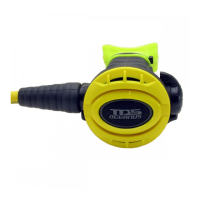

 To Next Page
