Need help?
Do you have a question about the TDT RZ6 and is the answer not in the manual?
Provides a comprehensive overview of the RZ2 BioAmp Processor's design and capabilities.
Explains how TDT Synapse software controls the RZ2 and device programming via RP Visual Design Studio.
Introduces the RZ5D BioAmp Processor, a versatile solution for real-time processing and simultaneous acquisition and stimulation.
Describes RZ5P as an optimized solution for fiber photometry and multi-channel neurophysiology with two 400 MHz Sharc DSPs.
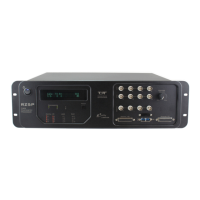
Introduces RZ6 as a high sample rate processor with flexible I/O capabilities, supporting up to four DSP cards.
Introduces RS4 as a high-performance data storage array for high channel count data acquisition from RZ2.
Describes PO8e interface for high channel-count data transfer to PCI Express card for real-time processing.
Describes RX8 as a high channel count, high sample rate analog I/O system supporting up to 24 channels.
Describes RX6 as a high performance multiple DSP device for acquiring/producing high sample rate signals.
Describes RX5 as a powerful multiple DSP device for high channel count neurophysiology data processing.
Describes RX7 as a high performance processor for microstimulation applications, controlling MS16 stimulus isolator.
Describes RP2/RP2.1 as real-time processors with Sharc DSP for programmable signal processing.
Describes RA16BA Medusa Base Station for acquiring, filtering, and processing digitized signals from Medusa preamplifiers.
Introduces Barracuda features like nanosecond accurate event-timing, fast DACs, and precise stimulus presentation control.
Describes RM1/RM2 as self-contained real-time processors for designing/debugging RPvdsEx circuits.
Describes PZ5 as a multi-modal neurodigitizer for recording biological potentials, compatible with Z-Series amplifiers.
Describes PZ5M as a multi-modal neurodigitizer for recording biological potentials, battery operated with Mains power.
Describes PZ2 as a high channel count preamplifier for extracellular recordings, featuring fast fiber optic connection.
Describes PZ3 as a high channel count, low impedance amplifier for ECOG, EEG, LFP, EMGs, and similar applications.
Describes PZ4 as a high channel count manifold for transmitting extracellular recordings acquired with ZCD digital headstages.
Describes Medusa Preamplifiers as low noise digital bioamplifiers with PCM or Sigma-Delta ADCs for signal acquisition.
Describes RA8GA for acquiring and digitizing multi-channel data from various analog voltage sources.
Introduces IZ2 Stimulator as a computer-controlled neural microstimulator delivering user-defined stimuli through up to 128 electrodes.
Outlines a typical system configuration including stimulator, battery pack, and RZ processor with DSP.
Describes IZ2M/IZ2MH as neural stimulator outputting constant-current stimulation and providing voltage feedback.
Introduces MS4/MS16 as stimulus isolator converting digital waveforms to analog current waveforms.
Outlines a typical system configuration including RZ processor, stimulus isolator, and battery pack.
Describes RV2 as a video processor and collection device for machine vision cameras, supporting target tracking and storage.
Describes MZ60 MEA Interface for high spatio-temporal resolution tissue slice and cell culture recordings with RZ2 and PZ5.
Outlines a typical system with RZ2 processor, PZ5 digitizer, and MZ60 MEA interface, with optional stimulus generation.
Describes ZIF-Clip® standard headstages for probe impedance, connecting to PZ or RA16PA preamplifiers.
Describes ZD digital headstages using Intan amplifier chips to digitize recordings, routed to PZ5 for transfer.
Describes ZCD digital headstages using Intan amplifier chips to digitize physiological recordings, routed to PZ4 manifold.
Describes NN64AC as recommended for extracellular neurophysiology with silicon electrodes, metal microelectrodes or microwire arrays.
Describes CB16-PMT as recommended for tunneling needle/inline tail probes with impedance ranging from 20 kOhm to 5 Mohm.
Introduces SH16 as a 16 channel acute headstage with relays for remote switching between recording and stimulation.
Describes RA4LI headstage for low impedance electrodes, connecting directly to RA4PA Medusa preamplifier.
Describes S-BOX as a 32-channel passive signal splitter for routing low impedance biological signals to acquisition system.
Introduces S-BOX_PZ5 as a 32-channel passive signal splitter for use with PZ5 Amplifier.
Details ZIF-Clip® microwire arrays made to user specifications, using polyimide insulated tungsten microwire.
Explains PA5 operation through front panel controls in Atten and UserAtt modes.
Describes RBOX as a subject response interface for psychoacoustics, with buttons, LEDs, and battery power.
Describes BH32 as a network appliance for controlling behavioral cages, providing 32 I/O lines.
Introduces zBus as TDT's high-speed, low-noise bus for System 3 modules, housed in a rack-mountable chassis.
 General
| Category | Real-time Processor |
|---|---|
| Bit Depth | 24-bit |
| Dynamic Range | 110 dB |
| Interface | USB 2.0 |
| Operating System Compatibility | Windows |

 To Next Page