Section 8 – Aircraft Care and Maintenance
5.3. MOORING
The aircraft is moored to insure its immovability, protection, and security under
various weather conditions.
Mooring is strongly recommended when the wind is more than
15 knots and the a/c is completely refuelled.
Procedure
1. Position airplane on levelled surface and headed into the prevailing wind, if
practical
2. Center nose wheel and engage parking brake and/or use the wheel chocks
Do not engage the parking brakes at low ambient
temperature, when an accumulation of moisture may
cause the brakes to freeze, or when they become hot
from severe use. In these cases use wheel chocks.
3. Secure pilot control wheel by wrapping the seat belt around it
4. Assure that flaps are retracted
5. Electrically ground airplane, by connecting ground cable to the engine muffle
6. Install control locks
7. Install protective plugs
8. Close and lock cabin doors.
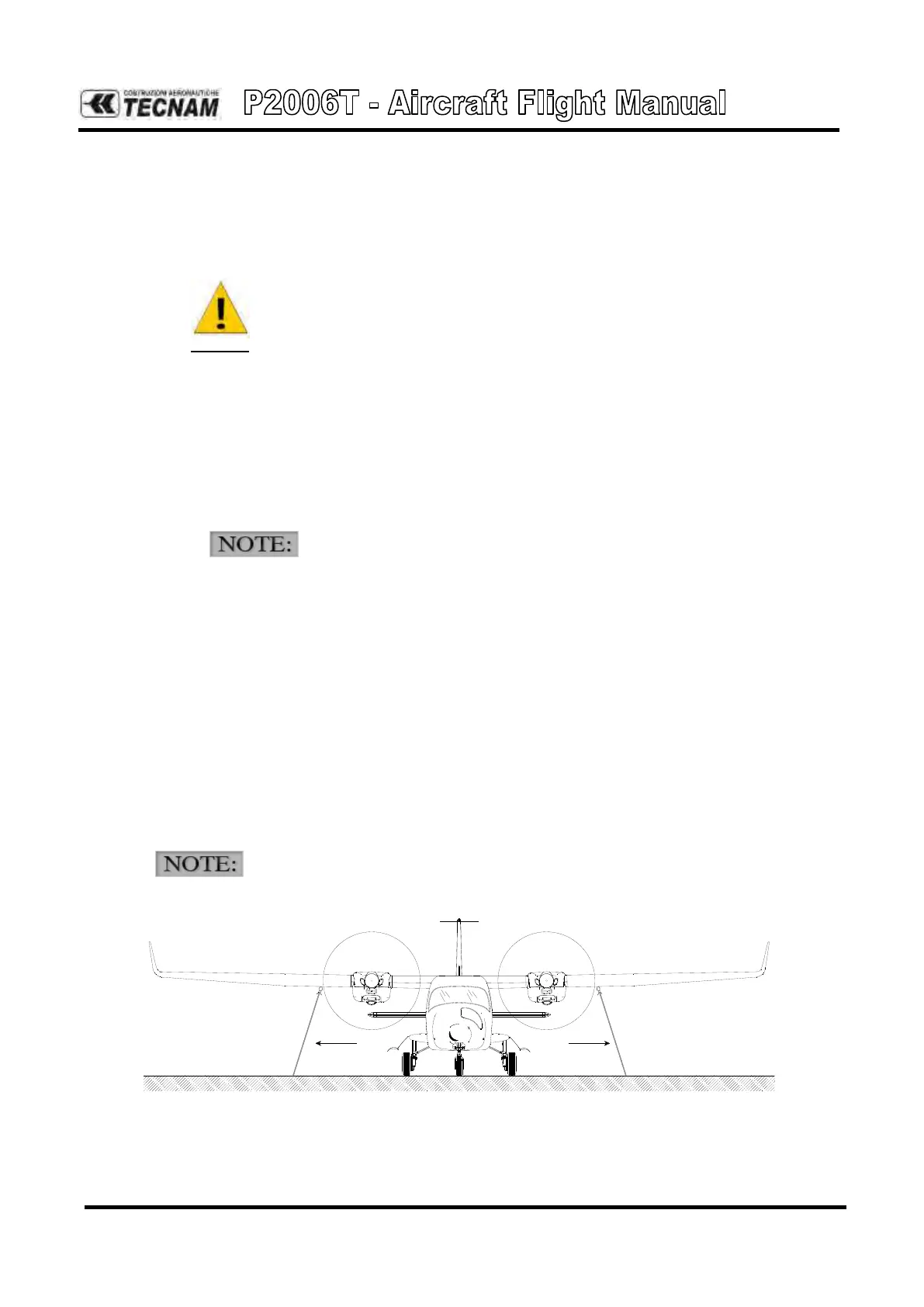
9. Secure tie-down cables to the nose gear leg (in correspondence of the wheel
fork) and to the wings and tail cone tie-down rings at approximately 45 degree
with respect to the ground. (Refer to following figures)
Additional preparation for high winds includes tie-down ropes from the
main landing gear forks employment.
Mooring – front view


 To Next Page