This document serves as a user manual for a mobile phone, model T301, providing essential information for its operation, maintenance, and safety.
Function Description
The T301 mobile phone is designed to offer a range of practical functions for both work and leisure activities. It incorporates a user-friendly human-computer interface, aiming to meet diverse user requirements. Key functionalities include:
- Communication: The phone requires a valid SIM (Subscriber Identity Module) card to function for communication purposes. This card is provided by a network supplier.
- Personal Organization: Features such as a name card holder and alarm clock are integrated to assist with personal organization.
- Multimedia: The device supports audio and video playback, allowing users to enjoy multimedia content.
- Imaging: A camera and video recording function are available for capturing moments.
- Productivity Tools: A calculator is included for convenience.
- Scene Mode: This feature likely allows users to optimize phone settings for different environments or activities.
- Messaging: The phone supports messaging capabilities.
- Storage: While the phone has limited internal storage, it supports an external memory card (T card) to enhance the experience with camera, video, music, and recording functions.
Usage Features
To ensure optimal performance and longevity of the T301 mobile phone, several usage guidelines are provided:
- SIM Card Installation: Before using the phone, a valid SIM card must be inserted. Users are advised to power off the phone before inserting or removing the SIM card to prevent damage. It is crucial to avoid touching the metal contact surface of the SIM card and to keep it away from electricity and magnetic forces to prevent data loss or damage.
- Memory Card Installation: An external memory card is recommended due to limited internal storage. Users should ensure the memory card is correctly placed and has good contact with the metal points.
- Battery Charging: The phone is powered by a rechargeable battery. When the electric quantity is low, the phone will automatically power off. Users should avoid letting the battery remain in a low-power state for extended periods, as this can negatively impact battery quality and service life. Overcharging should also be avoided. Only the designated charger should be used to ensure normal operation.
- Power Management: To prolong battery life, a new battery should be fully discharged during its first use. The charger should be unplugged when the device is not in use. Leaving a fully charged battery connected to a charger for over a week can shorten its lifetime.
- Temperature Considerations: The phone should not be exposed to extreme temperatures (below 0°C or above 45°C). Temperature affects the battery's charging limit; therefore, the battery should be cooled or warmed before charging. Charging should stop if the battery temperature is above 55°C or below 0°C, and resume when it is below 50°C or above 5°C.
- Short-Circuit Prevention: The battery should only be used for its intended purpose, and short-circuiting must be avoided. Accidental short-circuiting can occur if a metallic object connects the positive (+) and negative (-) terminals.
- Damaged Battery: Damaged batteries should not be used.
- Environmental Considerations: Users are advised to follow local laws and ordinances for disposing of used batteries and electronic waste. E-waste should not be dumped in garbage bins or municipal solid waste streams. Improper disposal can harm human health and the environment.
- Traffic Safety: When driving, the phone should not be used unless there is an emergency or the vehicle has safety wireless equipment. It is recommended to park the vehicle in a safe place to ensure full attention to driving. Related regulations should be observed. Certain electronic systems in a vehicle may be affected by the phone's electric waves if there is inadequate protection. Using the device only in vehicles with an antenna is suggested, and only qualified personnel should install the device in a vehicle.
- Aircraft Safety: The device must be switched off before boarding an aircraft. Using wireless teledevices in an aircraft can be dangerous to aircraft operation, disrupt wireless telephone networks, and is illegal. GSM service will be unavailable during flight.
- Environment Safety: Special regulations in force in any area should be followed. The device should be switched off when its use is prohibited or when it may cause interference or danger. Radio transmitting equipment, including wireless phones, can interfere with inadequately protected medical devices. Users with medical devices should consult a physician or the device manufacturer. The device may interfere with hearing aids, pacemakers, and other medical devices. It is suggested to switch off the device in areas with potentially explosive atmospheres, such as gas stations and chemical factories. Restrictions on the use of radio equipment should be observed.
- Socket-Outlet: The socket-outlet for charging should be installed near the equipment and be easily accessible.
Maintenance Features
Proper care and maintenance are crucial for the T301 mobile phone to ensure its longevity and to maintain warranty coverage:
- Child Safety: The device and its accessories should be kept out of the reach of small children.
- Moisture Protection: The device must be kept dry, as all types of liquids or moisture can corrode electronic circuits.
- Temperature Extremes: The device should not be stored in hot areas, as high temperatures can shorten the life of electronic devices and warp or melt plastics.
- Unauthorized Opening: Users should not attempt to open the device unless instructed in the guide, as non-professional handling can damage it.
- Cleaning: Harsh chemicals or strong detergents should not be used to clean the device.
- Accessories: Only supplied or approved replacement attachments should be used. Unauthorized accessories could invalidate the warranty.
- Battery Disposal: Batteries should not be disposed of in a fire, as they may explode. Disposal should always follow local regulations. Improper disposal of batteries can cause harm to human health or the environment.
- Battery Storage: Leaving the battery in hot or cold places will reduce its capacity and lifetime. A device with a hot or cold battery may not work temporarily, even if fully charged.
- Product Disposal: At the end of their life, used electronic products, batteries, and packaging materials should be dropped in the nearest designated collection center. Packaging materials should be sorted for recycling according to waste disposal options. The battery should be removed from the product for recycling.
- FCC Compliance: Any changes or modifications not expressly approved by the party responsible for compliance could void the user's authority to operate the equipment. The device complies with part 15 of the FCC Rules, meaning it will not cause harmful interference and must accept any interference received. If the equipment causes harmful interference to radio or television reception, users are encouraged to reorient or relocate the receiving antenna, increase separation between equipment and receiver, connect equipment to a different circuit, or consult a dealer or experienced radio/TV technician.
- SAR Information: SAR (Specific Absorption Rate) tests are conducted using standard operating positions. The phone transmits at its highest certified power level in all tested frequency bands. The actual SAR level during operation can be well below the maximum value, as it depends on proximity to a wireless base station antenna. Before public sale, new phone models must be tested and certified by the FCC to ensure they do not exceed exposure limits. For body-worn operation, the phone has been tested and meets FCC RF exposure guidelines when used with an accessory designated for this product or an accessory that contains no metal and positions the handset a minimum of 0.5cm from the body. Non-compliance with these restrictions may violate RF exposure guidelines.

 Need help?
 General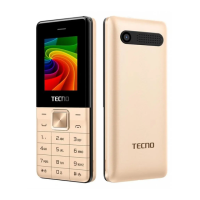

 To Next Page
