Need help?
Do you have a question about the Teka CNL 1001 and is the answer not in the manual?
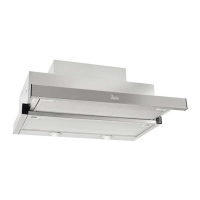
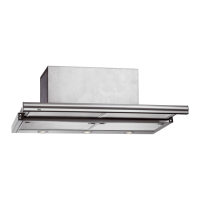
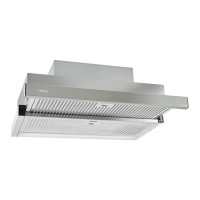
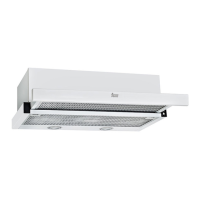
Details the components and features of the cooker hood, including motors, lighting, and filters.
Instructions for cleaning grease filters, including dishwasher or spray methods.
Guidance on cleaning the extractor's exterior body using warm soapy water.
Information on installing, lifespan, and replacing activated carbon filters.
Procedure for replacing the light bulbs in the extractor unit.
Guidelines for connecting the appliance via fixed wiring and double pole switched fused spur.
This document serves as a comprehensive manual for the Teka CNL 1001 / CNL 2002 cooker hood, providing instructions for installation, operation, and maintenance. It is designed to ensure users can fully utilize the appliance's features, prevent malfunctions, and address minor issues independently.
The cooker hood is a modern, functional, and practical appliance, constructed from high-quality materials, intended for domestic use to expel and purify gases generated during food preparation. Its primary function is to extract fumes and odors from the kitchen, ensuring a cleaner and more pleasant cooking environment.
The cooker hood operates with a motor system that offers three selectable positions, allowing users to adjust the extraction power according to their cooking needs. An independent light switch controls the integrated lamps, providing illumination over the cooking area. The appliance features an extractable group that expands the gas capture area, enhancing its effectiveness. For optimal performance, it is recommended to switch on the extractor a few minutes (3-5 minutes) before cooking begins to establish a continuous and stable airflow for fume extraction. Similarly, keeping the extractor on for a few minutes after cooking is complete helps to expel any remaining fumes and odors.
The hood can be configured for either external venting or recirculation. For external venting, the extracted air is expelled outside through a duct. If external venting is not feasible or desired, activated charcoal filters can be incorporated. These filters purify the air by absorbing odors and then return the cleaned air to the kitchen through the outlet pipe. Anti-return tabs are provided to be located in the outlet mouth, ensuring efficient airflow direction.
The cooker hood is designed for ease of use with clearly marked controls for speed and lighting. The motor controls allow selection of low, high, and intensive extraction speeds, catering to different cooking intensities. The light switch independently controls the lamps, which are typically 40W bulbs, providing ample illumination.
For installation, the hood is fixed to a kitchen unit. Specific height requirements must be observed: a minimum of 60 cm above electric cookers and 65 cm above gas cookers. If a gas cooker's instructions specify a greater distance, those must be followed. The appliance must be connected to a wall socket with an effective earth. When the extractor operates simultaneously with other non-electrical cooking equipment, the outlet air pressure must not exceed 4 Pa (4 x 10^5 bar). To ensure optimal performance, the length of the outlet hose should not exceed 4 meters and should not include more than two 90° angles (elbows).
The front panel of the extractor can be exchanged to match the kitchen units. This involves withdrawing the movable group, removing the screws supporting the front, and then installing the new front using the same screws.
Regular cleaning and maintenance are crucial for the cooker hood's longevity and efficient operation. Before any cleaning or maintenance, the extractor must be disconnected from the mains.
Filter Cleaning: The filters, located over the cooking area, are easily withdrawn for cleaning. They can be cleaned either in a dishwasher (though aggressive detergents may blacken metallic surfaces without affecting performance) or by soaking them in hot water to facilitate grease removal. Special sprays can also be used, ensuring non-metallic parts are protected. After cleaning, the filters should be allowed to dry. It is recommended to clean the filter at least once a month, depending on usage frequency, as grease accumulates regardless of whether the extractor is switched on.
Extractor Body Cleaning: The extractor body should be cleaned using a cloth moistened with warm (approximately 40°C) soapy water, paying particular attention to the grids. Afterwards, it should be dried with a lint-free cloth. Metallic scouring pads, abrasive products, or scrapers with metallic surfaces (like knives or scissors) should never be used, as they can damage the surface.
Activated Charcoal Filter Maintenance (if installed): To install the charcoal filter, align its anchor points with the motor's anchorage and turn clockwise. These filters typically last three to six months, depending on usage conditions. Activated charcoal filters cannot be washed or regenerated; once exhausted, they must be replaced. Replacement involves withdrawing the old filter in the reverse order of installation.
Bulb Replacement: To change the bulbs, the filter support must be removed to access them. It is essential to disconnect the mains beforehand and ensure the bulbs are not hot. The maximum power for replacement bulbs is 40W.
Troubleshooting: The manual provides a troubleshooting guide for common issues such as the extractor not working, insufficient blowing or vibrations, and lights not illuminating. Solutions include checking the mains cable, revising the electricity circuit, cleaning or replacing filters, eliminating obstructions, contacting the installer, or exchanging/tightening bulbs.
Safety Instructions: Several safety precautions are emphasized. Users must observe installation and connection instructions before first use. The extractor should never be unplugged by pulling the cable; always pull the plug. The extractor should not be switched on if the electricity cable is worn, cut, or if there are signs of deterioration around the control panel. In case of malfunction, unplug the unit and contact technical service. Gas should not be left burning without a pan under the hood. Grease accumulation, especially in the filter, poses a fire risk and must be avoided. Flambéing food under the hood is prohibited. Local rules and regulations regarding air and fumes must be consulted before installation. The voltage and frequency of the mains supply must match the extractor's characteristics label. An omnipolar switch with a minimum contact separation of 3 mm must be incorporated into the fixed installation for switching on and off. The electrical connection must use a flexible cable, not a rigid conduit. Expelled air must not be directed into a duct used for other non-electrical food processing equipment. The room must have adequate ventilation if the extractor is used concurrently with other non-electrical cooking appliances. Gloves and caution are recommended when cleaning the inside of the extractor. The appliance is strictly for domestic use and for expelling cooking fumes; any other use is at the user's risk. Repairs should only be carried out by qualified technical assistance using original spare parts to avoid damage, malfunction, or safety risks. The manufacturer is not liable for inappropriate use.
 General
| Noise level | 49 dB |
|---|---|
| Number of speeds | 3 |
| Type of extraction | Recirculating |
| Maximum extraction power | 272 m³/h |
| Type | Built-under |
| Product color | Black |
| Power requirements | 220-240 V, 50Hz |
 Weight and Dimensions
| Depth | 490 mm |
|---|---|
| Width | 600 mm |
| Height | 184 mm |


 To Next Page