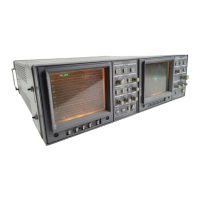
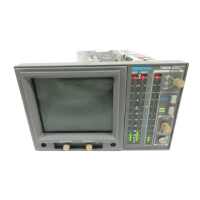
The Tektronix 1485R MOD W5F is a waveform monitor, specifically a modified version of the standard 1480R Series. This modification, designated W5F, primarily enhances the frequency response of the vertical amplifier, making it suitable for applications requiring improved high-frequency performance in video signal analysis.
Function Description
The 1485R MOD W5F is designed for precise measurement and display of video waveforms. It allows for detailed analysis of various video signal parameters, including amplitude, timing, and frequency characteristics. The core function of a waveform monitor is to provide a visual representation of the electrical signal that constitutes a video image, enabling engineers and technicians to ensure signal integrity and compliance with broadcast standards.
The W5F modification specifically targets the vertical amplifier, which is a critical component responsible for amplifying the input video signal before it is displayed on the Cathode Ray Tube (CRT). By increasing the frequency response of this amplifier, the instrument can more accurately reproduce and display high-frequency components present in the video signal. This is particularly important for analyzing modern video formats with higher bandwidths or for detecting subtle high-frequency distortions that might otherwise be missed.
The circuit descriptions in the standard instruction manual, with the exception of diagrams 3 and 4, cover the modification 1485R-W5F. Diagram 3 pertains to DC Restoration and Gain Control, while Diagram 4 focuses on Vertical Deflection.
Circuit Description Highlights:
- Deflection Amplifier: The output transistors and coils from the Vertical Amplifier board have been changed, with new components installed on a small board mounted above the original position. The output coils were modified to more efficiently drive the capacitance of the CRT. Additionally, the LC networks connected to the CRT plates were also changed. These modifications collectively contribute to the increased bandwidth of the vertical amplifier.
- DC Restoration and Gain Control: The series-parallel peaking network of these blocks, crucial for maintaining proper phase response, has been changed to a Bessel type filter. This change helps to increase the frequency response while preserving the phase linearity, which is vital for accurate waveform display.
Important Technical Specifications
The specifications for the 1485R MOD W5F are listed in relative percentages unless otherwise designated. These specifications are crucial for understanding the performance capabilities of the modified instrument.
- 1V Range Fixed:
- 50 kHz - 5 MHz: ±1.0%
- 5 MHz - 10 MHz: ±1.5%
- 10 MHz - 15 MHz: ±2.0%
- 15 MHz - 18 MHz: +2.0-3.0%
- 18 MHz - 20 MHz: +2.0-5.0%
- 3.58 MHz: ±1.0%
- 4.43 MHz: ±1.0%
- 0.5V Range Fixed:
- 50 kHz - 5 MHz: ±1.0%
- 5 MHz - 10 MHz: ±1.5%
- 10 MHz - 15 MHz: ±2.0%
- 15 MHz - 18 MHz: +2.0-10.0%
- 18 MHz - 20 MHz: +2.0-10.0%
- 3.58 MHz: ±1.0%
- 4.43 MHz: ±1.0%
- 0.2V Range Fixed:
- 50 kHz - 5 MHz: ±1.0%
- 5 MHz - 10 MHz: ±2.0%
- 10 MHz - 15 MHz: +2.0-5.0%
- 15 MHz - 18 MHz: +2.0-10.0%
- 18 MHz - 20 MHz: +2.0-20.0%
- 3.58 MHz: ±1.0%
- 4.43 MHz: ±1.0%
- 0.1V Max Gain Variable: (No specific percentages listed, indicating it's a variable gain setting)
- 1V Range Fixed:
- 50 kHz - 5 MHz: ±1.0%
- 5 MHz - 10 MHz: ±1.5%
- 10 MHz - 15 MHz: +2.0-5.0%
- 15 MHz - 18 MHz: +2.0-10.0%
- 18 MHz - 20 MHz: +2.0-15.0%
- 3.58 MHz: ±1.0%
- 4.43 MHz: ±1.0%
- 0.5V Range Fixed:
- 50 kHz - 5 MHz: ±1.0%
- 5 MHz - 10 MHz: ±1.5%
- 10 MHz - 15 MHz: +2.0-5.0%
- 15 MHz - 18 MHz: +2.0-10.0%
- 18 MHz - 20 MHz: +2.0-15.0%
- 3.58 MHz: ±1.0%
- 4.43 MHz: ±1.0%
- 0.2V Range Fixed:
- 50 kHz - 5 MHz: ±1.5%
- 5 MHz - 10 MHz: ±2.0%
- 10 MHz - 15 MHz: +2.0-5.0%
- 15 MHz - 18 MHz: +2.0-10.0%
- 18 MHz - 20 MHz: +2.0-20.0%
- 3.58 MHz: ±1.5%
- 4.43 MHz: ±1.5%
- 0.1V Max Gain Variable: (No specific percentages listed)
- 1V Range Fixed:
- 50 kHz - 5 MHz: ±0.5%
- 5 MHz - 10 MHz: ±1.0%
- 10 MHz - 15 MHz: ±2.0%
- 15 MHz - 18 MHz: +2.0-3.0%
- 18 MHz - 20 MHz: +2.0-5.0%
- 3.58 MHz: ±0.5%
- 4.43 MHz: ±0.5%
- 0.5V Range Fixed:
- 50 kHz - 5 MHz: ±0.5%
- 5 MHz - 10 MHz: ±1.0%
- 10 MHz - 15 MHz: ±2.0%
- 15 MHz - 18 MHz: +2.0-10.0%
- 18 MHz - 20 MHz: +2.0-10.0%
- 3.58 MHz: ±0.5%
- 4.43 MHz: ±0.5%
- 0.2V Range Fixed:
- 50 kHz - 5 MHz: ±0.5%
- 5 MHz - 10 MHz: ±2.0%
- 10 MHz - 15 MHz: +2.0-5.0%
- 15 MHz - 18 MHz: +2.0-10.0%
- 18 MHz - 20 MHz: +2.0-20.0%
- 3.58 MHz: ±0.5%
- 4.43 MHz: ±0.5%
- 0.1V Max Gain Variable: (No specific percentages listed)
- 1V Range Fixed:
- 50 kHz - 5 MHz: ±1.0%
- 5 MHz - 10 MHz: ±1.5%
- 10 MHz - 15 MHz: +2.0-5.0%
- 15 MHz - 18 MHz: +2.0-10.0%
- 18 MHz - 20 MHz: +2.0-15.0%
- 3.58 MHz: ±1.0%
- 4.43 MHz: ±1.0%
- 0.5V Range Fixed:
- 50 kHz - 5 MHz: ±1.0%
- 5 MHz - 10 MHz: ±1.5%
- 10 MHz - 15 MHz: +2.0-5.0%
- 15 MHz - 18 MHz: +2.0-10.0%
- 18 MHz - 20 MHz: +2.0-15.0%
- 3.58 MHz: ±1.0%
- 4.43 MHz: ±1.0%
- 0.2V Range Fixed:
- 50 kHz - 5 MHz: ±1.5%
- 5 MHz - 10 MHz: ±2.0%
- 10 MHz - 15 MHz: +2.0-5.0%
- 15 MHz - 18 MHz: +2.0-10.0%
- 18 MHz - 20 MHz: +2.0-20.0%
- 3.58 MHz: ±1.5%
- 4.43 MHz: ±1.5%
- 0.1V Max Gain Variable: (No specific percentages listed)
Frequency Response AUX IN
- 1V Range Fixed:
- 50 kHz - 5 MHz: ±1.0%
- 5 MHz - 10 MHz: ±1.5%
- 10 MHz - 15 MHz: ±2.0%
- 15 MHz - 18 MHz: ±2.0%
- 18 MHz - 20 MHz: +2.0-5.0%
- 3.58 MHz: ±1.0%
- 4.43 MHz: ±1.0%
- 0.5V Range Fixed:
- 50 kHz - 5 MHz: ±1.0%
- 5 MHz - 10 MHz: ±1.5%
- 10 MHz - 15 MHz: ±2.0%
- 15 MHz - 18 MHz: +2.0-3.0%
- 18 MHz - 20 MHz: +2.0-10.0%
- 3.58 MHz: ±1.0%
- 4.43 MHz: ±1.0%
- 0.2V Range Fixed:
- 50 kHz - 5 MHz: ±1.0%
- 5 MHz - 10 MHz: ±2.0%
- 10 MHz - 15 MHz: +2.0-5.0%
- 15 MHz - 18 MHz: +2.0-10.0%
- 18 MHz - 20 MHz: +2.0-20.0%
- 3.58 MHz: ±1.0%
- 4.43 MHz: ±1.0%
- 0.1V Max Gain Variable: (No specific percentages listed)
Frequency Response AUX CUT (Measured from A IN)
- 1V Range Fixed:
- 50 kHz - 5 MHz: ±1.5%
- 5 MHz - 10 MHz: ±2.0%
- 10 MHz - 15 MHz: ±2.5%
- 15 MHz - 18 MHz: +2.5-3.0%
- 18 MHz - 20 MHz: +2.5-10.0%
- 3.58 MHz: ±1.5%
- 4.43 MHz: ±1.5%
- 0.5V Range Fixed:
- 50 kHz - 5 MHz: ±1.5%
- 5 MHz - 10 MHz: ±2.0%
- 10 MHz - 15 MHz: ±2.5%
- 15 MHz - 18 MHz: +2.5-3.0%
- 18 MHz - 20 MHz: +2.5-10.0%
- 3.58 MHz: ±1.5%
- 4.43 MHz: ±1.5%
- 0.2V Range Fixed:
- 50 kHz - 5 MHz: ±1.5%
- 5 MHz - 10 MHz: ±2.5%
- 10 MHz - 15 MHz: +2.5-5.0%
- 15 MHz - 18 MHz: +2.5-10.0%
- 18 MHz - 20 MHz: +2.5-20.0%
- 3.58 MHz: ±1.5%
- 4.43 MHz: ±1.5%
- 0.1V Max Gain Variable: (No specific percentages listed)
Common Mode Rejection
- 25 Hz - 50 kHz:
- 1V Range: 46 dB 10 MV
- 0.5V Range: 52 dB 5 MV
- 0.2V Range: 66 dB 1 MV
- 0.1V Max Gain: 66 dB 1 MV
- 50 kHz - 5 MHz:
- 1V Range: 34 dB 14 MV
- 0.5V Range: 34 dB 14 MV
- 0.2V Range: 34 dB 14 MV
- 0.1V Max Gain: 34 dB 14 MV
- 5 MHz - 10 MHz:
- 1V Range: 28 dB 28 MV
- 0.5V Range: 28 dB 28 MV
- 0.2V Range: 28 dB 28 MV
- 0.1V Max Gain: 28 dB 28 MV
- 10 MHz - 20 MHz:
- 1V Range: 20 dB 70 MV
- 0.5V Range: 20 dB 70 MV
- 0.2V Range: 20 dB 70 MV
- 0.1V Max Gain: 20 dB 70 MV
Overdrive Recovery
- 2T Pulse:
- 1V Range: 2 MV P-P
- 0.5V Range: 2 MV P-P
- 0.2V Range: 2 MV P-P
- 0.1V Max Gain: 4 MV P-P
- T Pulse:
- 1V Range: 5 MV P-P
- 0.5V Range: 5 MV P-P
- 0.2V Range: 5 MV P-P
- 0.1V Max Gain: 4 MV P-P
- T/2 Pulse:
- 1V Range: 7 MV P-P
- 0.5V Range: 7 MV P-P
- 0.2V Range: 15 MV P-P
- 0.1V Max Gain: 4 MV P-P
- CHR/LUM Gain:
- 1V Range: 5 MV P-P
- 0.5V Range: 5 MV P-P
- 0.2V Range: 5 MV P-P
- 0.1V Max Gain: 4 MV P-P
Clamp Tilt:
- <0.05 B from 25 Hz to 50 kHz with Clamp Off
Usage Features
The W5F modification does not alter the fundamental operation of the instrument. Users familiar with the standard 1480R Series Waveform Monitors will find the controls and basic functionality unchanged. The primary benefit is an enhanced capability to analyze higher frequency components of video signals, which is automatically leveraged when using the instrument.
Calibration Procedure:
The manual provides a specific calibration procedure for the 1485R MOD W5F, which replaces certain steps in the standard instruction manual (070-1813-01, Steps 6, 8, and 9; and 070-2338-00, Steps 17, 19, and 20). This procedure ensures that the instrument maintains its specified performance after the modification.
Additional Test Equipment Required for Calibration:
- Sweep Generator: Capable of generating signals from 1 to 25 MHz, with amplitude constant within 0.25% from 1 to 5 MHz and 1% from 5 to 25 MHz. A Marconi Television Sweep Analyzer OA2900 or equivalent is recommended.
- TV Signal Generator: Capable of generating T pulse and T/2 pulse within 1% of bar amplitude. A Tektronix 1410 with TSG5 module is specified.
Key Calibration Steps:
- Auxiliary Input Response Adjustment:
- Connect the sweep generator to AUX IN and the Sweep Generator X drive to EXT HOR IN.
- Set sweep width to 22 MHz, 1485 to 1VFS, EXT DISPLAY, and AUX IN.
- Set sweep amplitude for 1V deflection on the 1485 CRT.
- Adjust response for Aux VIDEO IN for best flatness using C1567 and C1593.
- A-B, B=0 Response Adjustment:
- Connect the sweep generator to the A INPUT (loop through and terminate in 75Ω) and the B INPUT (loop through on 75Ω).
- Set 1485 INPUT switch to A-B DC CPL'D, RESPONSE switch to FLAT.
- Set sweep generator for a 1V sweep (1410IRE).
- Adjust C1244, C1246, and C1056 for best flatness to 20 MHz.
- Check display for flat response with INPUT switch A DC CPL'D.
- Move sweep generator output to B INPUT and adjust C1023 for best response with INPUT switch B.
- With INPUT switch A-B, adjust C1240 and C1235 for best response.
- Note: Interaction between A-B, B=0 and A-B, A=0 may necessitate readjustment.
- 0.5 VFS, 0.2 VFS, and Common Mode Adjustment:
- 0.5 VFS: Connect sweep generator to 1485 A INPUT, set INPUT switch to A-B, VFS switch to 0.5, sweep amplitude for 0.5V. Adjust C1862 for best flatness.
- 0.2 VFS: Set VFS switch to 2, depress Cal and OPERATE buttons. Set sweep width to 5 MHz. Adjust sweep generator amplitude so chopped sweep just touches at the 1 MHz point. Adjust C1854 for ≤3.5MV difference between 1 MHz level and the 3.58 MHz and 4.43 MHz points. Depress OPERATE button only, reduce sweep generator drive to 200MV. Set sweep width for 22 MHz and check 0.2V flatness.
- Common Mode: Disconnect all 1485 signal inputs. Connect a test signal generator through a 75Ω cable, 75Ω feed-through terminator, and Tee connector to the 1485 A and B input loop thrus. Set the test signal generator for a field square wave output and the 1485 INPUT for A-B, VFS for 0.2. Adjust R1233 for best null of the video signal (≤2mv).
- Overdrive Recovery Check:
- Connect the 1410 TSG5 output to the A input of the 1485 and terminate in 75Ω.
- Set the overlay control on the 1485 so that the Pulse and Bar are overlayed.
- Check the pulse amplitude variation compared to the bar while moving the vertical position from the top to bottom screen between 1VFS and 0.2VFS.
Maintenance Features
The manual does not explicitly detail maintenance features beyond the calibration procedure. However, given that it's a modification insert, it implies that routine maintenance, troubleshooting, and repair procedures would largely follow the standard 1480R Series Waveform Monitor manual, with specific attention to the modified components as outlined in the circuit descriptions and parts list. The parts list includes specific Tektronix part numbers, serial/model numbers, and descriptions for the modified components, which would be essential for any repair or replacement.

 Need help?

 To Next Page
 General