TENNEY ENVIRONMENTAL
PREVENTIVE
MAINTENANCE
GUIDE
-.
)
Frequency of preventive maintenance operations depends upon how the facility is used and
upon other circumstances. Because of this, a hard and fast schedule of maintenance
operations is difficult to present. Indeed, an inflexible schedule might be suitable for one user,
but completely inadequate for another. Therefore, the preventive measures given here are
offered as a guide, allowing you to arrange your own program.
We suggest that you maintain a preventive maintenance log. In this log you will record
operating notes, pressures, temperatures, and electric readings. The log is valuable because it
will help maintenance and service people by documenting long term trends and by showing
parameter levels when the chamber is operating properly.
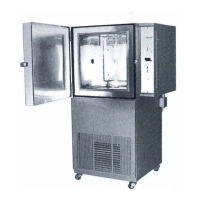
Since the refrigeration system is sealed and the instruments are solid state, little maintenance
is required on the temperature chamber. However, the following preventive maintenance steps
are suggested.
ALL INTERLOCKS AND
SAFETY FEATURES SHOULD
BE
TESTED
PERIODICALLY FOR PROPER OPERATION.
1.
Periodically inspect the refrigeration system condenser coil for dust or dirt accumulation
that would impede the flow of air.
A
dirty condenser will drive up head pressure. If
necessary, clean with
a
brush or vacuum cleaner. Frequency of cleaning depends upon
the air quality at the chamber. (Air Cooled)
r
-
j
2.
Make sure the condenser water supply is adequate and is flowing unimpeded to its drain
Inadequate flow will drive up head pressure. (Water cooled)
3.
lnspect the door gasket, making sure the door seals tightly. Replace gasket if significant
wear is evident.
4.
If the door does not seal well, adjust the door latch. If adjustment of the latch does not
make the door close tightly, replace the gasket.
5.
Only after disconnecting all power to the chamber, inspect and clean the condenser fan
and the conditioner fan. Make sure they spin freely and that the conditioner fan is tight on
its shaft.
6.
Only after disconnecting all power to the chamber, inspect inside the machinery
compartment; look for loose electrical connections, frayed wires, and loose components.
7.
Only after disconnecting all power to the chamber, inspect the electric heater inside the
conditioner; look for sagging elements, broken insulators or other defects. lnspect the
heat limiter (if supplied), making sure that its contacts are bright and clean.


 To Next Page
 Loading...