EasyManua.ls Logo

TEVA Airomir Autohaler - User Manual

TEVA Airomir Autohaler
5 pages
Print Icon
To Next Page IconTo Next Page
Loading...
Airomir™ Autohaler™ and Inhaler
Salbutamol sulfate (sal-bute-a-mol sull-fate)
Consumer Medicine Information
Airomir™ Autohaler™ and Inhaler Published by MIMS/myDr July 2014
1
What is in this leaflet
This leaflet answers some common
questions about Airomir Autohaler
and Airomir Inhaler. It does not
contain all the available information.
It does not take the place of talking to
your doctor or pharmacist.
All medicines have risks and
benefits. Your doctor has weighed
the risks of you using Airomir
Autohaler or Airomir Inhaler against
the benefits they expect it will have
for you.
If you have any concerns about
using this medicine, ask your
doctor or pharmacist.
Keep this leaflet with your
medicine.
You may need to read it again.
What's in Airomir
Autohaler and Inhaler
The name of your medication is
Airomir Autohaler or Airomir
Inhaler. It contains a medicine called
salbutamol sulfate. Salbutamol
sulfate belongs to the beta-agonist
family of medicines. The amount of
medicine in each puff of Airomir
Autohaler or Inhaler is the same as
100 micrograms of salbutamol. Each
Airomir Autohaler or Inhaler
contains at least 200 puffs.
What Airomir Autohaler
and Inhaler are used for
Airomir Autohaler and Inhaler are
designed so the medicine can be
inhaled (breathed in) into the lungs to
treat asthma and other conditions
where breathing is difficult.
Salbutamol sulfate opens up the
airways to your lungs, thereby
relieving wheezing and the feeling of
tightness in your chest, and helps you
breathe more easily. Airomir
Autohaler and Airomir Inhaler are
therefore known as a RELIEVER
medicine.
Your medicine may also help prevent
wheezing and chest tightness in some
situations that cause narrowing of the
airways to your lungs, like exercise.
That's why your doctor or pharmacist
may advise you to take one or two
puffs of Airomir Autohaler or
Airomir Inhaler before exercise.
Your Airomir Autohaler or Inhaler is
designed to be just one part of a
general plan to help you manage your
asthma. Every asthma patient is
different. Ask your doctor or
pharmacist for an ASTHMA
MANAGEMENT PLAN that suits
you. Make sure you visit your doctor
or pharmacist regularly to check
whether your plan needs to be
changed.
Perhaps you have been prescribed
Airomir Autohaler or Inhaler for
something other than asthma.
Ask your doctor if you have any
questions about why this medicine
has been prescribed for you.
What's different about
Airomir Autohaler and
Airomir Inhaler?
If you have been using an older type
of inhaler you will find that Airomir
Autohaler or Inhaler has a different
taste and a warm, soft spray. But it is
still just as effective.
Each spray from Airomir Autohaler
or Inhaler contains exactly the same
dose of salbutamol sulfate active
ingredient as a spray from the older
type of inhaler.
Before you use Airomir
Autohaler or Airomir
Inhaler
When you must not use it
Do not use Airomir Autohaler or
Airomir Inhaler if you are allergic
to:
salbutamol and similar drugs
any of the ingredients listed under
"Product description" later in this
leaflet
Some of the symptoms of an allergic
reaction may include:
shortness of breath
wheezing or difficulty breathing
swelling of the face, lips, tongue
or other parts of the body
rash, itching or hives on the skin
Do not take this medicine after the
expiry date printed on the canister
or if the packaging is torn or shows
signs of tampering.
Question and Answer IconNeed help?

Do you have a question about the TEVA Airomir Autohaler and is the answer not in the manual?

Summary

About Airomir Autohaler and Inhaler

What is in this leaflet

Overview of the leaflet's content and purpose, emphasizing consultation with healthcare professionals.

Product Contents

Details the medication's name, active ingredient (salbutamol sulfate), and dosage per puff.

Uses of Airomir Autohaler and Inhaler

Explains the primary use for treating asthma and other breathing difficulties by opening airways.

Airomir Autohaler vs. Airomir Inhaler

Compares the Autohaler and Inhaler, noting differences in feel but same effectiveness.

When Not to Use Airomir

Lists contraindications, including allergies to salbutamol or other ingredients, and expired products.

Before Using Airomir Autohaler or Inhaler

Medical Conditions and Allergies

Advises informing the doctor about allergies, heart problems, diabetes, high blood pressure, and thyroid issues.

Pregnancy and Breastfeeding

Guidance for pregnant, planning to be pregnant, or breastfeeding individuals.

Interactions with Other Medicines

Details potential interactions with medications for blood pressure, theophylline, steroids, and diuretics.

How to Use Airomir Autohaler and Inhaler

Autohaler Usage Instructions

Step-by-step guide for using the Airomir Autohaler, including priming and breathing technique.

Inhaler Usage Instructions

Step-by-step guide for using the Airomir Inhaler, emphasizing breathing and pressing the canister.

Troubleshooting Inhaler Issues

Addresses common problems like blocked mouthpieces, incorrect assembly, or empty canisters.

Dosage Guidance

Provides recommended dosage for adults, children, and the elderly, and maximum daily limits.

Important Usage and Safety Information

Overdose Precautions

Advises on immediate actions to take if too much medicine is used, including contacting medical services.

Ongoing Usage Recommendations

Emphasizes informing healthcare providers about Airomir use and seeking advice if effectiveness changes.

Common Side Effects

Lists potential side effects such as shaking, headache, dizziness, and palpitations.

Inhaler Care and Cleaning

Instructions for weekly cleaning of the mouthpiece and cover to maintain functionality.

Storage, Disposal, and Product Details

Storage Guidelines

Recommends storing the inhaler in a cool, dry place away from heat and moisture.

Disposal Advice

Instructs on responsible disposal, warning against puncturing or burning the pressurized canister.

Product Appearance

Describes the physical components of the Airomir Autohaler and Airomir Inhaler units.

Active and Inactive Ingredients

Lists the active ingredient (salbutamol) and other components like ethanol, oleic acid, and norflurane.

Sponsor and Manufacturer Information

Provides contact details for the supplier and developer of the Airomir products.

Overview

The Airomir™ Autohaler™ and Inhaler are medical devices designed to deliver salbutamol sulfate, a beta-agonist medicine, directly into the lungs to treat asthma and other conditions that cause breathing difficulties. These devices are known as "RELIEVER" medicines, as they help open up the airways, relieving wheezing and chest tightness, and facilitating easier breathing. Each puff from either device delivers 100 micrograms of salbutamol. Both the Autohaler and Inhaler contain at least 200 puffs.

Function Description:

The primary function of both the Airomir Autohaler and Inhaler is to administer salbutamol sulfate to the lungs. Salbutamol sulfate works by relaxing the muscles in the airways, which helps to widen them and improve airflow. This action provides rapid relief from symptoms such as wheezing, shortness of breath, and chest tightness. The medicine can also be used preventatively before exercise to avoid exercise-induced narrowing of the airways.

The Airomir Autohaler is designed for ease of use, automatically releasing a dose when the user begins to breathe in from the mouthpiece. This eliminates the need for precise coordination between pressing and inhaling, which can be challenging with traditional inhalers. A distinct "click and whoosh" sound confirms that the correct dose has been released.

The Airomir Inhaler, while also delivering salbutamol, requires the user to manually press down on a metal canister with their forefinger as they begin to breathe in slowly and deeply through the mouthpiece. This method requires more coordination from the user compared to the Autohaler.

Important Technical Specifications:

  • Active Ingredient: Salbutamol sulfate.
  • Dose per Puff: 100 micrograms of salbutamol.
  • Puffs per Device: At least 200 puffs.
  • Propellant: Norflurane (a non-CFC propellant that does not deplete ozone).
  • Other Ingredients: Ethanol (0.0036 mL per puff), oleic acid.
  • Storage Temperature: Below 30°C.
  • Device Type:
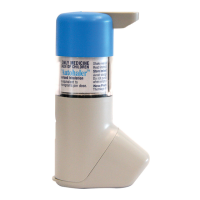
    • Airomir Autohaler (AUST R 67257): Consists of a metal canister sealed inside a plastic autohaler unit with a mouthpiece, plastic cover, and a lever at the top. Available in pack sizes of 100* & 200 doses.
    • Airomir Inhaler (AUST R 64799): Consists of a metal canister inside a plastic inhaler unit with a mouthpiece and plastic cover. Available in pack sizes of 100* & 200 doses.
    • (*100 dose packs are not currently marketed.)

Usage Features:

Airomir Autohaler Instructions for Use:

  1. Test Firing (if new or unused for two weeks): Release four puffs into the air away from the face.
    • Remove the mouthpiece cover by unclipping it from the back.
    • Hold the autohaler upright between thumb and index finger and shake well.
    • Push the lever up until it stays up.
    • Point the mouthpiece away from you.
    • Push the dose release slide on the bottom of the Autohaler unit in the direction of the arrow to release a puff.
    • Return the lever to the down position, then repeat for a total of four puffs.
    • Always push the lever back down after test firing.
  2. Regular Use:
    • REMOVE COVER AND SHAKE: Unclip the mouthpiece cover, check for cleanliness, hold upright, and shake well.
    • HOLD UPRIGHT AND PUSH LEVER UP: Keep the autohaler upright and push the lever up until it stays in position. Ensure the hand is not blocking the air vent at the bottom.
    • BREATHE OUT AND POSITION MOUTHPIECE: Breathe out as much as comfortably possible, then immediately close lips around the mouthpiece.
    • BREATHE IN: Inhale slowly and deeply through the mouthpiece. Continue breathing in after hearing the "click and whoosh" and feeling the puff.
    • HOLD YOUR BREATH: Hold breath for 10 seconds, then breathe out slowly.
    • PUSH LEVER DOWN: After each puff, return the lever to the down position while holding the autohaler upright.
    • Repeat: If more than one puff is prescribed, repeat steps 2 to 6. Replace the mouthpiece cover after use. The lever should be left down between treatments.
    • Empty Device Check: If the Autohaler is empty during test firing, no puff will be felt or heard.

Airomir Inhaler Instructions for Use:

  1. Test Firing (if new or unused for two weeks): Release four puffs into the air away from the face.
    • Remove the mouthpiece cover, check for cleanliness, hold upright, and shake well.
    • Breathe out as far as comfortably possible.
    • Place the mouthpiece in the mouth and close lips firmly around it.
    • As you start to breathe in slowly, firmly press the metal canister downwards with your forefinger until a puff is released.
    • Finish breathing in and hold breath for 10 seconds before breathing out slowly.
    • Repeat for additional puffs if needed.
  2. Regular Use:
    • REMOVE COVER AND SHAKE: Remove the mouthpiece cover, check for cleanliness, hold upright, and shake well.
    • BREATHE OUT: Breathe out as much as comfortably possible.
    • POSITION MOUTHPIECE, START TO BREATHE IN AND PRESS: Place the mouthpiece in the mouth, close lips firmly around it. As you start to breathe in slowly, press the metal canister downwards until a puff is released.
    • FINISH BREATHING IN AND HOLD: Hold breath for 10 seconds, then breathe out slowly.
    • Repeat: If more than one puff is prescribed, repeat steps 2 to 4. Replace the mouthpiece cover after use and store in a safe place.

General Usage Guidelines:

  • Dosage: The usual dose is one or two puffs to relieve wheezing or before exercise. Do not exceed 16 puffs per day without consulting a doctor.
  • Supervision: Children using Airomir Autohaler or Inhaler should be supervised by a responsible adult.
  • Effectiveness: If the usual dose does not seem to be working or lasting as long, contact a doctor urgently.
  • Troubleshooting (if device does not work properly):
    • Check for a dirty or clogged mouthpiece (wash and air dry).
    • Check if the device is empty (shake it).
    • Ensure the metal canister is correctly positioned in the small socket.
    • Do not disassemble, drop, or hit the device.

Maintenance Features:

Care and Cleaning:

  • Frequency: The inhaler mouthpiece should be cleaned at least once a week to prevent blockage from medication build-up.
  • Cleaning Steps:
    1. WASH MOUTHPIECE UNDER WARM RUNNING WATER: Remove the canister and set it aside in a safe place (never immerse the canister in water). Wash the mouthpiece through the top and bottom with warm running water for 30 seconds. Wash the mouthpiece cover as well.
    2. SHAKE OFF EXCESS WATER AND AIR DRY: Shake off excess water and leave the mouthpiece and cover in a safe place to air dry thoroughly, ideally overnight.
    3. Reassembly: Once the mouthpiece is dry, replace the canister and the mouthpiece cover.
    4. Urgent Use (if not completely dry): If the inhaler is needed before it's completely dry, shake off excess water, replace the canister, and remove most remaining water by test spraying twice into the air away from the face. Then take the dose as prescribed. After such use, wash and air dry thoroughly again.

Storage:

  • Keep the Airomir Autohaler or Inhaler in a cool, dry place where the temperature stays below 30°C.
  • Do not store in the bathroom, near a sink, on a windowsill, or in a car, as heat and dampness can damage medicines.
  • Keep the device (with its mouthpiece cover) in a place where children cannot reach, ideally in a locked cupboard at least one-and-one-half meters above the ground.

Disposal:

  • Dispose of the Airomir Autohaler or Inhaler thoughtfully.
  • The metal canister is pressurized; do not burn or puncture it, even when empty, as it may explode.
  • If the doctor advises to stop taking the medicine or if the expiry date has passed, ask a pharmacist for disposal instructions.

TEVA Airomir Autohaler Specifications

General IconGeneral
BrandTEVA
ModelAiromir Autohaler
CategoryMedical Equipment
LanguageEnglish