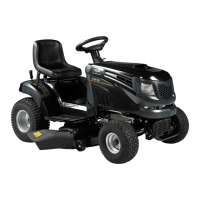
The provided document is a multi-language user manual for a series of robotic lawnmowers from the brand TEXAS, specifically the RMX 500, RMX 800, RMX 1600, and RMX 2000 models.
Function Description:
The TEXAS RMX series robotic lawnmowers are battery-powered machines designed for automated grass mowing. They operate by following a boundary wire laid around the lawn, covering the cutting area in a random pattern defined by advanced software to ensure complete coverage within a scheduled working time. When the battery is discharged, the robot automatically returns to the charging station along the boundary wire for recharging and then resumes its cutting cycle. The RMX 1600 and RMX 2000 models also feature ultrasonic sensors for enhanced obstacle detection.
Important Technical Specifications:
The RMX series includes four models with varying capacities and features:
- RMX 500:
- Engine Model: Battery 20V, 2.5 Ah Lithium-Ion
- Recommended Capacity: Up to 500 m²
- Max Capacity: Up to 600 m²
- Charging Time: 120-140 min
- Working Width: 18 cm
- Boundary Cable: 130 m
- Weight: 8 kg
- RMX 800:
- Engine Model: Battery 20V, 5.0 Ah Lithium-Ion
- Recommended Capacity: Up to 800 m²
- Max Capacity: Up to 1000 m²
- Charging Time: 100-120 min
- Working Width: 18 cm
- Boundary Cable: 170 m
- Weight: 8.2 kg
- RMX 1600:
- Engine Model: Battery 20V, 5.0 Ah Lithium-Ion
- Recommended Capacity: Up to 1600 m²
- Max Capacity: Up to 1800 m²
- Charging Time: 100-120 min
- Working Width: 22 cm
- Ultrasonic sensor: Yes
- Boundary Cable: 200 m
- Weight: 11 kg
- RMX 2000:
- Engine Model: Battery 20V, 5.0 Ah Lithium-Ion
- Recommended Capacity: Up to 2000 m²
- Max Capacity: Up to 2200 m²
- Charging Time: 100-120 min
- Working Width: 22 cm
- Ultrasonic sensor: Yes
- Boundary Cable: 220 m
- Weight: 11 kg
Common specifications across all models include:
- Blade System: 3 rotating blades
- Working Height (min-max): 20-60 mm
- Height Settings: 9
- Height Adjustment: Central
- Upper Cover: Plastic
- Sensors: Lifting sensor, Obstacle sensor, Overturn sensor, Tilt sensor, Rain sensor, Multizone
- Slope: Max 20° / 36%
- Dimensions (Length x Width x Height): 560 x 350 x 240 mm (RMX 500/800), 600 x 470 x 250 mm (RMX 1600/2000)
Usage Features:
The RMX series robotic lawnmowers are designed for ease of use and smart control.
- Installation: Requires laying a boundary wire around the mowing area and any obstacles. The manual provides detailed instructions on wire placement, including distances from edges, corners, and specific obstacles like flower beds, trees, and pools. The charging station needs to be placed on a flat surface with a minimum of 1 meter straight clearance in front.
- Control: The robot can be controlled via its integrated display or a dedicated smartphone app ("robotic-mower connect"). The app, available for iOS 11+ and Android 4.4.2+, allows for programming schedules, adjusting cutting times, and defining starting points.
- Connectivity: The robots are IoT-enabled, connecting via Wi-Fi 2.4 GHz or Bluetooth 4.0. The app automatically updates time and date settings upon connection.
- Programming: Users can set daily start times and cutting durations (1-24 hours). A "Starting Point" feature allows defining up to 4 different starting locations along the boundary wire, which helps ensure better coverage in multi-zone gardens. An "Edge Cutting" option allows the robot to mow along the boundary wire at the start of its cycle.
- Rain Sensor: All models include a rain sensor that pauses mowing and returns the robot to the charging station for a default of 3 hours upon detecting rain. This delay can be adjusted via the app.
- PIN Code: A default PIN (0000) is set from the factory, which can be customized for security.
- Battery Management: The battery status is displayed in the app. The charging station will start charging when the battery level drops below 90% to protect the battery and extend its lifespan.
- Firmware Updates: The app facilitates firmware updates for the robot, ensuring it always has the latest features and improvements.
Maintenance Features:
Regular maintenance is crucial for the longevity and optimal performance of the robotic lawnmower.
- Cleaning:
- Robot Underside: Should be cleaned at least once a month, especially around the blades, using a soft brush or plastic scraper to remove grass and dirt. Always turn off the robot completely before cleaning.
- Plastic Cover: Should be cleaned with a soft brush, water atomizer, or damp cloth. Avoid using a water hose or pressure washer to protect electronics.
- Sensor Sticks: Grass and dirt can accumulate around the 4 sensor sticks under the upper cover. These should be cleaned, and the sticks moved by hand to ensure proper function.
- Charging Station: Should be cleaned regularly, removing grass and soil from the running plate. Charging contacts on both the station and the robot should be inspected and cleaned every 2 months using fine sandpaper or steel wool to remove rust or corrosion.
- Blade Replacement: The blades have two sharp sides and can be flipped when one side becomes dull. It is recommended to replace all 3 blades and their screws simultaneously after each season to maintain balance and optimal cutting results. Always turn off the robot before working with the blades.
- Battery Replacement: The Li-ion battery has an estimated lifespan of 3-5 years. It can be easily replaced by unscrewing the battery cover, removing the bracket, and disconnecting the old battery before plugging in a new original battery.
- Winter Storage: For winter storage, both the robot and charging station should be stored indoors in a dry, warm place. The main power switch should be turned OFF, and the battery fully charged before storage. The battery should be recharged 1-2 times during winter (at least every 3 months) to maintain its health. The boundary wire should NOT be removed from the ground.
- Troubleshooting: The manual includes a comprehensive list of error codes (E1, E2, E3, E4, E5, E6, E7, E8, BP, EE) with corresponding solutions, guiding users through common issues like "Robot outside the work area," "Wheel motor blocked," "Blade engine blocked," "Obstacle sensor not working," "Robot lifted," "Tilt sensor triggered," "Return to charging station failed," "Battery temperature too high or low," and "Unknown error." For persistent issues, users are advised to contact Texas support.

 Need help?
 General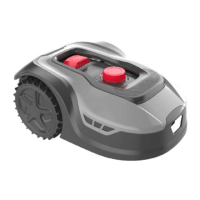

 To Next Page