22
Watch out for:
Children – They may well run in front of you without warning. You may only be moving very slowly, but
you could still injure a child.
Elderly People – They may be unable to quickly move aside to let you pass. Give way to them
Disabled people on foot – they too may be unable to dodge you
People with visual problems or impaired hearing – Give them space and time
Other motorised vehicle users – You may be doing all the right things. This does not guarantee they will
do likewise
When you need help:
You may need to ask people to open doors for you. Most people are willing to help, if asked politely. Don’t
struggle to do the impossible, or even the very difficult things when there are people around who would help if
asked.
Driving inside shops and buildings – This is where you have the advantage over car users! Not many
supermarkets would welcome a car driving round their store. But most bigger shops and even some quite small
ones, are accessible to wheelchairs and scooters. Once inside the store it is your responsibility to drive slowly
and safely and not damage the fittings or the stock, or hurt other shoppers or store workers. You may need to ask
for help. Again in most cases people are willing if asked properly. Don’t risk pulling down a whole display to
reach the top shelf. ASK FOR HELP.
Speed in shops and buildings – Reduce it! – It is a good idea to set the speed control to a lower level to avoid
any accident. Be especially careful if you need to reverse, that your way is clear of shop fittings and people.
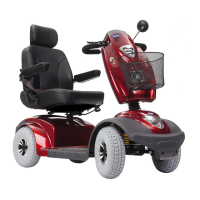
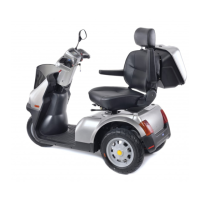
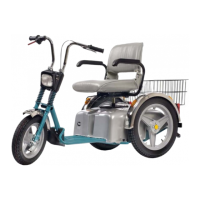
Three wheeled scooters with their maneuverability and lightness of steering are more suited to shopping.
On the Road – Remember you are not driving a car, but a very small and slow vehicle, which is therefore more
vulnerable.
If it is possible, use the footpath. It is wise to avoid using roads, particularly busy ones.
WHEN DRIVING YOUR VEHICLE ON THE ROAD:
Remember although this is legal for all Class 3 vehicles it is not always safe or sensible to do so. You are
responsible for your own safety and that of other road users. The normal rules of the road apply and you must
observe the law about:
Driving on the left side of the road. Never drive against the traffic.
One way streets – Never drive against the traffic
Giving way where cars would give way (details in the Highway Code)
Obeying traffic lights and all other road signals and instructions
Giving way to pedestrians on crossings.


 To Next Page