Need help?
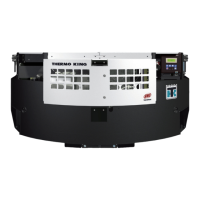
Do you have a question about the Thermo King SGCO 3000 and is the answer not in the manual?
Notes about the fuel strainer option for specific units.
Table detailing standard (S) and optional (O) features for the SGCO model.
Basic safety rules for unit operation and handling.
Covers hazards, precautions, and first aid for battery handling.
Covers general electrical hazards, high voltage, and low voltage safety.
Procedures to prevent electrostatic discharge when servicing the controller.
Safety measures to prevent damage during welding operations.
Guidelines for safe operational practices.
Specifies where to find serial numbers for generator, engine, SGCO units, and controller.
Describes the location and purpose of various decals on the unit.
Outlines inspection and service tasks based on operating hours.
Details about the engine's model, fuel, oil, and performance.
Details about the generator's type, output, and RPM.
Details of the controller, voltage, and electrical components.
Default configurations for various controller parameters.
Physical characteristics including weight and overall size.
Tables for torque values based on bolt size and class.
Overview of the generator set's self-contained, diesel-powered nature.
Features of the extended maintenance interval package.
Functionality and control capabilities of the SG+ controller.
Description of indicator LEDs and fuel gauge.
Safety features that monitor and shut down the unit.
Description of the fuel-saving EcoPower option.
Functionality of the optional fuel level sensor.
Mentions header pin mounting as an additional option.
Details the controller's automatic operation and protection features.
Explains the display, keypad, and basic navigation.
Lists controller inputs, outputs, and self-diagnostic capabilities.
Outlines the organization of menus like Data, Alarm, Commands.
Explains how to use keys (Enter, Esc, Up, Down, Alarm, Language) to navigate menus.
Provides a visual representation of the menu hierarchy and navigation paths.
Details of primary menus like Data, Alarm, Message, Commands, Misc. Functions, Configuration, Event Log.
Describes Standard, Pause Mode, and Network Down displays.
Procedures for pre-operation checks.
Steps for starting the unit and performing PTI.
How to view unit operating information through Data Menu submenus.
Procedures for viewing and acknowledging alarms and messages.
Accessing tests and system setup.
Accessing settings like C/F mode, SW/HW version.
Setting parameters like hour meter thresholds.
Reviewing recorded events and fuel events.
How to interpret and use LogView software to view event logs.
How to inspect, clean, and maintain the unit's battery.
Describes fuel pull, hold, speed, start, and preheat relays.
Inspection of wiring and the 12 Vdc charging system.
Describes the air heater and testing the low oil pressure switch.
Procedures for testing, removing, installing, and bench testing the oil level sensor.
How to test the coolant temperature sensor and interpret readings.
How to test the coolant level sensor and troubleshoot related messages.
Procedures for testing the flywheel sensor's resistance and voltage output.
Description of the extended maintenance interval package.
Information on the TK486 engine's lubrication system.
Procedures for changing engine oil and oil filters.
Guidance on diagnosing low oil pressure issues using a flow chart.
Description and inspection of the crankcase breather.
Information on the cyclonic dry air cleaner and air restriction indicator.
Describes the cooling system and approved Extended Life Coolants.
Procedures for checking and changing antifreeze.
Procedure to remove trapped air from the engine cooling system.
Details on the engine thermostat and components of the fuel system.
Procedures for replacing fuel lines and bleeding the fuel system.
Procedures for handling water in fuel, replacing filters, and cleaning the fuel strainer.
How to adjust engine speed for standard and EcoPower units.
Description and diagnosis of the fuel solenoid system.
Steps for replacing the integral fuel solenoid.
Description, leaks, and replacement of the trochoid feed pump.
How to check and replace the cold start device.
Procedure for checking and adjusting engine valve clearance.
How to adjust belt tension and replace belts.
Steps for removing the injection pump using specialized tools.
Steps for installing the injection pump, including timing gear alignment.
Procedure for setting injection pump timing using angle stickers.
Overview of the alternator system and its components.
Information on changing the generator output voltage.
Explains excitation, running control, battery charging, and overload shutdown.
Steps for diagnosing alternator issues, including preliminary checks and specific tests.
General inspection, insulation, windings, housing, bearing, fan, and coupling checks.
Procedures for rewiring the alternator to change output voltage from 460 Vac to 230 Vac.
Inspecting for damage and checking mounting bolt tightness.
How to position the radiator fan for optimal performance.
Procedure for installing the clip-on corner clamp unit.
Procedure for installing the clip-on header pin unit.
Procedure for cleaning the radiator coil.
Troubleshooting guide for common unit conditions and their remedies.
Lists available wiring, schematic, and menu flow diagrams.
 General
| Brand | Thermo King |
|---|---|
| Model | SGCO 3000 |
| Category | Portable Generator |
| Language | English |

 To Next Page