Need help?
Do you have a question about the THOMSON TFR469 and is the answer not in the manual?
Covers intended use, proper installation, freestanding design, and safe unplugging practices.
Warning about flammable refrigerant and risks associated with defrosting. Do not puncture tubing.
Caution regarding cold surfaces and guidelines for refreezing thawed foods to maintain safety.
Avoid electrical/sharp tools for defrosting; unplug before service; avoid explosive fumes.
Remove doors from discarded refrigerators to prevent child entrapment.
Diagram identifying key parts like interior light, temperature control, shelves, crisper, and door components.
Instructions for removing packaging, checking for damage, and preparing the appliance for use.
How to adjust the front leveling legs for stability and proper door closure.
Recommended clearances for sides, top, and back to ensure efficient operation.
Ensuring a proper grounded outlet and avoiding improper adapters or extension cords.
Recommendations and warnings regarding the use of extension cords for the appliance.
Choosing a suitable installation location, avoiding extreme temperatures and heat sources.
Step-by-step guide to adjust the freezer door alignment using hinge screws.
Explanation of the 7-setting temperature dial and initial setting recommendations.
Instructions on how to remove and replace the full-width slide-out refrigerator shelves.
Details on the functionality and capacity of the 'Dispense-A-Can' storage feature.
Information on the clear crisper and how to properly remove and replace it.
When and how to defrost the freezer section, including speed-up tips and safety warnings.
Safety precautions for maintenance, especially concerning refrigerant and component replacement by trained personnel.
Best practices for storing fresh foods, including wrapping, containers, and specific item guidance.
Proper packaging, temperature, and storage duration for frozen foods, including meats and meals.
Description of common sounds like gurgling, vibrations, and thermostat clicks during operation.
Instructions for cleaning the appliance interior and exterior, including safe cleaning agents.
How to clean door gaskets and apply petroleum jelly for a proper seal.
Step-by-step guide for safely replacing the interior light bulb.
Actions to take during power outages, including unplugging and discarding spoiled food.
Recommended steps for long absences and safely moving the refrigerator.
Common problems like not operating, temperature issues, or frequent running, with solutions.
Addressing moisture buildup and unpleasant odors within the refrigerator.
Solutions for doors not shutting properly, including leveling and alignment checks.
Diagnosing popping/cracking sounds and troubleshooting a non-working interior light.
 General
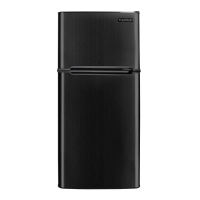
| Type | freestanding |
|---|---|
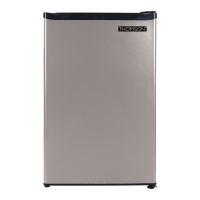
| Style | top freezer |
| Color | black stainless steel |
| Total Capacity | 4.5 cubic feet |
| Refrigerator Capacity | 3.15 cubic feet |
| Freezer Capacity | 1.35 cubic feet |
| Defrost System | manual |
| Number of Refrigerator Shelves | 2 |
| Temperature Control | dial |
| Ice Maker | no |
| Smart Home | no |
| Annual Energy Consumption | 368 kilowatt hours |
| Voltage | 120 volts |
| Current | 15 amperes |
 Weight and Dimensions
| Depth | 20 1/10 inches |
|---|---|
| Height | 42 9/10 inches |
| Width | 19 1/10 inches |
| Net Weight | 68.3 pounds |

 To Next Page