EasyManua.ls Logo

THOMSON TFRF710-F-SM - User Manual

THOMSON TFRF710-F-SM
15 pages
Print Icon
To Next Page IconTo Next Page
Loading...
TFRF710-F-SM
THOMSON and the THOMSON logo are trademarks of Curtis international Ltd
TM TM
Question and Answer IconNeed help?

Do you have a question about the THOMSON TFRF710-F-SM and is the answer not in the manual?

Summary

General Safety Rules

Important Safety Instructions

Parts and Features Overview

Installing Your Freezer

Unpacking Your Freezer

Instructions for removing all packaging and inspection before initial use.

Adjusting Your Freezer

Guidelines for proper placement, leveling, and tilt limits during handling.

Proper Air Circulation

Recommended clearances around the unit for optimal performance.

Electrical Requirements and Limitations

Electrical Requirement

Details on proper grounding, outlet type, and voltage for safe operation.

Installation Limitations

Guidance on unsuitable locations and floor conditions for freezer placement.

Freezer Features and Usage

Operating Your Freezer

Steps for plugging in, setting temperature, and initial use of the freezer.

General Features Explained

Description of the temperature dial, performance factors, and overload warnings.

Normal Operating Sounds

Explanation of common sounds like boiling, gurgling, and clicking noises.

Food Storage Basket and Defrosting

Food Storage Basket

Information about the removable basket for organizing food inside the freezer.

Defrosting and Draining Procedures

Instructions for manually defrosting the freezer and draining accumulated water.

Food Storage Information

Frozen Food Handling

Tips for preparing and storing frozen foods to maintain quality and prevent spoilage.

Packaging Recommendations

Suggested materials and methods for proper food packaging for freezer storage.

Safe Storage Guidelines

Recommended storage times for various types of frozen foods.

Freezer Care and Cleaning

Cleaning and Maintenance

Procedures for safely cleaning the freezer interior, avoiding harsh chemicals.

Door Gasket Maintenance

Instructions for cleaning and maintaining door gaskets for a proper seal.

Appliance Disposal Guidelines

Information on responsible disposal of the freezer according to regulations.

Power Interruptions and Moving

Power Outage Procedures

Actions to take during and after power interruptions to protect food and the unit.

Vacation and Moving Care

Steps for preparing the freezer for long absences or relocation.

Troubleshooting Common Issues

Freezer Not Operating

Steps to diagnose and resolve issues where the freezer fails to start.

Food Temperature Problems

Addressing issues with food appearing too warm or too cold inside the freezer.

Frost Build-up and Compressor Issues

Solutions for excessive frost and frequent compressor cycling.

Resolving Freezer Odors

Causes and methods for eliminating unpleasant smells within the freezer.

Specifications and Defrosting

Product Specifications

Technical details including model, capacity, dimensions, and electrical ratings.

Manual Defrosting Instructions

Step-by-step guide for manually defrosting the Thomson freezer.

Warranty Information

Warranty Service Requirements

Information on warranty coverage, claims, and necessary documentation for service.

Overview

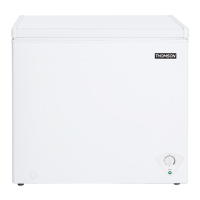
This document serves as the user manual for a Thomson Chest Freezer, model TFRF710-F-SM, providing essential information for its safe operation, features, maintenance, and troubleshooting.

Function Description

The Thomson Chest Freezer is designed for the long-term storage of frozen foods. It operates by maintaining a consistently cold internal temperature, preventing food spoilage and preserving its quality over extended periods. The freezer is intended for household and similar applications, including staff kitchen areas, farmhouses, hotels, motels, bed and breakfast environments, and catering services. It is a freestanding appliance and should not be recessed or built into an enclosed cabinet, requiring proper air circulation around its sides, back, and top for optimal efficiency. The unit features a mechanical thermostat for temperature control, allowing users to adjust the internal temperature to suit their storage needs.

Usage Features

  • Installation and Placement: The freezer requires a stable, level surface for installation, away from direct sunlight, radiators, baseboard heaters, or other heat sources. When moving the freezer, it should not be tilted more than a 45-degree angle to prevent damage to the compressor and sealed system. If tilted, it's crucial to allow the unit to stand upright for at least 24 hours before plugging it in, giving the refrigerant time to settle. Recommended clearances are 4 inches (102mm) on the sides and back, with the top not blocked, to ensure proper air circulation.
  • Electrical Requirements: The freezer operates on a 115-volt, 15-amp grounded electrical outlet. It is critical to avoid using extension cords or ungrounded (two-prong) adapters, as this can lead to a shock hazard and provides no effective grounding. Any frayed or damaged power cords should be immediately repaired or replaced by a certified technician.
  • Temperature Control: The freezer is equipped with an adjustable temperature control dial, ranging from "1" (coldest) to "7" (quick-frozen mode). Upon initial setup, it is recommended to set the temperature to "4" and allow the freezer to operate for 24 hours before placing food inside and adjusting to the desired setting. The temperature inside can fluctuate based on ambient room temperature, lid opening frequency, and the amount of fresh food added. Setting the dial to "0" will stop the cooling function. The quick-frozen mode ("7") should not be used frequently, as it can cause the compressor to run continuously.
  • Food Storage: The freezer includes a removable vinyl-coated wire basket, which allows for more accessible storage and can be removed if not needed. To ensure efficient operation and minimum energy consumption, it is advised to defrost the freezer when the frost accumulation reaches 1/4 inch thick. Hot food should be cooled before being placed in the freezer to prevent unnecessary energy use. Proper packaging is essential for food storage, using airtight containers, heavy-duty aluminum foil, plastic wrap, or self-sealing plastic bags to prevent air and moisture flow, which can lead to odor and taste transfer or drying out of food. Refreezing completely thawed foods is not recommended, and thawed foods should be consumed promptly if they still contain ice crystals and are below 40°F. Foods with off-odors or off-colors should be discarded.
  • Power Interruptions: In the event of a power outage, the power cord should be removed from the AC outlet. Once power is restored, allow 5 minutes before plugging the unit back in. If the outage is prolonged, inspect and discard any spoiled or thawed food and clean the freezer before reusing.
  • Vacation and Moving Care: For extended periods of absence, the freezer should be emptied, unplugged, and cleaned. The lid should be propped open to allow air circulation. When moving the freezer, it should always be transported vertically to prevent damage to the sealed system.

Maintenance Features

  • Defrosting: Manual defrosting is required when frost accumulation reaches 1/4 to 1/2 inch thick. To defrost, turn the temperature control to "OFF" and unplug the freezer. All frozen food should be removed and stored in insulated containers. The exterior drain plug should be unscrewed and removed, with a tray placed underneath to collect the draining water. Using pans of hot water inside can speed up the defrosting process. Sharp or metallic instruments should never be used to remove frost, as this can damage the cooling coils and void the warranty. Boiling water should also be avoided. After defrosting, the interior should be wiped clean with a baking soda and water solution, rinsed, and dried. The drain plug must be replaced before plugging the freezer back in and returning food.
  • Cleaning: Before cleaning, always unplug the freezer to avoid electric shock. A cleaning solution of 3-4 tablespoons of baking soda mixed with warm water can be used with a sponge or soft cloth to wipe down the interior. Rinse with clean warm water and dry thoroughly. Harsh chemicals, abrasives, ammonia, chlorine bleach, concentrated detergents, solvents, or metal scouring pads should not be used, as they can damage or discolor the freezer.
  • Door Gaskets: Door gaskets should be cleaned every three months to ensure a proper seal. Applying a light coat of petroleum jelly to the hinge side of the gaskets can help keep them pliable and maintain a good seal.
  • Disposal: This appliance should not be treated as regular household waste. It must be taken to an appropriate waste collection point for recycling electrical components, in accordance with federal and local regulations. Information on local waste removal agencies can be obtained from the relevant government office.

THOMSON TFRF710-F-SM Specifications

General IconGeneral
TypeUpright Freezer
Energy Efficiency ClassF
Number of Shelves4
Temperature ControlMechanical
Dimensions (H x W x D)85 x 55 x 58 cm
Noise Level42 dB
Defrosting SystemManual
ColorSilver

Related product manuals