Drawing 10148 REV 0 24-11-15
Operating Instructions for TEC Pool Dosing Equipment
Overview Controller
The TEC4000 Control System has been designed for ease of use. However it is important that this
manual is studied before you begin to use the TEC4000 Control System, so that you understand the
principles of operation of the TEC4000 Control System before you start to use the system.
System Overview
The TEC4000 Control System consists of, the pH, chlorine and redox (optional) probes which
monitor the water chemistry parameters (pH free chlorine and redox potential). With this
information the TEC4000 instructs the chemical dosing devices (chlorine / bromine, pH minus and
pH plus) to supply chemicals to the water stream as required. The TEC4000 displays the current
water chemistry parameters on a display. The TEC4000 also controls a flocculent pump and agitator
motor on a pulsed timer. There are also four types of external interfaces volts free alarm, BMS,
RS485 and RS232. These interfaces allow the TEC4000 to communicate with a wide range of
external equipment. Before connecting to external equipment always contact Topline for advice on
01323-440760.
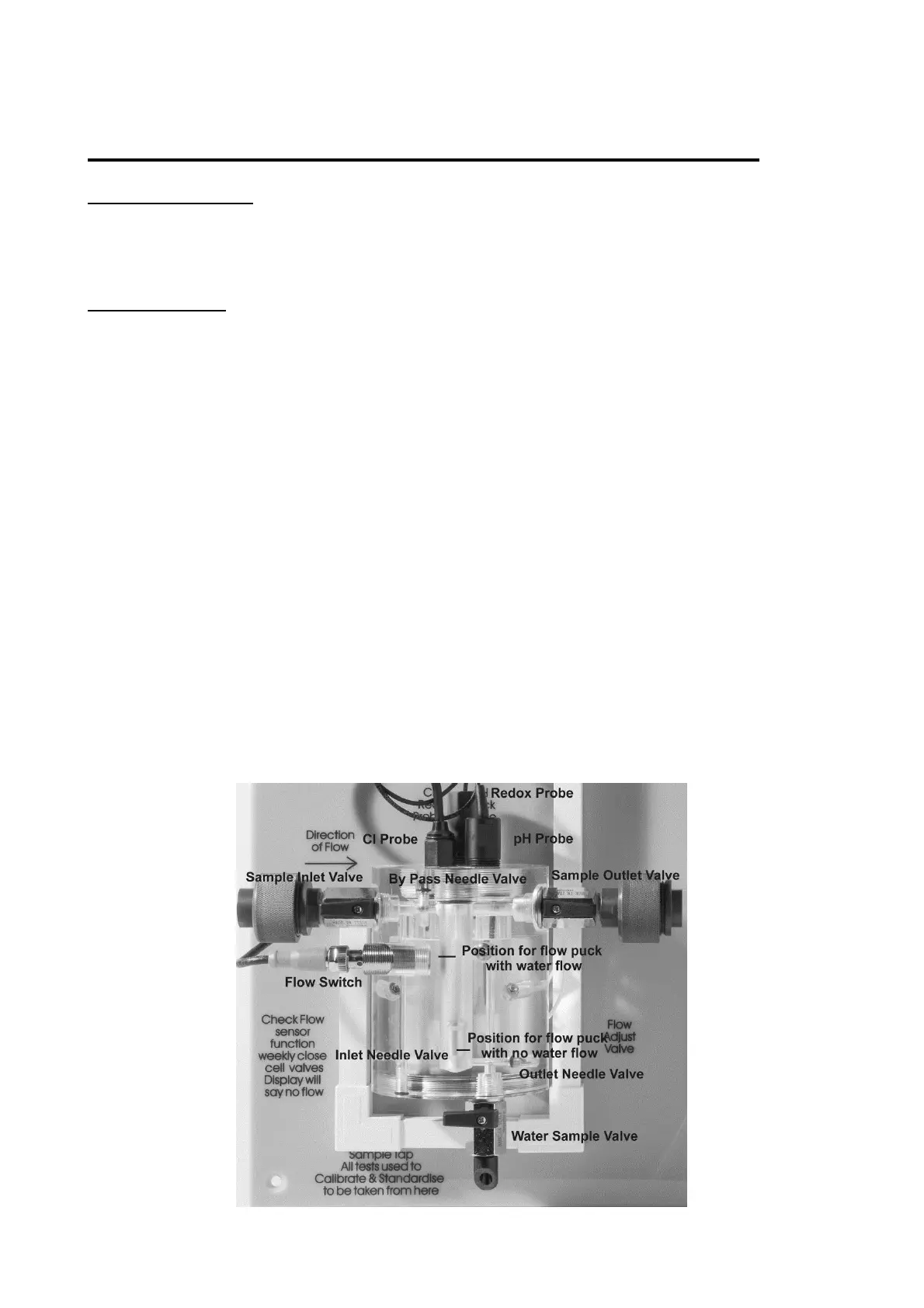
A water sample is taken from the main circulation system, post filtration via a sample bowl strainer
to the sensor assembly which contains the electrodes. The sample flow is either run to waste
(preferred) or returned back into the main circulation. Isolating valves are placed at each end of the
sample line. The pH, chlorine and redox (optional) probes are the main element of the sensors. A
bypass arrangement diverts the water sample, and a flow of about 60 litres per hour is maintained
past the probes. This flow is indicated by the flow puck and is adjusted via flow needle valves on
the LHS, RHS and top of the acrylic cell. The flow puck should be adjacent to the flow sensor. A
regular non changing flow is essential for correct operation of the system, with no air being pushed
into the sample cell. A sample tap is present, from which a water sample should be taken to enable
the sensors to be standardised or calibrated against chemical reagent tests.


 To Next Page
 Loading...