EasyManua.ls Logo

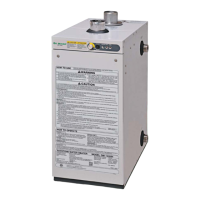
Toyotomi OM-128HH - User Manual

Toyotomi OM-128HH
15 pages
Print Icon
To Next Page IconTo Next Page
Loading...
Oil-Fired Water Heater for Hydronic Heating
Operation and Maintenance Instructions
MODEL OM-128HH (Type B)
CONTENTS
IMPORTANT
READ AND UNDERSTAND INSTRUCTIONS BEFORE INSTALLING OR USING THIS WATER HEATER.
RETAIN INSTRUCTIONS FOR FUTURE REFERENCE. CHECK LOCAL CODES AND ORDINANCES FOR
PERMITTED USE.
CAUTION
THIS WATER HEATER SHALL NOT BE USED FOR COMMERCIAL USE OR FOR ANY PURPOSES OTHER
THAN HOT WATER SUPPLY USES. OTHER USAGE MAY CAUSE A MALFUNCTION OR SHORTEN ITS
SERVICE LIFE. DO NOT REMOVE THE RATING PLATE AND LABELS FROM THE WATER HEATER UNIT.
SECTION A:
Safety Tips······························································ 1
Safety Features ······················································ 3
SECTION B:
Specifications························································· 4
Control Panel·························································· 5
Dimensional Outline·············································· 5
Construction··························································· 6
Wiring Diagram······················································ 6
SECTION C:
Fuel Guide ······························································ 7
SECTION D:
Operation
Fueling ···································································· 8
Inspection Before Operation································· 8
Operation································································ 9
Adjusting Water Temperature ······························ 9
Turning Unit Off····················································· 9
Operation Control by Timer (Option)················· 10
Preventing Freeze Up ·········································· 10
Long Term Inactivity············································ 10
SECTION E:
Routine Maintenance
Inspection and Maintenance······························· 11
Inspection and Maintenance Items ···················· 11
SECTION F:
Troubleshooting ·················································· 12
Error Code List ····················································· 13
OM-128HH_Op_US.qxd 22.9.1 10:20 ページ 1

Other manuals for Toyotomi OM-128HH

Questions and Answers

Overview

The provided manual describes the TOYOTOMI OM-128HH (Type B) Oil-Fired Water Heater for Hydronic Heating. This device is designed for indoor use only and is intended for hydronic heating applications, not for hot water supply.

Function Description

The OM-128HH is an oil-fired water heater that utilizes an oil pressure vapor system for combustion. It can be installed as either a direct vent or chimney vent system. The unit heats water for hydronic heating, with automatic operation based on the temperature of the water inside the heat exchanger. It features a power switch, operation lamp, burner lamp, and a warning lamp to indicate status and potential issues. A temperature selector knob allows users to adjust the hot water temperature. The unit is also equipped with a timer connection terminal for automatic operation, allowing it to enter a stand-by condition when the timer is off and resume operation when the timer is on.

Important Technical Specifications

  • Model: OM-128HH (Type B)
  • Type: Oil Pressure Vapor System, Direct Vent or Chimney Vent, Hydronic Heating
  • Ignition: High Voltage Discharge Spark
  • Fuel: ASTM D3699 1-K Kerosene, ASTM D396 Low Sulfur No.1 or No.2 Fuel Oil, or ASTM D975 Ultra Low Sulfur Diesel (ULSD). Low sulfur fuel is recommended.
  • Steady-State Efficiency: 87.0%
  • AFUE: 87.1%
  • Hot Water Input: 148,000 BTU/h (Input value of No.1 Fuel Oil)
  • Fuel Consumption: 1.05 gal/h
  • Heat Exchanger Capacity: 5.10 gal
  • Fuel System: External tank (to be purchased from local suppliers)
  • Dimensions (W x H x D): 12-5/8" x 27-3/4" x 22-1/2"
  • Weight: 77 lbs. Empty
  • Vent Pipe Hole: 4-3/4" diameter
  • Maximum Length of Vent Pipe System: 10 ft., 3 bends or less
  • Electrical Rating: 120 Volts AC, 60 Hz; Ignition - 136W; Burning - 107W
  • Exhaust Air Temperature: Less than 350°F
  • Nozzle: 0.85 GPH, 60°, Delavan Type XA
  • Temperature Fuse: 282°F
  • Electric Current Fuse: 5 A, 7A
  • Water Quality: Circulating water should contain proper quantity of antifreeze solution. pH 6.5 to 8.5, Chloride max 0.0067 Oz/gal (50 mg/L), Hardness max 0.0208 Oz/gal (150 mg/L), Residual Chlorine max 0.00027 Oz/gal (2 mg/L).
  • Altitude Limit: Designed for use no more than 4,922 FT. (1,500 m) above sea level. Burner adjustments are required at higher altitudes.

Usage Features

The OM-128HH is designed for ease of operation with several safety features.

  • Temperature Control: A temperature selector knob allows adjustment of hot water temperature from around 70°F (COLD) to 180°F (VERY HOT). The factory setting is approximately 130°F. Users are warned about the risk of scald injury with higher temperature settings.
  • Power Control: A simple power switch turns the unit ON/OFF. When operating for the first time or after running out of fuel, air in the fuel line may prevent ignition, requiring a specific air removal procedure.
  • Timer Operation (Option): The unit can be connected to an external timer. When the timer sends an "ON" signal, the unit operates automatically. When the timer sends an "OFF" signal, the unit enters a stand-by mode.
  • Freeze Prevention: It is crucial to protect hot water piping, drain pipe, check valve, valves, expansion tank, and temperature & pressure relief valve with sufficient insulation or a freeze prevention heater, especially in cold regions. The circulation water should contain adequate antifreeze fluid, which should be changed every 2 years.
  • Long Term Inactivity: For extended periods of disuse, the heat exchanger and pipes should be thoroughly drained, and the electrical cord disconnected.

Maintenance Features

Routine maintenance is essential for efficient and safe operation.

  • Pre-Operation Inspection: Before turning on, ensure the water supply inlet is open, check for water leaks, sufficient fuel, proper power connection and grounding, clear area around the heater from flammable materials, and secure exhaust/flue pipes. The unit must not be operated without water in the heat exchanger.
  • Fuel System Maintenance:
    • Removing Air Trap: A procedure is outlined to remove trapped air from the fuel line, which can cause ignition difficulties, especially after initial operation or refueling an empty tank.
    • Fuel Guide: Emphasizes using clean, high-quality fuel (1-K Kerosene, No.1 or No.2 Fuel Oil, or ULSD) and proper storage practices to prevent contamination, which can lead to poor combustion and reduced unit life.
    • Fuel Leaks (Regularly): Check for oil leaks from the unit and fuel feed line.
    • Fuel Tank Water (Monthly): Remove any water or waste particles from the fuel tank.
    • Fuel Strainer/Filter (Monthly): Clean the fuel strainer (Part #20476887) and fuel filter (Part #17185384) to prevent vibration, noise, ignition, and combustion failure.
  • Water System Maintenance:
    • Water Leaks (Regularly): Check the heat exchanger for water leaks.
    • Temperature and Pressure Relief Valve (Monthly): Pull up the lever to ensure the valve is operational and prevent immobility due to corrosion or mineral deposits.
  • Combustion System Maintenance:
    • Flue Pipe (Monthly): Inspect for clogging, soot accumulation, corrosion, and leaks from pipe joints.
    • Burner Inspection (Every Six Months): Check the burner and combustion area for soot and clean if found.
    • Flame Sensor (Photo IC Diode) (Every Six Months): Clean the beam receiving surface of the flame sensor with a soft cloth to ensure proper operation.
    • Blower Motor (Every Six Months): Ensure no dust on the blower motor fan.
    • Heat Exchanger (Annually): Open the drain valve to drain the heat exchanger and pull up the lever of the temperature and pressure relief valve to allow air to enter.
  • Electrical Maintenance:
    • Plug and Receptacle (Monthly): Ensure the plug is free of dust and fits securely.
  • General Maintenance:
    • Flammable Materials (Regularly): Remove all flammable material from the area around the unit.
    • Odor or Soot (Regularly): If soot is noticed at exhaust pipe fittings, consult a dealer for potential exhaust gas leaks.
    • Dust (Monthly): Check for dust inside the unit and on the base.
    • Gaskets and Washers (Every Six Months): Check for water leaks caused by improper sealing of water pipes and replace gaskets or sealant if leaks are found.

Safety Features

The unit incorporates several safety features:

  • Ignition Safety Device (Flame Sensor): Stops operation if ignition fails or flame fails during combustion, flashing Error code "6" or "7".
  • High Limit Thermistor: Stops operation if water in the heat exchanger reaches abnormally high temperatures, flashing Error code "1".
  • Power Failure Recovery System: Automatically reignites the unit after a power failure.
  • Fully Vented System: Provides outside air for combustion and vents all combustion products outdoors.
  • Fusible Link Valve: Stops fuel supply to the burner in case of a household fire causing extreme heat to the fuel line or water heater.
  • Fuel Strainer: Catches dirt and impurities in the fuel before it reaches the burner.
  • Heat Exchanger-Bi-Metal Switch: Extinguishes the burner if the heat exchanger temperature becomes abnormally hot due to a malfunctioning thermostat, flashing Error code "9".
  • Temperature Fuse: Blows and turns off the unit if air around the heat exchanger rises to an abnormal level, flashing Error code "4".
  • Air Pressure Switch: Deactivates and turns off the burner if the blower motor malfunctions or stops supplying air for combustion, flashing Error code "6" or "7".

Troubleshooting

The manual includes a detailed troubleshooting guide with error codes displayed on the Main circuit board (visible through an access cover window). These codes indicate specific malfunctions (e.g., thermistor malfunction, flame sensor malfunction, temperature fuse activated, ignition transformer malfunction, out of fuel, trapped air, clogged fuel strainer, air pressure switch issues, electrode discharge failure, heat exchanger bi-metal switch activated, not supplied water) and provide corresponding solutions, often recommending consulting a dealer.

WARNINGS throughout the manual emphasize risks such as fire, explosion, injury from moving parts, electrical shock, backfire, indoor air pollution, scalds, and burns. It is crucial to disconnect power and close the fuel valve before servicing and to never use gasoline or other volatile liquids as fuel. Repairs should only be performed by professionals.

Toyotomi OM-128HH Specifications

General IconGeneral
BrandToyotomi
ModelOM-128HH
CategoryWater Heater
LanguageEnglish

Related product manuals