
 Need help?
Do you have a question about the TP-Link ER605 and is the answer not in the manual?
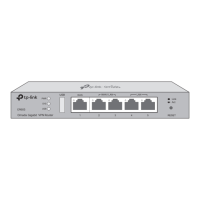
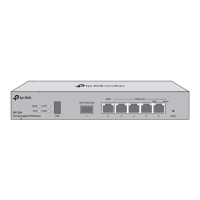
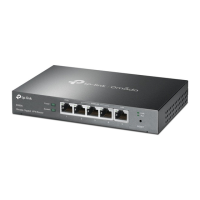
Explains the Power and System LEDs status for device power and running conditions.
Details Link/Act and SFP WAN LEDs for connection status and data transmission.
Illustrates connecting the router to a modem and internet for network setup.
Guides on configuring the router individually via a computer in Standalone Mode.
Details network topologies using Omada Software or Hardware Controllers for central management.
Outlines network setup using the Omada Cloud-Based Controller for centralized device management.
Instructions for downloading, installing, and launching the Omada Software Controller.
Steps to remotely access and manage the controller via the Omada Cloud Portal.
Guide to setting up and managing devices via the Omada Cloud-Based Controller.
Describes managing controllers locally or remotely using the Omada mobile app.
This document outlines the setup and management of an Omada Gigabit VPN Router, designed for both standalone and centrally managed network environments. The router serves as a crucial component for establishing secure and reliable network connections, particularly for businesses requiring VPN capabilities.
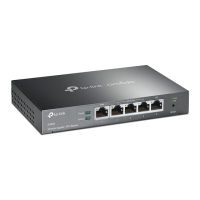
The Omada Gigabit VPN Router primarily functions as a network gateway, providing high-speed internet access and robust VPN (Virtual Private Network) functionalities. It is designed to handle gigabit-level data transfer, ensuring efficient network performance. The router supports various network configurations, allowing it to be integrated into diverse network architectures, from small office setups to large-scale enterprise environments. Its core purpose is to facilitate secure communication, both within the local network and over the internet, through its VPN capabilities. This includes creating secure tunnels for remote access and site-to-site connections, protecting data integrity and confidentiality. The device also acts as a central point for network traffic management, enabling administrators to control data flow, prioritize services, and enforce security policies. The router's LED indicators provide real-time status updates on power, system operation, and network link/activity, aiding in quick troubleshooting and monitoring.
The Omada Gigabit VPN Router offers two primary modes of operation: Standalone Mode and Controller Mode, catering to different management preferences and network scales.
In Standalone Mode, the router is configured and managed individually, making it suitable for smaller networks or scenarios where centralized management is not required. The setup process involves a direct connection from a computer to a LAN port of the router. Users access a web-based management interface by typing a default IP address into a web browser. This interface allows for the creation of a secure username and password, followed by access to various configuration options. Through this interface, users can set up WAN connections, configure LAN settings, manage VPN tunnels, and adjust other network parameters. This mode provides full control over the router's functionalities directly from a local computer, offering flexibility for independent network administration.
Controller Mode is designed for large-scale networks with multiple devices, such as access points, switches, and gateways, where centralized configuration and monitoring are essential. This mode allows for the management of all network devices, including the Omada router, through a single interface. There are three options for Controller Mode:
Via Omada Software Controller: This involves installing the Omada Software Controller on a Windows or Linux PC. After installation, the software controller provides a unified platform to configure and manage all Omada network devices. The setup includes downloading the controller software, running an installation wizard, and then accessing the controller's web interface to perform quick setup and detailed configurations. This method is ideal for organizations that have a dedicated server or PC to host the controller software.
Via Omada Hardware Controller (OC200/OC300): For users who prefer not to dedicate a PC for the software controller, the Omada Hardware Controller offers a pre-installed solution. These hardware devices (OC200/OC300) come with the Omada Software Controller embedded, providing a plug-and-play solution for centralized management. This option simplifies deployment and maintenance by eliminating the need for a separate computer to run the controller software.
Via Omada Cloud-Based Controller: This option provides a fully cloud-managed solution, allowing users to manage their network devices remotely through the Omada Cloud Portal. Users access the cloud portal via a web browser, log in with their TP-Link ID, and then register their Omada Cloud-Based Controller. This method enables management from anywhere with an internet connection, offering convenience and scalability for distributed networks. Devices are added to the controller using their serial numbers and must be online and in factory default state. Appropriate licenses are then assigned for management.
For enhanced mobility and convenience, the Omada App allows users to manage their controller from a mobile device. This app supports both local and remote site management, providing a flexible way to monitor network status and perform basic configurations on the go.
The Omada Gigabit VPN Router is designed with ease of maintenance in mind, primarily through its intuitive management interfaces and comprehensive documentation.
Detailed configurations and advanced features are thoroughly explained in the router's User Guide, which is available for download from the TP-Link official website. This resource serves as a primary reference for troubleshooting and optimizing network performance. Similarly, the User Guide for the Omada Controller provides in-depth information for managing devices in Controller Mode.
While not explicitly detailed in the provided text, typically, network devices like the Omada router receive firmware updates to enhance security, introduce new features, and improve stability. These updates are usually managed through the web interface in Standalone Mode or via the Omada Controller in Controller Mode.
TP-Link offers a community forum where users can ask questions, find answers, and interact with other users and engineers. For technical support and additional information, users can visit the TP-Link support website or scan a QR code for quick access. This provides a robust support ecosystem for resolving issues and getting assistance.
Users are encouraged to provide suggestions or feedback on product guides via a dedicated email address, indicating a commitment from TP-Link to continuous improvement based on user input.
The device includes essential safety guidelines to ensure proper operation and longevity. Users are advised to keep the device away from water, fire, humidity, and hot environments. Disassembly, repair, or modification of the device is discouraged, with users directed to contact support for service needs. The use of damaged chargers or USB cables is prohibited, and only recommended chargers should be used. The adapter should be easily accessible and the device placed with its bottom surface downward for optimal performance and safety.
In summary, the Omada Gigabit VPN Router is a versatile and secure networking solution, offering flexible deployment options and comprehensive management tools, supported by extensive documentation and a dedicated support infrastructure.
 General
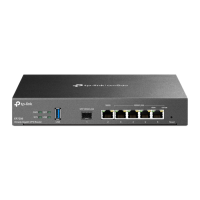
| Model | ER605 |
|---|---|
| Category | Network Router |
| Load Balancing | Yes |
| QoS | Yes |
| Power Input | 12V DC/1A |
| Humidity | 10% to 90% non-condensing |
| VPN Support | PPTP, L2TP, OpenVPN, IPsec |
| Firewall | Yes (SPI, DoS Defense) |
| Dimensions | 158 x 101 x 25 mm |
| Operating Temperature | 0°C to 40°C (32°F to 104°F) |
| Storage Temperature | -40–70 ℃ (-40–158 ℉) |


 To Next Page