
 Need help?
Do you have a question about the TP-Link ER707-M2 and is the answer not in the manual?
Instructions for connecting the router to the internet using an Ethernet cable and modem.
Instructions for connecting the router to the internet via a fiber-optic cable and an optical module.
Guide to configuring the router singly using a computer and web browser.
Guide to configuring the router centrally using Omada Controller types.
This document describes the installation, configuration, and maintenance of a TP-Link Omada VPN Router, designed for robust network management in various environments.
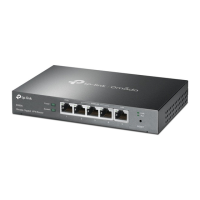
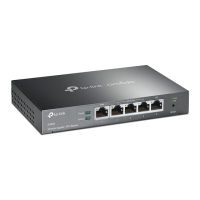
The TP-Link Omada VPN Router serves as a central component for network connectivity and management. It supports both Ethernet and fiber optic WAN connections, making it versatile for different internet service provider setups. The router is capable of handling multi-gigabit speeds, indicated by its 2.5G WAN port and multiple Gigabit Ethernet ports. It integrates into the Omada ecosystem, allowing for centralized management of network devices such as access points, switches, and gateways, which is particularly beneficial for large-scale networks. The device also features USB ports, which can be used for connecting a USB modem for backup internet connectivity or for attaching USB storage devices for network-attached storage functionalities.
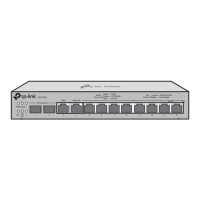
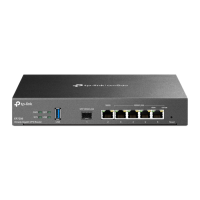
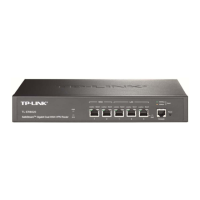
The router's primary function is to provide secure and reliable internet access, manage network traffic, and facilitate VPN connections. Its LED indicators provide real-time status updates on power, system activity, SFP port status, USB port status, and Link/Act status for both 2.5G and Gigabit ports, enabling quick diagnosis of network issues.
The Omada VPN Router offers flexible configuration options to suit different user needs:
Standalone Mode: In this mode, the router is configured and managed individually via a web browser. Users connect a computer directly to a LAN port of the router, access the default management IP address (192.168.0.1), and then create a username and password for secure login. From the web interface, users can configure various network settings, including WAN connections, LAN settings, and other router functionalities. This mode is ideal for smaller networks or environments where centralized management is not required.
Controller Mode: This mode is recommended for large-scale networks with multiple Omada devices (access points, switches, gateways) as it enables centralized configuration and management. There are two types of Omada Controllers:
Omada Hardware Controller (OC200/OC300): This is a dedicated hardware device that runs the Omada Software Controller. It's a good alternative if a user doesn't have a spare PC to keep the software running continuously. The hardware controller obtains an IP address from the router's DHCP server, which can be identified through the router's DHCP client list. Once accessed via its IP address, users can complete a quick setup wizard and then log in to manage the network. Remote management is possible via the Omada Cloud Service, where users can add their hardware controller using their TP-Link ID.
Omada Software Controller: This is a free software application that can be installed on a Windows or Linux PC. The PC running the software controller needs to be connected to the network and have internet access for optimal functionality. Users download the software from the TP-Link website, install it, and then follow a quick setup wizard. Similar to the hardware controller, a login screen appears after setup, allowing users to manage their network. The Omada Cloud Portal also enables remote access to the software controller by binding it to a TP-Link ID.
Connectivity: The router supports both traditional Ethernet WAN connections (via RJ45 ports) and fiber optic WAN connections (via SFP WAN slot), providing flexibility for different ISP setups. The 2.5G WAN port offers high-speed internet access, while multiple Gigabit Ethernet ports ensure fast local network connectivity. The USB ports can extend functionality by supporting USB modems for failover internet or USB storage for network sharing.
Omada App: The Omada App provides convenient management capabilities for controllers (both hardware and software) from a mobile device. Users can manage their controller locally or remotely, offering flexibility and ease of access on the go.
The device is designed with ease of maintenance and troubleshooting in mind:
LED Indicators: Comprehensive LED indicators on the front panel provide immediate visual feedback on the device's status.
Web-based Management Interface: Both Standalone and Controller modes utilize a user-friendly web-based interface for configuration and management. This interface allows users to monitor network status, adjust settings, and perform diagnostics. The "setup menu" on the left side of the screen in Standalone Mode provides easy navigation for configuring functions.
User Guides and Support: TP-Link provides detailed User Guides for both the router and the Omada Controller, available on their official download center. This resource is invaluable for in-depth configuration and troubleshooting. Additionally, TP-Link offers a community forum for users to ask questions, find answers, and communicate with engineers, as well as a dedicated support website for technical assistance.
Cloud Management: For Controller Mode, the Omada Cloud Service and Omada Cloud Portal enable remote management of the network. This means administrators can monitor and configure their network devices from anywhere with internet access, reducing the need for on-site presence for routine maintenance or troubleshooting.
Safety Information: The manual includes important safety guidelines to ensure the longevity and safe operation of the device. These include keeping the device away from water, fire, humidity, and hot environments, avoiding disassembly or modification, using only recommended chargers and cables, and ensuring the power adapter is easily accessible. These guidelines contribute to preventing damage and ensuring reliable operation.
 General
| DSL WAN | - |
|---|---|
| Ethernet WAN | Yes |
| Storage temperature (T-T) | -40 - 70 °C |
| Operating temperature (T-T) | 0 - 40 °C |
| Storage relative humidity (H-H) | 5 - 90 % |
| Operating relative humidity (H-H) | 10 - 90 % |
| Package depth | 323 mm |
| Package width | 242 mm |
| Package height | 73 mm |
| Package weight | 1100 g |
| Product color | Black |
| LED indicators | LAN, Link, Power, Speed, System, USB, WAN |
| Housing material | Steel |
| Sustainability certificates | CE, Federal Communications Commission (FCC), RoHS |
| Flash memory | 128 MB |
| Internal memory | 1000 MB |
| Internal memory type | DDR4 |
| Windows operating systems supported | Windows 10, Windows 2000, Windows 7, Windows 8, Windows 8.1, Windows 98SE, Windows NT, Windows Vista, Windows XP |
| Throughput | 1.44 Gbit/s |
| Networking standards | IEEE 802.1Q, IEEE 802.3, IEEE 802.3ab, IEEE 802.3q, IEEE 802.3u, IEEE 802.3x |
| Ethernet LAN data rates | 10, 100, 1000, 2500 Mbit/s |
| Ethernet interface type | 2.5 Gigabit Ethernet, Fast Ethernet, Gigabit Ethernet |
| Output current | 1.5 A |
| Output voltage | 12 V |
| Power source type | DC |
| Power consumption (typical) | - W |
| Security algorithms | 3DES, 128-bit AES, 192-bit AES, 256-bit AES, DES, MD5, SHA-1, SNMP, SNMPv2, SNMPv3 |
| VPN tunnels quantity | 66 |
| Supported network protocols | TCP/IP, DHCP, ICMP, NAT, PPPoE, NTP, HTTP, HTTPS, DNS, IPSec, PPTP, L2TP, OpenVPN, SNMP |
| USB version | 2.0 |
 Weight and Dimensions
| Depth | 131 mm |
|---|---|
| Width | 226 mm |
| Height | 35 mm |



 To Next Page